
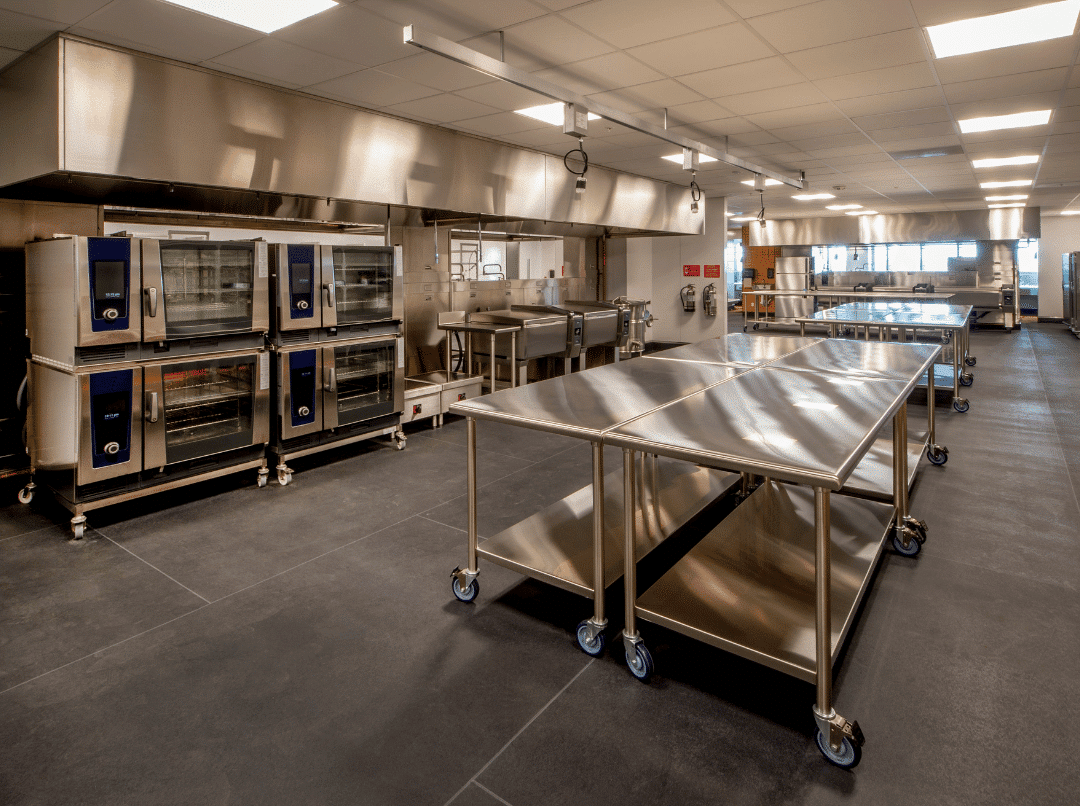
Opening a restaurant means making dozens of equipment decisions fast, often before you’ve cooked a single service. Get them right, and your kitchen runs smoothly for years. Get them wrong, and you’ll face breakdowns, blown budgets, and staff who fight the tools instead of the tickets.
This guide walks you through exactly what to buy, how to choose, and where new owners lose money. It’s built for decisions, not just definitions.
What Is Restaurant Commercial Kitchen Equipment?
Restaurant commercial kitchen equipment is the professional-grade gear used to store, prep, cook, and clean food in a foodservice operation. Unlike home appliances, it’s built for heavy daily use, high volume, and strict health and safety codes.
The reason this matters for buying: commercial equipment is rated differently. It carries certifications like NSF for food-contact surfaces and UL for electrical safety, and it’s designed to survive years of continuous service. Buying residential gear to save money almost always backfires. It fails faster, voids your insurance, and can fail your health inspection.
Practical takeaway: when you compare options, confirm the certifications first. If a piece isn’t rated for commercial use, it doesn’t belong in your kitchen, no matter how good the price looks.
What Equipment Does a New Restaurant Actually Need?
A new restaurant needs a core set of equipment tied directly to its menu: a way to cook, a way to keep food cold, a place to prep, a way to wash, ventilation, and the smallwares your team touches every shift. Everything beyond that is either a menu-specific tool or an upgrade you can add later.
The mistake most first-time owners make is buying for a dream menu instead of the real one. You don’t need a combi oven, a salamander, a blast chiller, and three fryers on day one. You need the equipment that produces the dishes you’ll actually sell in year one.
Here’s a simple way to build your real list:
- Write out your full opening menu.
- Map every dish to the equipment it requires to cook and hold.
- Mark each item as “must-have to open” or “nice to have later.”
- Buy the must-haves in commercial quality and delay the rest.
This single exercise usually cuts a bloated equipment list by 20 to 40 percent, freeing cash for the pieces that actually affect service.
Essential Commercial Kitchen Equipment Checklist by Category
Below is a complete commercial kitchen equipment checklist organized by category. Instead of listing every possible machine, each section focuses on what matters and how to decide.
Cooking Equipment
Your cooking line is dictated by your menu, so start there. Most kitchens build around a commercial range, then add specialized cooking gear only where the menu demands it.
- Range – Your workhorse. Gas gives instant, visible heat control; electric runs cooler and more consistent. Match burner count to your busiest cook line, not your average shift.
- Oven – A convection oven covers most baking and roasting. Only step up to a combi oven if steam cooking genuinely improves your menu, because it’s a major cost jump.
- Fryer – Size by oil capacity and recovery time, not price. A fryer that can’t recover heat fast turns busy services into a bottleneck.
- Griddle and charbroiler – Add these only if your menu leans on flat-top items or grilled proteins.
Selection logic: buy cooking equipment for your peak volume, not your slow Tuesday. This is the one category where undersizing hurts every single shift.
Refrigeration Equipment
Refrigeration protects your food cost and your food safety, so it deserves more thought than most owners give it. The core decision is reach-in versus walk-in, and the answer depends on volume, not just kitchen size. (More on that in the next section.)
- Reach-in units – Fast line access for a small operation.
- Walk-in cooler and freezer – Bulk storage for higher volume or frequent deliveries.
- Refrigerated prep tables – Combine cold storage with a work surface for sandwiches, salads, and pizza lines.
- Undercounter units – Keep ingredients within arm’s reach on the cook line.
Selection logic: always size refrigeration slightly above your estimate. Running out of cold storage mid-week forces risky workarounds and drives spoilage.
Food Prep Equipment
Prep equipment buys back labor hours and keeps portions consistent, which protects your margins. Buy based on how much repetitive prep your menu creates.
- Food processor – Earns its place fast in any menu with chopping, pureeing, or sauce work.
- Mixer – Countertop is fine for light use; bakeries and dough-heavy menus need a floor model.
- Slicer – Essential for delis and sandwich shops, skippable for many others.
- Blender – Non-negotiable for soups, sauces, smoothies, and bar programs.
Selection logic: if a prep task happens dozens of times a day, a machine usually pays for itself in saved labor within months.
Warewashing Equipment
Clean dishes keep service moving and keep inspectors satisfied. Your volume decides whether you need a machine or can start with sinks.
- Commercial dishwasher – Undercounter for small spots, door-type or conveyor for higher volume.
- Three-compartment sink – Required in most regions for manual wash, rinse, and sanitize.
- Handwashing sink – A dedicated, code-mandated sink for staff hygiene.
- Grease trap – Often legally required and easy to forget until plumbing backs up.
Selection logic: a low-volume café can open with a three-compartment sink, but any operation pushing steady covers will lose time without a dishwasher.
Ventilation and Safety
Ventilation and safety gear aren’t optional extras. They’re code requirements that can delay your opening if handled late.
- Exhaust hood – Removes smoke, grease, steam, and heat.
- Makeup air system – Replaces the air the hood pulls out to keep pressure balanced.
- Fire suppression – Usually built into the hood and mandated by fire code.
- Class K fire extinguishers, first-aid kit, non-slip mats – Basic protection for your team.
Selection logic: confirm ventilation and fire requirements with your local authority before you buy cooking equipment. The hood has to match the line beneath it, and retrofitting later is expensive.
Storage and Smallwares
Storage keeps you organized and compliant, while smallwares are the tools your staff touch constantly. Both are easy to under-buy.
- Stainless steel and wire shelving, dunnage racks – Keep goods off the floor as code requires.
- Pots, pans, knives, cutting boards, ladles, tongs, thermometers, storage containers.
Selection logic: buy enough smallwares to survive a full peak service without stopping to wash. Running out mid-rush slows every station.
How to Choose the Right Commercial Kitchen Equipment
The right equipment is the piece that fits your menu, your space, your volume, and your budget in that order. Price should be the last filter, not the first.
Run every potential purchase through these questions:
- Menu fit – Does this directly produce or hold something you sell? If not, it can wait.
- Kitchen size and layout – Measure your space and plan workflow from storage to prep to cooking to plating. Leave clearance for cleaning, ventilation, and code. Oversized gear in a tight kitchen slows staff and creates hazards.
- Output volume – Size to your busiest service. This is where undersizing quietly costs you every day.
- Energy efficiency – ENERGY STAR-rated models cost more upfront but cut utility bills in a kitchen that runs all day.
- Maintenance and parts – Ask about service availability and how easy parts are to source. Downtime on core equipment stops service.
- Warranty – Longer, stronger coverage on cooking and refrigeration protects you from the most expensive failures.
- Compliance – Confirm NSF, UL, and local code requirements before buying.
The pattern here is simple: spend the most thought and money on equipment you use every shift, and be pragmatic about everything else.
Commercial Kitchen Equipment by Restaurant Type
Your concept determines your equipment list far more than your budget does. The same category looks completely different across restaurant types, so here’s how essential commercial kitchen equipment shifts by format.
Café or Coffee Shop
A café needs a lean setup focused on drinks and light food. Your biggest investment is the espresso machine and grinders, not the cook line.
Typical core: espresso machine, grinders, undercounter refrigeration, display refrigeration for pastries, a panini press or small griddle, and a countertop oven. Most cafés can open with a three-compartment sink instead of a full dishwasher, which keeps startup costs low. This is the classic commercial kitchen equipment for small restaurant setups: compact, efficient, and menu-focused.
Quick-Service Restaurant
A QSR is built for speed and consistency, so equipment prioritizes fast output and holding. Every second matters when the line is out the door.
Typical core: high-capacity fryers, a griddle or charbroiler, heated holding cabinets, refrigerated prep tables, and a walk-in cooler for bulk storage. Holding equipment is what separates a smooth QSR from a chaotic one, so don’t treat it as an afterthought.
Full-Service Restaurant
A full-service kitchen needs range and versatility to handle a broad, changing menu. This is where your equipment list is longest and your cooking line most complete.
Typical core: a full multi-burner range, a convection or combi oven, multiple refrigeration units including a walk-in, a complete prep station, a salamander or broiler for finishing, and a door-type or conveyor dishwasher. Plan for menu changes, since full-service concepts evolve their dishes far more than QSRs do.
Ghost Kitchen or Delivery-Only
A ghost kitchen prioritizes efficient output in a compact footprint with no dining room to serve. Versatile, space-saving equipment wins here.
Typical core: multi-use cooking equipment, combi ovens for flexibility in tight spaces, reach-in refrigeration, strong ventilation for enclosed areas, and dedicated packaging and holding stations. Because delivery is the whole business, holding and packaging quality directly shape your customer experience.
Common Buying Mistakes New Restaurant Owners Make
The most expensive mistakes happen before opening day, and they repeat across almost every first restaurant. Knowing them in advance saves real money.
Buying for the dream menu, not the real one. New owners equip for the menu they hope to run in year three. You end up with idle machines eating cash and floor space. Buy for what you’ll actually cook in your first year, and add later once revenue proves the need.
Underestimating refrigeration. This is the quiet killer. Owners size cold storage to their kitchen footprint instead of their delivery schedule and menu. When you run short mid-week, food gets stored unsafely or spoils, and both cost you. Always buy a size up.
Treating ventilation as a late detail. Ventilation gets pushed to the end of planning, then blows up the timeline. The hood must match your cooking line and meet fire code, and permitting takes time. Sort ventilation early, alongside your cook line, not after it.
Choosing price over quality on core equipment. A cheap range or fridge that dies during a Friday rush costs far more than the money it saved, in lost sales, emergency repairs, and stress. Spend where reliability matters most and economize on low-use items.
Forgetting installation and delivery costs. Freight, rigging, and professional installation for hoods, gas lines, and walk-ins add up fast. Owners who budget only for the equipment itself get an unpleasant surprise at the worst time.
Overcrowding the kitchen. More equipment feels safer, but a cramped kitchen slows staff, blocks cleaning, and creates safety hazards. Empty, functional space has real value.
Skipping inspection on used equipment. Used gear can be smart, but buying it unseen or without service history invites breakdowns. Always inspect condition and maintenance records first.
How Much Does Restaurant Commercial Kitchen Equipment Cost?
Equipment cost varies widely based on your concept, menu, volume, and whether you buy new or used, so any single number is misleading. What’s more useful is understanding what drives the cost and where you can safely save.
What drives the cost:
- Cooking and refrigeration usually take the biggest share, especially walk-ins and high-capacity cooking lines.
- Ventilation and fire suppression are a major, often underestimated line item, particularly with heavy grilling or frying.
- Volume and capacity push prices up quickly, since larger and faster equipment costs more.
- Installation, delivery, and permits are the hidden costs that catch new owners off guard.
Where to spend more: put your budget into the equipment you use every shift and can’t afford to have fail, mainly cooking equipment and refrigeration. Reliability here protects your revenue.
Where to save: shelving, prep tables, dunnage racks, sinks, and many smallwares perform the same whether new or budget-friendly. These are safe places to economize.
Budget tip: set aside 10 to 15 percent of your equipment budget for installation, delivery, and surprises. It’s the buffer that keeps your opening on schedule.
For a small restaurant or café, a lean setup keeps startup costs modest. A full-service or high-volume kitchen demands significantly more, mostly because of the cooking line, walk-in refrigeration, and ventilation.
Should You Buy New or Used Commercial Kitchen Equipment?
The smart answer is a mix: buy new where reliability and warranty matter most, and buy used where a machine is simple and durable. Blanket rules in either direction cost you money.
Buy new for refrigeration and core cooking equipment. These run constantly, and a failure stops service. New units give you warranty protection, better energy efficiency, and predictable lifespan, which matters most on the gear you depend on daily.
Buy used for shelving, prep tables, three-compartment sinks, and many smallwares. These are hard to damage and cheap to replace, so used versions deliver the same value at a lower price.
Whatever you buy used, inspect it first. Check condition, ask for service history, and confirm parts are still available. A great deal on gear you can’t repair isn’t a deal at all.
Frequently Asked Questions
What is the most essential commercial kitchen equipment for a new restaurant?
Your cooking equipment, refrigeration, and prep tools are the core essentials, plus warewashing and ventilation to meet code. Beyond that, your menu decides what else you need. Start with what you’ll use every single shift.
What equipment does a small restaurant need?
A small restaurant needs cooking equipment matched to its menu, reach-in refrigeration, a prep area, a three-compartment sink, storage shelving, ventilation, and essential smallwares. Keep the list lean and tied to your actual menu rather than an aspirational one.
How much does it cost to equip a commercial kitchen?
Costs depend on size, menu, volume, and whether you buy new or used. Cooking equipment, refrigeration, and ventilation drive most of the budget. Always add 10 to 15 percent for delivery, installation, and permits.
Should I buy new or used commercial kitchen equipment?
Buy new for refrigeration and core cooking gear where reliability and warranty matter. Buy used for durable, simple items like shelving, prep tables, and sinks. Always inspect used equipment and confirm parts availability before buying.
How do I plan a commercial kitchen layout?
Design around workflow: storage, prep, cooking, plating, and warewashing should flow logically. Measure your space, follow local codes for clearances and ventilation, and keep high-use items near the cook line.
How much refrigeration do I need?
Size it to your menu and delivery schedule, not just your kitchen footprint, and buy slightly more than you expect to use. Under-buying leads to unsafe storage and spoilage during busy periods.
What certifications should commercial kitchen equipment have?
Look for NSF certification on food-contact surfaces and UL or equivalent listings for electrical safety. Ventilation and fire suppression must meet local fire codes. Always confirm requirements with your local authority.
Build a Kitchen That Works From Day One
Equipping a commercial kitchen comes down to a few disciplined choices: start with your real menu, prioritize the equipment you use every shift, respect local codes, and plan your budget with a buffer. Do that, and you avoid the expensive mistakes that trip up most first-time owners.
If you’d rather not navigate sizing, sourcing, and compliance alone, Wonhosp can help. We support restaurants with equipment selection, sourcing, delivery, and installation, so you match the right gear to your menu, space, and volume, and open strong from your very first service. Reach out for guidance tailored to your kitchen.