
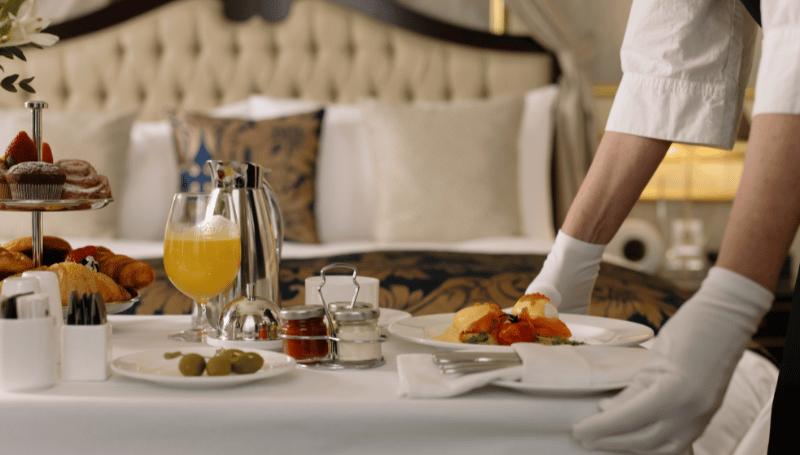
Ask ten hospitality buyers what “tabletop supplies” include, and you’ll likely get ten different answers. Some product images show only plates and cutlery. Others include serveware, buffet displays, trays, and the small salt-and-pepper sets that complete a table setting. The term is broad enough that two procurement teams may use it to mean completely different things.
That lack of clarity creates a real problem. Because the category is so broad, many operations end up sourcing items separately — plates from one supplier, trays from another, display stands from a third. The result is mismatched aesthetics, inconsistent durability, and a total cost that can creep much higher than expected.
So let’s clear things up. In this guide, I’ll walk you through what tabletop supplies actually are, the categories they fall into, the materials behind them, the specs that genuinely matter, realistic lifespans, and a practical buying framework. No fluff — just the factors that affect your guest reviews, breakage budget, and day-to-day service.
Tabletop supplies is an umbrella term covering every item that sits on or serves a dining surface — dinnerware, serveware, flatware, drinkware, trays, buffet display pieces, and tabletop accessories. The right choice depends on three things: the material matched to your service environment, the specifications that drive durability and food safety, and how each piece fits your brand presentation. Quality is defined by measurable specs and cost per use, not by appearance or brand name alone.
We supply tabletop products and catering equipment to hotels, restaurants, banquet halls, and catering operations across multiple regions. We see the gap between what gets marketed and what a durable, coherent tabletop program actually requires. Here’s everything that matters.
What Exactly Are Tabletop Supplies?
Tabletop supplies covers every product used to present, serve, and consume food and drink on a dining surface — plus the display and accessory pieces that complete the setting. If it lives on, serves, or dresses a table, it’s a tabletop supply.
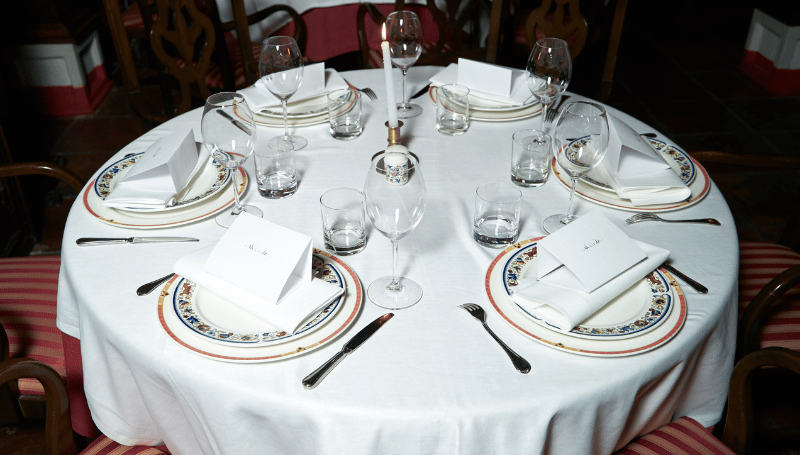
That scope is wider than most people assume. It spans the guest-facing items front-of-house — plates, glasses, display stands — and the functional serving pieces working behind them, like trays, buffet ornaments, and serving tools. A guest sees a beautifully plated dessert on a tiered stand; they never think about the tray that carried it or the riser holding it up. Both are tabletop supplies.
The trouble is that the broad definition isn’t very useful when you’re placing orders. “Send me tabletop supplies” means nothing to a supplier. So let me break it down by category. That’s how procurement teams actually think about it — and how you build a complete service instead of a random collection of pieces.
What Types of Tabletop Supplies Do Hotels and Restaurants Use?
Tabletop supplies fall into a handful of functional categories. Each serves a different role and carries different durability, material, and presentation needs.
The key takeaway up front: a coherent tabletop program coordinates across all of these categories. The operations that look polished don’t buy each piece in isolation — they plan how dinnerware, serveware, trays, and displays all read together.
Dinnerware
This is the guest-facing core, and the category most people picture first. It includes dinner plates, side plates, bowls, and cups and saucers.
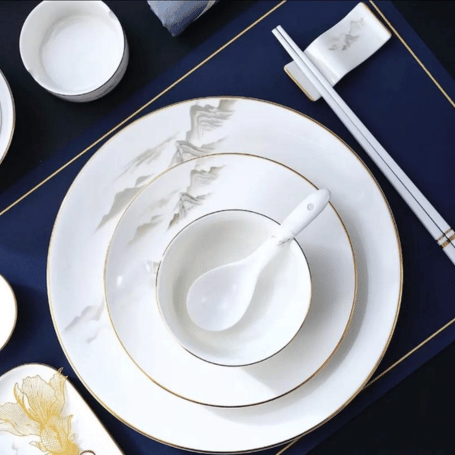
This is also where styled ranges earn their place. A line like our Retro Tableware suits character-driven concepts and themed dining rooms, where the plate is part of the story rather than just a surface for food.
Dinnerware is the highest-volume, highest-breakage category in any operation. It gets stacked, bussed, washed, and handled more than any other item on this list. Durability matters more here than anywhere.
Serveware
Serveware moves food from the kitchen to the table: platters, serving bowls, gravy boats, and presentation pieces. Some serveware also doubles as display — our Fruit Plate Series and Dessert Stand Series are made to both carry food and look good doing it.
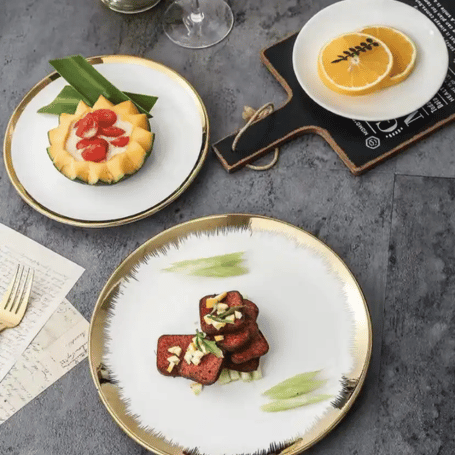
Buyer tip: Serveware is seen by guests but handled by staff. It needs to satisfy both — refined enough to present, tough enough to survive a busy service line.
Buffet Display
Buffet display pieces elevate a spread: tiered stands, risers, chafing presentation, and decorative focal pieces for buffet and banquet lines. This is where our Buffet Ornaments, Acrylic Display Stand, and Dessert Stand Series sit.
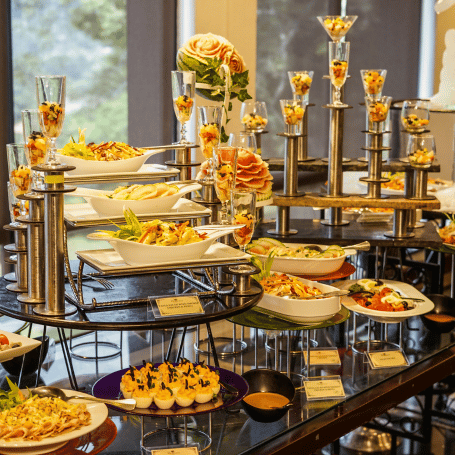
These pieces do two jobs at once. They lift presentation and draw the eye — and they carry real food weight while doing it. A display piece that looks the part but bows under a tray of pastries fails at half its job.
Flatware
Knives, forks, spoons, and specialty serving utensils. This category ties directly to our Stainless Steel Catering Supplies and the finish quality of the Mirror Polish Series.

Buyer tip: Grade and finish drive both feel-in-hand and long-term appearance. A fork that feels solid and holds its shine through thousands of washes signals quality to a guest before the food even arrives.
Drinkware
Water glasses, wine glasses, tumblers, and coffee and tea service. For high-volume operations, two practical factors determine cost: breakage rates and stacking efficiency. A glass that nests cleanly and survives the bus tub saves more than its unit price suggests.

Trays
The workhorse category — serving trays, room-service trays, bus trays, and bakery trays. Our Tray Series and Steel & Wood Combination pieces balance function with a warmer, more designed look.

Buyer tip: Trays take a beating, so load rating, edge finish, and grip matter most. A tray that flexes under weight or slips in a server’s hand is a spill and a liability.
Condiment and Tabletop Accessories
The finishing pieces: salt and pepper sets, sugar holders, napkin holders, menu stands, and decorative table items. This is where our Woodenware Series adds texture and brand character to an otherwise plain setting.

They’re small, but they shape the finished look of every table. Mismatched or worn accessories undercut even the best dinnerware.
What Materials Are Tabletop Supplies Made From?
This is where purchasing decisions get real. Material drives feel, durability, washing cost, replacement cycles, and guest perception. And here’s the thing most buyers miss: the same item exists in several materials, each suited to a different service model.
Porcelain and Ceramic
The dinnerware workhorse. The spec that matters is vitrification — how completely the clay body fuses when fired. A fully vitrified body absorbs roughly 0.5% or less water, which is why it resists chipping, staining, and hairline cracks that ruin cheaper plates. Best for full-service dining and presentation-first settings.
Stainless Steel
Durable, hygienic, and effectively unbreakable. The key distinction is grade: 18/10 (18% chromium, 10% nickel) resists corrosion and holds its shine far better than 18/0, which lacks nickel and dulls faster. This ties to our Stainless Steel Catering Supplies and Mirror Polish Series for buffet and catering use.
Acrylic
Lightweight, shatter-resistant, and remarkably clear acrylic cast (rather than extruded). Ideal for display pieces and outdoor or high-traffic settings — see our Acrylic Display Stand. Watch two things over time: yellowing under UV and surface scratching from abrasive cleaning.
Wood
Warm, natural presentation for boards, trays, and accessory pieces. Our Woodenware Series and Steel & Wood Combination bring texture and brand character to a table. Wood needs proper sealing and gentler care — it doesn’t belong in a commercial dishwasher.
Melamine
Shatter-resistant and lightweight, perfect for buffet, poolside, and outdoor service. Just know its limits: it’s not microwave-safe and not the right look for true fine dining.
Glass
Clarity and elegance for drinkware and some serveware. Tempered options improve durability, but glass always carries a breakage trade-off you’ll need to budget for.
Material Comparison
| Material | Best For | Durability | Guest Perception | Relative Cost | Care Notes |
|---|---|---|---|---|---|
| Porcelain / Ceramic | Dinnerware, full-service dining | Strong when fully vitrified | Clean, professional, classic | Mid | Dishwasher-safe; check glaze and edges |
| Stainless Steel | Flatware, buffet, catering | Effectively unbreakable | Modern, hygienic | Mid | Choose 18/10; passivate welds |
| Acrylic | Display, outdoor, high-traffic | Shatter-resistant; scratches | Light, clear, casual–premium | Low–Mid | Acrylic-safe cleaners only; UV care |
| Wood | Trays, boards, accessories | Good with care | Warm, natural, artisanal | Mid | Hand-wash, oil, and seal regularly |
| Melamine | Buffet, poolside, outdoor | Shatter-resistant | Casual | Low–Mid | Not microwave-safe |
| Glass | Drinkware, serveware | Tempered improves it | Elegant, refined | Low–High | Stacking and breakage matter |
Buyer tip: Don’t standardize one material across your whole program. Match the material to each category’s job and environment. A buffet line and a fine-dining room need very different things from the same word: “plate.”
What Specs Actually Affect Durability and Guest Experience?
Here’s the gap. The specs that predict breakage, lifespan, and safety rarely appear in a product photo. They’re the numbers you should put in your RFQ — because breakage and replacement, not unit price, drive your real tabletop cost.
Every quality claim should map to a number, a test, or a certificate. If it can’t, treat it as marketing language.
Durability and Chip/Impact Resistance
What to look for depends on the material: edge engineering (rolled or reinforced rims) on ceramics, body density and vitrification, gauge thickness for steel, and panel thickness for acrylic. These predict how a piece survives stacking, drops, and the dish room.
Common mistake → fix: Buyers often pick the heaviest plate, assuming weight equals toughness. In reality, a fully vitrified body at moderate thickness outlasts a heavy, under-fired one. Specify density and edge design, not grams.
Buyer tip: Request chip-resistance, gauge, or thickness data for the specific item — not a generic “durable” claim.
Commercial Washing and Heat Performance
Commercial warewashers run hotter, faster, and with far harsher detergents than any home unit. That punishes glaze, decoration, and body alike. Decoration durability splits along one line: under-glaze patterns sit beneath the protective glaze and survive for the life of the piece, while on-glaze patterns fade and scratch off under repeated cycles.
Material limits matter too. Melamine isn’t microwave-safe and softens under high heat. Acrylic has real thermal limits. Wood can’t go through a commercial dishwasher at all.
Buyer tip: Ask for a tested commercial-wash cycle rating at a stated temperature — not a vague “dishwasher safe.”
Food-Contact Safety
This is non-negotiable for anything touching food, and it’s fully verifiable. Require certifications valid for your operating market: FDA for the United States, EU Regulation 1935/2004 for Europe, or LFGB for the strict German benchmark. Don’t assume — not all acrylic and not all decorative glaze is automatically food-safe.
Buyer tip: Request verifiable certificate numbers for the specific SKU, then look them up yourself. A supplier who understands their product hands you a number without hesitation.
Finish, Presentation, and Consistency
Glaze quality, polish grade (our Mirror Polish Series is built around this), acrylic edge finish, and color and pattern consistency across a range all decide how a table reads. A flawless plate next to a streaky one undermines the whole setting.
Buyer tip: Inspect samples under strong light and check consistency across several pieces, not just one. Consistency signals controlled manufacturing.
How Long Do Tabletop Supplies Last?
Lifespan varies widely by material and category, and realistic numbers help you forecast replacement budgets rather than guessing. Keep in mind that hospitality wear rates depend on your volume, handling, and washing intensity — a 200-cover restaurant burns through stock far faster than a quiet boutique dining room.
Lifespan and Replacement Signals by Category
| Item Category | Typical Lifespan Driver | Replacement Timeline | Key Replacement Signals |
|---|---|---|---|
| Dinnerware | Chip and impact cycles | 1–3 years | Chipping, crazing, and glaze dulling |
| Serveware | Handling and wash cycles | 2–4 years | Edge chips, surface wear, fading |
| Flatware | Wash cycles, grade quality | 3–7 years | Spotting, dulling, bent tines |
| Drinkware | Breakage and clarity loss | 1–2 years | Chips, cloudiness, scratching |
| Trays | Load and impact | 2–5 years | Warping, edge damage, finish wear |
| Acrylic Display | UV and cleaning exposure | 1–3 years | Yellowing, hazing, crazing |
| Woodenware | Moisture and handling | 2–4 years | Warping, cracking, and finish breakdown |
These ranges assume standard commercial use and care. Aggressive handling, overloaded machines, and the wrong cleaners will significantly shorten them.
Why Cost-Per-Use Beats Unit Price
Here’s the math that should drive your decisions. A $4 plate that survives 500 services costs less than a penny per use. A $1.50 plate that chips out after 100 services costs 1.5 cents per use — nearly double the sticker price.
And the unit price hides other costs: breakage waste, the energy required to handle heavier pieces in the dish room, and the operational headache of mismatched replacements when a pattern no longer matches.
Buyer tip: Calculate cost-per-use, not price-per-unit, before you commit to a bulk order. The “expensive” piece is often the cheaper one.
How Should Hospitality Buyers Choose the Right Tabletop Supplies?
There’s no single “best” tabletop program. The right choice aligns material, spec, and presentation with your service model and brand positioning. Here’s the framework I use with buyers.
A Practical Buying Framework
- Match material and tier to your property and service model. Fine dining, full-service, buffet, catering, and outdoor each call for different specs. Don’t force one standard across all of them.
- Coordinate across categories for a consistent look. Plates, serveware, trays, and display should read as one program. Pieces like our Steel & Wood Combination and Mirror Polish Series can unify a table story across materials.
- Think in terms of cost per use, not unit price. Forecast lifespan and breakage, not just the line-item cost.
- Request test data and food-safety certificates. Chip resistance, wash-cycle ratings, migration reports, and certificate numbers — get them in writing.
- Match display and serveware to your buffet environment. Tie in the Acrylic Display Stand, Buffet Ornaments, Dessert Stand Series, and Fruit Plate Series to build a coherent buffet line.
- Confirm reorder availability and stacking efficiency. A discontinued pattern forces a full re-service rather than replacing a few pieces.
- Always order and stress-test samples first. Run them through your real dish room, lighting, and service load before any bulk purchase.
Service-Type Quick Guide
| Operation Type | Priority Materials | Priority Specs | Presentation Focus |
|---|---|---|---|
| Fine dining / luxury | Bone china, premium porcelain | Refined feel, edge quality, under-glaze | Subtle, elegant, brand-consistent |
| Full-service restaurant | Vitrified porcelain, 18/10 steel | Durability + presentation balance | Clean, consistent, on-brand |
| Buffet / banquet | Reinforced porcelain, steel, acrylic | Chip resistance, load rating, and stacking | Bold display, tiered height |
| Catering / outdoor | Melamine, stainless steel | Shatter resistance, portability | Practical, durable, casual |
Buyer tip: Align the whole program to your operation type. Matching every spec to the way you actually serve optimizes both guest experience and total cost.
Building a Tabletop Supplies Program, Not Just an Order
Tabletop supplies aren’t a pile of plates and trays. They’re a coordinated system — every piece, from the dinner plate to the buffet riser to the serving tray, shapes how guests experience your property. The operations that get this right don’t place scattered orders. They plan a program.
Bring this checklist to your next supplier conversation:
- Define the categories your operation actually needs
- Match material to each category’s job and environment
- Verify durability, wash, and thermal specs
- Collect and verify food-safety certificate numbers
- Calculate cost-per-use, not unit price
- Coordinate presentation across the whole program
- Confirm reorder availability and storage efficiency
- Test samples before committing to bulk
Any tabletop range worth buying comes with this documentation, not just a sales pitch. If a supplier can answer each line quickly, you’re talking to someone who knows their product. If they can’t, dig deeper before you commit.
If you’re building or refreshing your tabletop program — dinnerware, serveware, buffet display, trays, or accessories — get in touch for samples and full specification sheets across the range. We’ll help you match material, spec, and presentation to your service model and budget, so you can see exactly what your guests will touch and what your dish room will put it through, before you place a bulk order.
Frequently Asked Questions