
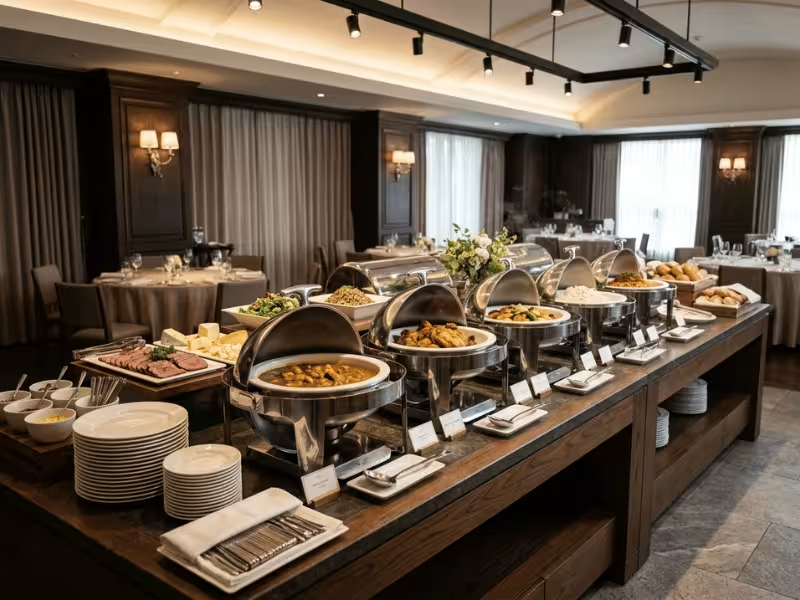
A buffet counter can look polished and still fail the event.
Small setup mistakes slow the line, cool the food, raise staff pressure, and make guests feel the service is disorganized. I see this happen more often than most planners expect.
This article looks at buffet mistakes as working problems, not style problems. I will show what usually goes wrong, why it happens, and how to fix it with better planning, layout, timing, and service control.
Why Small Buffet Mistakes Create Big Event Problems
A buffet line does three jobs at once. It moves people like a traffic system. It holds food at safe temperatures. And it asks every guest to make choices as they walk.
When one of those jobs breaks, the others follow fast.
I have stood at plenty of events and watched it happen. One guest pauses to decide between two dishes. The people behind stop. The line stretches back toward the tables.
Now the food sits longer. Hot dishes cool. Cold dishes warm. The spread that looked fresh at the start starts to look tired.
Then the complaints begin. Guests grumble about the wait. Others ask why their plate is lukewarm. Staff scramble to refill, tidy, and calm people down all at once.
That whole chain started with one small pause. Not bad food. Not a bad kitchen. Just a setup that let a single slowdown ripple across the room.
This is why I never treat buffet mistakes as cosmetic. A crooked sign or a spoon in the wrong spot feels minor. But at a busy event, small flaws multiply.
Fix the setup, and the line takes care of itself. Miss it, and you spend the night putting out fires.
Mistakes That Happen Before the Event Even Starts
Most buffet problems don’t start at the buffet. They start days earlier, in the planning. I’ve traced plenty of chaotic service nights back to a decision someone made before anyone touched a chafing dish.
Ignoring the room’s natural traffic flow
Every room already tells guests where to walk. The door pulls them in. The bar draws them over. Restrooms and exits create paths people follow without thinking.
Drop the buffet into that flow the wrong way, and you fight the room all night.
I see the same mistakes again and again:
- The buffet blocks the main entrance.
- It sits right in the path to the bar.
- Two guest streams cross at the busiest dish.
Before you place a single table, sketch the room. Mark arrows for how guests will move. Find the spots where paths cross, then keep the buffet clear of them.
Planning for the RSVP list instead of the real rush
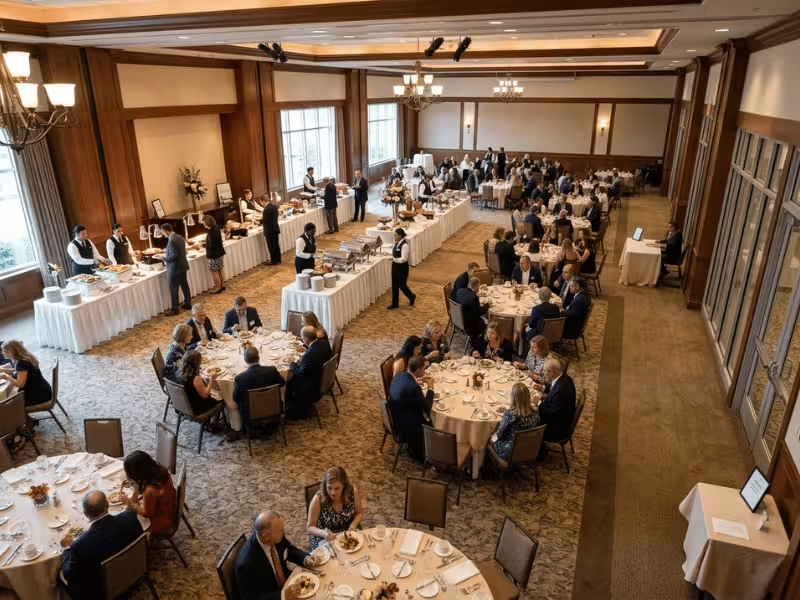
Your headcount matters less than your peak. What breaks a buffet is how many people hit the line at the same moment, not how many attend overall.
A seated dinner where everyone eats after the toast puts far more strain on the line than a party where guests drift in over two hours.
Remember one thing about buffets: guests serve themselves generously. They pile plates higher than any server would. Plan your food and your line speed for that first heavy rush, not for a tidy average.
Skipping the guest profile check
A menu that ignores your guests turns into a wall of dishes people can’t eat.
Check the profile before you finalize anything:
- Dietary needs — vegetarian, vegan, gluten-free, dairy-free, nut allergies.
- Age range — older crowds and kids need different portions and spice levels.
- Cultural and religious rules — these shape both the menu and the serving order.
Then label everything. One unlabeled dish can make a whole station useless for an allergic guest. They won’t risk it, so they skip it, and they leave hungry and frustrated. A small tent card fixes that.
Forgetting to time food against the event schedule
Food and schedule have to match. When they don’t, the buffet suffers.
Speeches run long. Toasts push back. The couple wants photos. Meanwhile, your hot dishes sit out cooling and your cold dishes drift toward warm.
I’ve watched a beautiful spread go lukewarm because the buffet opened before the room was ready to eat.
Write a service timeline instead of guessing:
- List each dish and its hold time.
- Note when hot food goes out and when cold food comes out.
- Build in a buffer for the toast that always runs long.
Get these four right, and the buffet almost runs itself. Miss them, and no amount of on-the-night effort fully recovers.
Layout Mistakes That Slow the Line Before Anyone Eats
A good layout does its work quietly. A bad one creates bottlenecks nobody can point to, yet everybody feels. These are the setup choices that stall the line before a single guest reaches the food.
|
Mistake |
What it causes |
Better fix |
|---|---|---|
|
One-sided line for a big crowd |
Long queue, slow feeding |
Open both sides |
|
Plates in the wrong spot |
Guests double back |
Stack plates at the start |
|
Popular dish at the front |
Line jams early |
Move it to the middle |
|
Too many dishes on one counter |
Slow decisions, crowding |
Split into stations |
|
No back or side access |
Refills block the line |
Leave a clear staff path |
Building a one-sided line for the wrong crowd
A one-sided buffet isn’t a mistake on its own. For 40 guests in a small room, it works fine.
The trouble starts when you use it for a bigger crowd. One line can only move so fast, and everyone waits behind the slowest person.
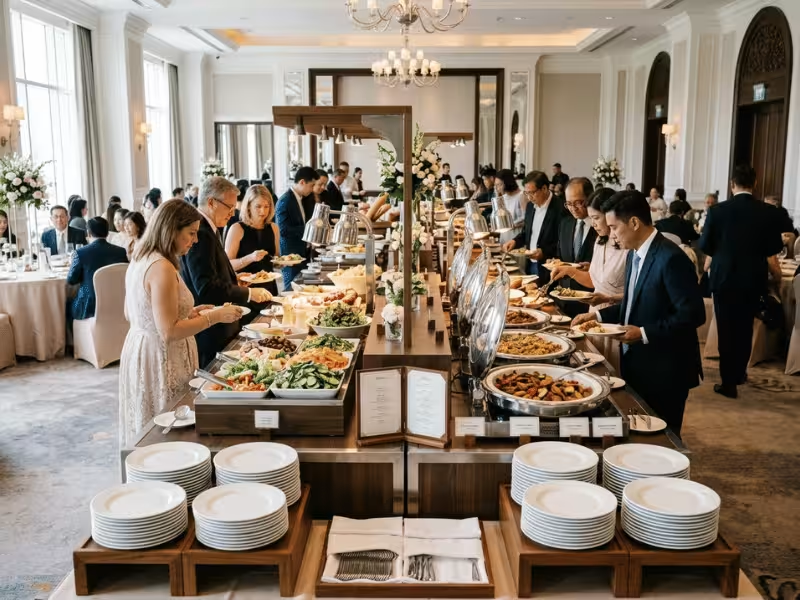
Open both sides once you pass 50 guests or so. Two lines move at once and cut the wait in half. Just mirror the dishes on each side, so nobody crosses over to grab something.
Putting plates in the wrong place
Plates belong at the very start. Guests need something to hold before they reach the food.
I still see plates stacked halfway down the line, or worse, at the end. Guests grab food with nowhere to put it, then double back. The whole line tangles.
For large events, station a staff member to hand plates over. It keeps the front moving. And if you serve both salad and dinner plates, separate them clearly so people don’t grab the wrong size and jam up at the first dish.
Letting the line start with the slowest or most popular item
Here’s a mistake that hides in plain sight. Put the crowd favorite first, and everyone stops there.
Guests pile on the carved roast or the shrimp before they’ve moved two feet. The line jams at the front while the rest of the buffet sits empty.
Queue psychology is simple: whatever anchors the front sets the pace for everyone. So put quick, light items first. Salads, breads, sides. Let guests fill their plates and build momentum. Place the popular dish in the middle, where the line already has flow behind it.
Crowding too many dishes onto one counter
More dishes on one table feels generous. It isn’t. It slows everyone down.
When fifteen dishes crowd a single counter, guests stop to scan and decide at every step. Multiply that pause by a hundred people, and you’ve built a wall.
There’s a safety cost too. Chafing dishes packed edge to edge leave no room to lift a hot lid without reaching over another pan. Someone gets burned or knocks something over.
For crowds over 100, split the food into themed stations. Salads here, mains there, desserts elsewhere. Guests decide faster and spread out.
Blocking refill access from the back or side
This one is easy to miss and costly to fix mid-service. Push the buffet flat against a wall, and your staff have only one way to reach the pans: through the guest line.
Now every refill becomes a disruption. A server squeezes past guests, holding a hot tray, while the line stops to let them by.
Leave two to three feet of clear space behind or beside each station. Staff swap pans from the back, guests never notice, and the line keeps moving. It’s the cheapest fix here, and the one planners forget most. Good stainless steel catering supplies make those pan swaps quick and keep food at safe temperatures between rounds.
Menu and Station Mistakes That Make the Buffet Feel Slower Than It Is
Sometimes the layout is fine and the line still crawls. When that happens, look at the food itself. The wrong menu order, the wrong tools, and the wrong holding gear all slow a buffet in ways guests feel but can’t name.
Packing too many decision-heavy dishes together
Guests hesitate when they face too many similar choices at once. Three pasta dishes side by side, or five sauces in a row, turn every guest into a decision maker who blocks the line.
I watch people freeze at these spots. They lean in, read, compare, then finally choose while the queue backs up behind them.
Spread out the dishes that need thought. Group clearly different items together so guests decide in a glance, not a debate. A shorter, well-ordered spread moves faster than a crowded one.
Letting hot food cool and cold food warm
Food that drifts to room temperature looks tired and turns risky. Most planners cause this by underestimating their holding gear.
Keep it simple: hot food above 140°F, cold food below 40°F. That means enough chafing fuel, full ice beds under cold platters, and warmers that actually hold heat, not ones that fade after an hour.
Check your fuel supply before service, not during it. A chafing dish running on a dying flame quietly ruins the dish it’s meant to protect.
Using the wrong serving tool for the dish
The right tool moves guests through fast. The wrong one stops them cold.
I see tongs handed to guests for rice, pasta, or casseroles all the time. Tongs can’t scoop. Guests fumble, drop food, and hold up everyone behind them.
Match the tool to the dish:
- Wide serving spoons for rice, pasta, casseroles, and grains.
- Ladles for soups, sauces, and anything runny.
- Tongs for bread, sliced meats, and firm items you can grip.
Set backup tools nearby too. A dropped spoon shouldn’t stall the line while someone hunts for another.
Keeping drinks and desserts on the main line
This is the hidden bottleneck most people never spot. When drinks and desserts sit at the end of the dinner buffet, guests stop there to pour and choose while a queue piles up behind them.
Pouring a drink takes time. Picking a dessert takes more. Now that slow decision happens right where the line should be clearing.
Pull both off the main buffet. Set a drink station near the seating and give desserts their own table across the room, ideally on a tiered dessert stand display that guests can browse at their own pace. Guests grab dinner, clear the line, then drift over for a treat whenever they like.
The dinner line keeps flowing, and the room feels calmer. It’s one of the simplest fixes here, and it solves congestion you’d otherwise blame on the layout.
Service Mistakes That Turn a Good Setup Into a Bad Experience
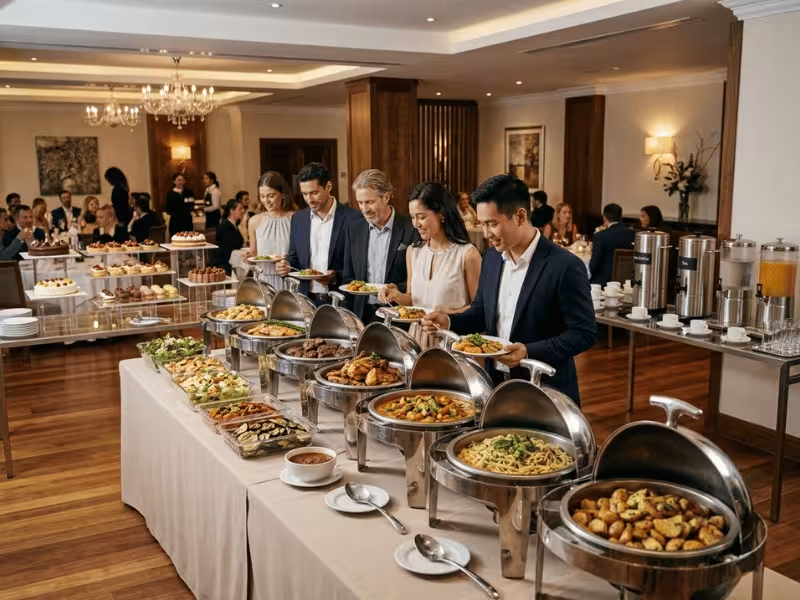
You can plan the perfect layout and still lose the night. A buffet needs someone to run it. Leave it alone, and even a smart setup falls apart within minutes.
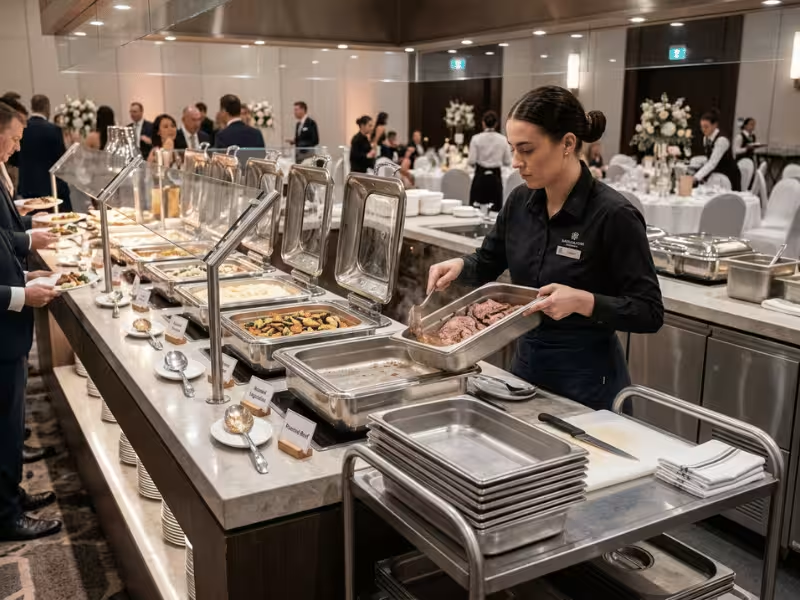
Leaving the buffet functionally unattended
A buffet is not a set-and-forget table. It needs eyes on it the whole time.
I’ve seen great spreads turn messy in fifteen minutes because nobody stood watch. Sauces drip. Serving spoons land in the wrong dish. A pan of chicken cools while everyone assumes someone else will handle it.
A good attendant does far more than refill:
- Wipes spills and straightens dishes so the spread stays clean.
- Answers guest questions about what’s in each dish.
- Keeps the line moving when someone stalls.
- Watches food temperatures and flags anything drifting warm or cold.
Plan one attendant for every 50 to 75 guests. That coverage keeps the buffet sharp all night.
Forgetting to manage the start of the line
The front of the line sets the pace for the whole thing. Leave it unmanaged, and one hesitant guest jams everyone behind them.
Put a person at the head of the line. This line manager keeps things flowing:
- Nudges hesitant guests along with a friendly word.
- Redirects people to the right starting point.
- Alerts the kitchen when a dish runs low.
For big events, release guests in stages. Call tables one at a time instead of opening the floodgates. A staged release keeps the line short and the room calm, and it stops that early crush that never fully clears.
Waiting too long to refill popular dishes
An empty pan stops the line cold. Guests hover, waiting, while a queue builds behind them.
Don’t wait for the dish to run dry. When a favorite drops to about one-third full, start the next tray. That timing gives the kitchen room to plate without a scramble.
Two habits make refills painless:
- Keep backup pans warm and ready in the back, not still in the oven.
- Swap the whole pan instead of piling fresh food on old.
Wait too long, and refilling becomes a panic. Someone runs to the kitchen, guests stand around, and the line breaks. Refill early, and nobody notices it happened.
Keeping the kitchen and floor talking
Most refill failures come down to communication. The floor knows a dish is fading, but the message never reaches the kitchen in time.
Shouting across a loud room doesn’t work. Set up something simple instead:
- A runner who carries updates between floor and kitchen.
- A radio channel for quick calls during peak service.
- A shared checklist that tracks what’s out and what’s next.
Give each person a clear role, too. When everyone knows who watches which station, gaps close before guests spot them.
A buffet lives or dies on whether someone owns the line. Design it well, then put people in charge of running it. That’s the difference between a spread that looks good at the start and one that still works at the end.
Guest Experience Mistakes That Make the Setup Feel Unfriendly
A buffet can move fast and still feel cold to your guests. These mistakes don’t slow the line, but they quietly tell people the setup wasn’t built with them in mind.
Forgetting guests with mobility needs
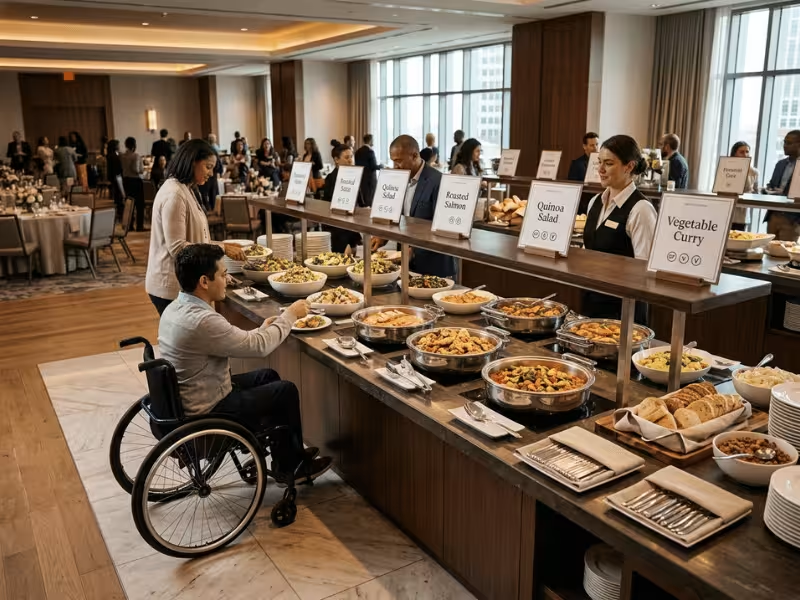
Some guests navigate the room in a wheelchair or with a walker. A buffet that ignores them sends a clear, unwelcome message.
I’ve watched people give up on a spread because they simply couldn’t reach it.
Build access in from the start:
- Leave aisles at least 36 inches wide so wheelchairs pass with room to spare.
- Keep key dishes within easy reach, not pushed to the back of a deep table.
- Skip raised platforms and steps that block the counter.
- Make signs readable from a seated height, not just eye level.
For guests who still can’t reach, offer table service. One attendant plating a plate solves the problem in seconds.
Making guests hunt for what they need
Guests don’t just want food. They want the tools to enjoy it, right where they expect them.
When someone fills a plate and then can’t find a fork, a napkin, or the sauce that pairs with the dish, the whole experience stalls. They stand there, plate in hand, scanning the room.
Keep the support items together and obvious:
- Utensils and napkins at the end of the line, where guests finish loading.
- Sauces and condiments beside the dishes they belong to.
- Labels sitting up high, not tucked under the pan.
The food might be perfect, but a missing fork is what guests remember. A few well-placed tabletop supplies keep everything within arm’s reach, and the frustration disappears.
Treating second rounds like an afterthought
Guests come back. They always do. Yet most setups plan for one pass and nothing more.
When someone wants seconds, they rejoin the dinner line and collide with people still on their first plate. The whole flow tangles again.
Give returning guests their own path. A separate seconds station, even a small one, keeps them off the main line. And pull dessert and coffee to their own table across the room.
This matters most at long events. Weddings and galas run for hours, and guests graze the whole time. A dedicated dessert and coffee spot lets them wander back at their own pace while the dinner line stays clean.
Plan for the second trip, and the room feels generous instead of rushed.
Cleanup and Breakdown Mistakes That Cost Time, Food, and Equipment
The event doesn’t end when the last guest leaves. Teardown is part of the setup, and a sloppy close undoes a smooth night fast.
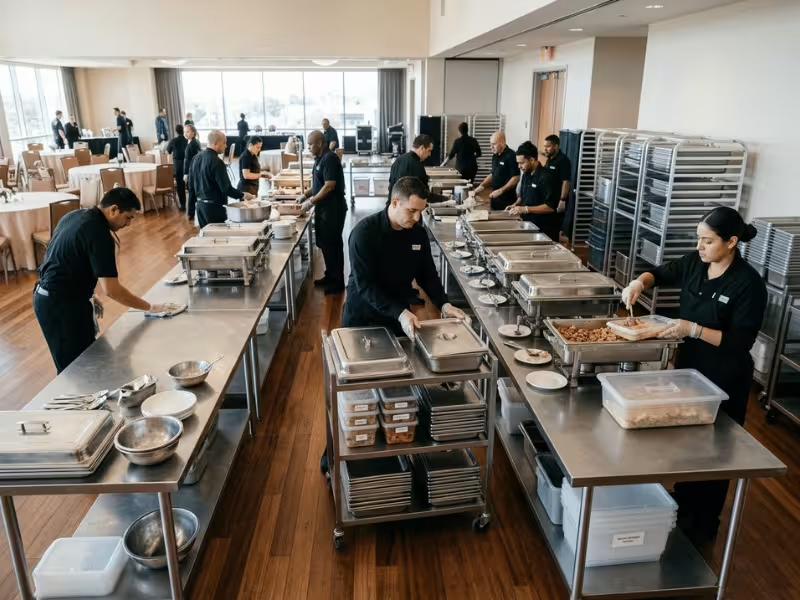
I’ve watched crews stand around at midnight, exhausted, with nobody sure who packs what. That’s the first mistake: no assigned breakdown roles. When everyone waits for someone else to start, the close drags on for hours.
Fix it before the event. Give each person a job. One handles food, one packs equipment, one clears the tables. Written roles turn a slow scramble into a quick, calm finish.
The second mistake wastes money. No food storage or donation plan means good food ends up in the trash. Decide early what you’ll refrigerate, what you’ll donate, and who picks it up. Line up containers and a local donation contact before the day, not after.
Third, watch how you pack the equipment. Toss chafing dishes, warmers, and serving pieces into a bin, and something breaks or goes missing. Pack in a set order. Nest what nests. Wrap the fragile pieces. Count everything against your inventory list before it leaves.
Tie it all together with a teardown checklist. Without one, the close runs slow and gear gets damaged. With one, your team moves through each step and nothing slips.
Plan the end as carefully as the start. A good breakdown protects your food, your equipment, and your budget, and it sends your crew home on time.
Buffet Setup Checklist for the Next Event
Run through this before every event. It catches the small gaps that turn into big problems once the room fills up. Print it, walk the space with it, and check each item off.
|
Category |
What to Confirm |
|---|---|
|
Guest count and schedule |
Peak rush headcount, not just RSVPs. Service window locked against speeches and toasts. Hold times written for each dish. Buffer built in for the toast that runs long. |
|
Room and traffic flow |
Buffet placed clear of doors, the bar, and restroom paths. Guest movement sketched with arrows. Crossing points identified and avoided. Entry and exit kept apart. |
|
Buffet layout and station order |
Plates stacked at the very start. Quick, light items first. Popular dish in the middle. Utensils and napkins at the end. Drinks and desserts pulled off the main line. |
|
Equipment and backup supplies |
Chafing fuel and ice beds checked. Right serving tool matched to each dish. Backup tools within reach. Plates, forks, and napkins at 20–30% above headcount. Power routed safely. |
|
Staffing and service control |
One attendant per 50–75 guests. A line manager at the front. Backup pans warm and ready. Kitchen-to-floor communication set up. Teardown roles assigned. |
Walk the line yourself once everything is in place. Grab a plate, move through, and reach for a spoon like a guest would. That quick test surfaces the awkward spots while you still have time to shift a table or move a dish.
One more habit worth keeping: confirm the checklist a second time about thirty minutes before doors open. Fuel burns down, ice melts, and someone always moves the plates. A final pass keeps the setup sharp right when it counts.
Quick Answers to Common Buffet Setup Questions
How many buffet stations do I need for 100 guests?
Plan for at least two stations, or one double-sided line, to keep the wait reasonable. A single line can feed 100 people, but they’ll queue for a while. If your menu is large, split the food into themed stations so guests spread out instead of bunching up.
Where should I put the plates at a buffet?
Stack plates at the very start, before the first dish. Guests need something to hold before they serve themselves. For large events, station a staff member to hand plates over so the front of the line keeps moving.
How much extra food should I plan for a buffet?
Budget 10 to 15 percent more than you would for plated service. Guests serve themselves, and they pile plates higher than any server would. Plan for that first heavy rush, not a tidy average, so you don’t run short before everyone eats.
Should the buffet be one-sided or double-sided?
For crowds over 50, go double-sided. Two lines move at once and cut the wait in half. Just mirror the dishes on both sides so nobody crosses over. For 40 guests or fewer in a small room, one side works fine.
How do I handle dietary restrictions at a buffet?
Check the guest profile before you finalize the menu, then label every dish clearly. Mark nuts, dairy, gluten, and shellfish in plain, bold text. One unlabeled dish makes a whole station useless for an allergic guest, so a small tent card goes a long way.
Should dessert be on the main buffet table or a separate station?
Give dessert its own table across the room. When sweets sit at the end of the dinner line, guests linger and the queue backs up. A separate spot keeps the main line flowing and lets people wander back at their own pace.
Final Thoughts
Get the order right, and the rest follows. Map the room first. Track how guests already move, then place the buffet where it fits that flow instead of fighting it.
Next, build the line. Set your dishes, plates, and tools in the sequence that keeps people moving.
Last, test it yourself. Grab a plate and walk through as a guest would. You’ll spot the awkward pause, the missing fork, the pinch point, while you still have time to fix it.
Do that every event, and your buffet runs smooth from the first plate to the last.