
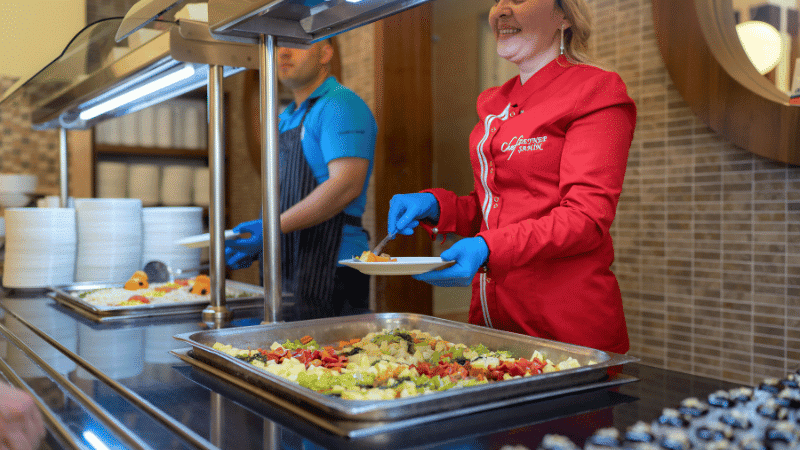
It’s 8:30 a.m. at a busy hotel. The omelet line stretches past the juice station, three people are waiting at the coffee machine, and someone reaches across your plate for the last strip of bacon. Nobody is trying to be rude. A buffet simply puts many hungry strangers in one room with shared food, shared tongs, and a clock ticking toward checkout.
That’s why buffet etiquette matters. Most of it comes down to three things: keeping shared items clean, keeping the line moving, and treating other guests and staff with respect. This guide follows a hotel buffet visit from start to finish. It covers live cooking stations, dining with kids, business breakfasts, tipping, and how customs change when you travel abroad.
Before You Head Down to the Buffet
Good buffet manners start before you leave your room. Timing matters most. Hotel breakfast rushes usually run from about 7:30 to 9:00 a.m., when business travelers and families arrive at once. If your schedule is flexible, go early or late for shorter lines and fresher trays. Also note the closing time. Arriving five minutes before service ends and filling three plates puts pressure on staff who are already clearing up.
Dress depends on the hotel. City hotels expect everyday casual clothes at breakfast. Resorts are more relaxed, but many ban wet swimsuits and bare feet indoors, because dripping swimwear creates slip hazards and damp seats. Evening buffets often have a smart-casual dress code, so check before you go.
Finally, handle the logistics. Many hotels ask for your room number, key card, or meal voucher at the entrance.
Quick prep list:
- Confirm breakfast is included in your rate
- Bring your key card or voucher
- Check opening and closing times
- Look up the dress code for dinner buffets
Finding a Table Without Claiming Territory
If a host greets you at the entrance, wait to be seated. Hosts balance tables across the room and know which sections are being cleared. If there’s no host, choose a table that fits your group. Two people at a six-seat table can leave a family of five standing with full plates.
Holding a table is where most friction happens. The simplest approach is for one person to stay seated while others get food, then trade places. If you’re dining alone, a napkin on your chair signals you’ll be back. Avoid “reserving” tables with bags, phones, or towels for people still upstairs, because it blocks seats for guests who are ready to eat. It’s also a good way to lose your phone.
For groups, ask staff before pushing tables together. They may have a better setup in mind, and moving furniture can block walkways that servers need.
|
Acceptable |
Frowned upon |
|---|---|
|
One person stays seated |
Leaving bags or towels to hold seats |
|
Napkin on your chair |
Saving tables for absent family members |
|
Asking staff to join tables |
Rearranging furniture yourself |
|
Choosing a table sized to your group |
Taking a large table for two |
How to Move Through the Buffet Line
Before you pick up a plate, take a quick walk past the stations. Seeing everything first helps you choose faster and keeps you from hovering over each dish while others wait behind you.
Plates usually mark the start of the line, and most buffets flow in one direction. At island-style or two-sided buffets, watch which way other guests move and follow them. Going straight to a quiet station, like the fruit or cereal area, is fine. Slipping into the middle of an active line to grab one item is not, because it forces everyone behind that spot to wait longer.
Once you’re in line, keep it moving. Decide quickly, and step to the side if you need a moment to think. Save conversations for the table rather than the space in front of the scrambled eggs.
If you don’t recognize a dish, read the label or ask a staff member. Don’t lift a portion to smell it or taste it at the station. Anything you touch should go on your plate.
A smooth line flow looks like this:
- Walk the buffet once without a plate.
- Pick up a clean plate at the start.
- Follow the direction of other guests.
- Serve yourself quickly and step aside to decide.
- Return utensils to their original dish.
- Head back to your table without cutting across the line.
Hygiene Habits That Protect Everyone
Use a fresh plate for every trip. A used plate carries traces of your meal. When you hold it under a serving spoon, that spoon can pick up germs and pass them to the next guest’s food. A clean plate breaks that chain.
Keep your hands off the food. Use tongs for bread, pastries, and fruit, even if you only want one croissant. Never use your own fork or spoon at the station, and never put food back once it’s on your plate. Other guests can’t know what it touched.
Report accidents instead of fixing them. If a serving spoon slides into a dish or falls on the floor, tell a staff member. Fishing it out with your fingers or returning a dropped spoon creates bigger hygiene problems than the original slip.
Stay aware of illness. Cough or sneeze away from the food, even with a sneeze guard in place. Sanitize your hands before serving yourself, since many hotels place dispensers near the entrance for this reason. If you’re genuinely sick, room service protects everyone and gives you more rest.
Portions, Seconds, and Wasting Less
The best part of a buffet is that you can go back as often as you like. Take advantage of that by starting small. Try a spoonful of anything new, then return for more of what you enjoy. You’ll taste more dishes and leave less behind.
Waste is a real issue for hotels. Food that leaves the buffet can’t be served again, so uneaten portions usually go straight into the bin. Some resorts now post reminders about waste, and a few charge guests who leave large amounts uneaten. Taking only what you’ll finish is one of the clearest signs of good buffet manners.
Takeaway is another common question. Most hotels don’t allow guests to pack buffet food to go, including fruit, muffins, and boiled eggs for later. The buffet price covers what you eat in the dining room. Some hotels do offer grab-and-go bags or takeaway boxes, so if you need a snack for a long day, ask staff first.
Pacing tips:
- Start with small tasting portions
- Visit hot and cold dishes on separate trips
- Save dessert for a final trip with a clean plate
- Ask before taking anything out of the dining room
Etiquette at Live Stations: Omelets, Carving, and Noodle Bars
Live stations have their own short queue, and a chef cooks or serves each order. Some hotels give you a number or bring the dish to your table, so listen for instructions.
Egg and Omelet Stations
Know your order before you reach the front, such as “two eggs, mushrooms, cheese, no onions.” Pointing at ingredients helps when there’s a language barrier. Mention allergies right away, since chefs often use shared pans and need to prepare a clean one. Ordering an extra omelet for your child is fine. Ordering five at peak time holds up everyone behind you, so bring family members along or return later.
Carving Stations
Let the chef slice and plate the meat. Carving knives are sharp, and chefs control portions to keep enough for later guests. Ask for your preferred cut or doneness, such as an end piece or a medium slice, and say thank you. It’s a small gesture that staff notice.
Noodle and Wok Stations
Choose your toppings, hand them to the chef, and wait for your bowl. Carry hot broth with both hands and walk slowly, since spills at these stations can cause burns.
Breakfast Buffet vs. Dinner Buffet: What Changes
Most hotel guests only experience the breakfast buffet, but dinner and special-occasion buffets follow slightly different rhythms.
Breakfast is fast and practical. Many people have meetings, flights, or tours ahead of them, so aim to finish in 30 to 45 minutes during peak hours. Be patient at shared toasters and coffee machines, which often become bottlenecks.
Dinner buffets move more slowly. Guests take more trips, servers often bring drinks, and themed nights such as seafood or holiday menus may require reservations. Lingering over coffee is fine when the room is quiet. When guests are waiting at the entrance, it’s kind to give up your table.
|
Factor |
Breakfast Buffet |
Dinner Buffet |
|---|---|---|
|
Pace |
Quick and functional |
Slow and leisurely |
|
Dress |
Casual |
Often smart casual |
|
Crowd level |
Heavy peak rush |
Steadier flow |
|
Drinks |
Self-serve coffee and juice |
Often served at the table |
|
Typical visit |
30–45 minutes |
60–90 minutes |
|
Reservations |
Rarely needed |
Common for special nights |
Taking Kids to the Buffet
Families are a big part of any hotel buffet crowd, and most staff welcome them. A little planning makes the meal easier for everyone.
Walk the line with young children. Sneeze guards and hot chafing dishes sit right at a child’s eye level, so close supervision prevents both burns and stray fingers in the food. Older kids can serve themselves while an adult stays nearby.
Teach three simple rules before you start: use the tongs, grab a new plate each time, and don’t touch unless you’re taking it. They’re easy to remember and cover most buffet hygiene.
Drink machines and dessert tables cause the most spills and sticky messes. Handle these stations for younger children. At the table, ask for a high chair or booster seat, and tell staff about big spills right away so no one slips.
Family game plan:
- Review the three rules before entering
- Keep one adult with younger kids in line
- Handle hot dishes and drink machines for them
- Ask for seating help and report spills quickly
Business Travelers vs. Vacation Guests
On weekday mornings, business travelers and vacationers share the same dining room with very different schedules.
If you’re working, arrive early and choose foods that are easy to eat neatly, like yogurt, eggs, or fruit, rather than syrup-covered pancakes before a presentation. A quick email check is fine, but a laptop spread across a four-seat table during the rush is not. Step outside for phone calls, since other guests don’t need to hear your agenda.
When eating with colleagues or clients, keep portions moderate and trips fewer. Stacked plates can create an impression you didn’t intend.
If you’re on vacation, keep in mind that weekday breakfasts often run on work schedules. Save the slow, three-coffee breakfast for later in the morning or the weekend, when tables open up.
Buffet Customs When You Travel Abroad
The core rules of fresh plates, serving utensils, and modest portions are respected almost everywhere. Still, local habits shape how a buffet feels, and noticing them helps you blend in.
|
Region or Setting |
What You May Notice |
How to Adapt |
|---|---|---|
|
Japan |
Quiet, orderly lines and small, neat portions |
Keep your voice low and your plate tidy |
|
Parts of China |
One person may bring several dishes back to share with the table |
Expect busy stations and shared plates |
|
Middle East |
Halal labels and separate stations, often for pork or alcohol |
Read labels and respect the layout |
|
Southern Europe |
Later dinner times, especially in Spain |
Check hours before assuming dinner starts early |
|
All-inclusive resorts |
Wristbands for access and multiple restaurants |
Wear your wristband and follow each venue’s rules |
These are common patterns, not rules every guest follows. When you’re unsure, watch local guests, match their pace, and ask staff.
Phones, Photos, and Personal Space
A quick photo of a beautiful dessert display is fine. Blocking the line to style a shot, leaning over open dishes, or capturing other guests without asking is not, because it slows service and can make people uncomfortable.
Keep sound off at your table. Use earbuds for videos, and take calls outside. In line, leave about an arm’s length between you and the person ahead, and never reach across someone to grab food.
Quick rules:
- Take photos quickly and from a distance
- Don’t photograph other guests without permission
- Mute your phone or use earbuds
- Give people space in line
Working With Staff and Knowing When to Tip
Buffet staff clear plates, refill drinks, restock trays, and answer questions about ingredients. Leave used plates at your table for them to collect. Never bring them back to the buffet, since serving areas are only for clean dishes and fresh food.
Simple signals help staff read your table. Place your knife and fork together on the plate when you’re finished. A napkin on your chair means you’re coming back. If you have an allergy or special diet, ask staff before serving yourself. They can check ingredients or point you to safer options, and labels don’t always list everything.
Tipping depends on where you are and how much service you receive. Always check the bill first, because a service charge may already be included.
|
Location |
Typical Practice |
|---|---|
|
United States |
About 10%, or a few dollars per person, when servers bring drinks and clear plates |
|
Japan |
Tipping isn’t customary |
|
Much of Europe |
Service is often included; rounding up is appreciated |
|
All-inclusive resorts |
Varies; small tips for attentive staff are common in many destinations |
Honest Mistakes Even Polite Guests Make
Even well-mannered guests slip up without noticing. Here are a few common ones and how to fix them:
- Refilling a used coffee mug at the shared machine. Grab a clean cup each time.
- Taking the last portion without mentioning it. Let staff know the tray is empty.
- Putting bagels in the conveyor toaster. Thick items can jam it, so ask staff for help.
- Letting the serving spoon slide into the dish. Rest the handle on the edge of the tray.
- Taking a whole bowl of shared items. Take a few jam packets or eggs, not the supply.
- Leaving a napkin-wrapped snack stash behind. Clear it up or leave nothing packed.
- Assuming “vegetarian” means allergen-free. Ask staff about specific ingredients.
- Thanking the omelet chef but not your server. Acknowledge both.
Staff see these moments every day. A quick “sorry” or “the eggs are out” goes a long way.
Hotel Buffet Etiquette FAQs
Can I take food from the hotel breakfast buffet back to my room?
Usually, no. Most hotels price buffets for eating in the dining room, and packing food to go is generally not allowed. Some hotels make exceptions for guests who are unwell or offer grab-and-go bags for early departures. If you need something to take with you, ask staff first instead of quietly wrapping items in a napkin.
How many times can I go back to a buffet?
As many times as you like. Returning often is the whole idea of a buffet, and small, frequent trips are better than one overloaded plate. Just grab a clean plate each time. At busy breakfasts, try not to linger at the stations so other guests can serve themselves quickly.
Is it rude to leave food on my plate at a buffet?
A small amount is fine, especially if you tried something new and didn’t enjoy it. Leaving large portions untouched is seen as wasteful, since buffet food can’t be served again. Taking smaller amounts at first is the easiest way to avoid this. You can always return for more of what you like.
Do you tip at an all-inclusive resort buffet?
Tipping isn’t required at most all-inclusive resorts, because service is typically built into the price. In many destinations, such as Mexico and the Caribbean, guests still leave small tips for attentive servers who bring drinks and clear plates. Check your resort’s policy, as a few properties discourage tipping altogether.
Can I bring outside food or drinks to a hotel buffet?
Generally, no. Hotels control what’s served for food safety and liability reasons. Exceptions are usually made for baby food, formula, or medically necessary items. If you have a specific dietary need, tell staff when you arrive. Many hotels can prepare a suitable dish or guide you to safe options on the buffet.
What should I do if I have a food allergy at a buffet?
Speak with staff before serving yourself. Buffet labels help but aren’t always complete, and shared utensils can transfer allergens between dishes. Many hotels can prepare a separate plate from the kitchen, which is safer than choosing from open trays. At live stations, mention your allergy before the chef starts cooking.
Can non-guests eat at a hotel breakfast buffet?
Often, yes. Many hotels open their breakfast buffet to outside diners for a set price. Some limit access to registered guests, especially at resorts or during busy seasons. Call ahead or ask at the front desk. If you’re a guest bringing a visitor, let staff know so the meal can be charged correctly.
How long can I stay at a buffet table?
It depends on how busy the room is. During the breakfast rush, 30 to 45 minutes is considerate. When the dining room is quiet, you can relax longer over coffee. If guests are waiting at the entrance and you’ve finished eating, give up your table so staff can seat them.
Is it okay to share buffet food with someone who didn’t pay?
Generally, no. Buffet pricing is per person, so sharing food with someone who hasn’t paid is usually against hotel policy. Young children may eat free or at a reduced rate, depending on the hotel. If a companion wants to join you, ask staff about adding a meal to your bill rather than splitting your plate.
Enjoy the Spread
Good hotel buffet etiquette comes down to three habits: keep the line moving, keep shared items clean, and take only what you’ll eat. Everything else builds on those basics.
You don’t need to be perfect to be a good buffet guest. Stay aware of the people around you, and when you’re unsure, watch others or ask staff. Then relax and enjoy the meal.