

FF&E shapes almost every moment a guest experiences, from the first step into your lobby to a good night’s sleep in the room. It also eats up one of the largest slices of any hotel development or renovation budget. Yet many teams treat it as a last-minute shopping list rather than a capital decision that deserves real planning.
That gap causes real problems. Owners confuse FF&E with OS&E, underestimate freight and lead times, and end up rushing purchases that hurt both budgets and reviews.
This guide fixes that. You’ll get a clear definition of hotel FF&E, a breakdown of what actually counts as FF&E, and a plain-English comparison with OS&E. From there, we’ll cover how to budget it properly and how to choose a supplier you can trust. Read it as a decision-support tool, not a dictionary entry.
What Is Hotel FF&E?
FF&E stands for Furniture, Fixtures, and Equipment. In hospitality, it covers the movable and semi-fixed items a hotel needs to operate and deliver a comfortable stay: beds, seating, casegoods, lighting, TVs, and more.
The key distinction is what FF&E is not. It isn’t part of the building structure, and it isn’t a consumable supply. That line matters because it determines how the cost is treated on your books.
FF&E definition (snippet-ready)
Hotel FF&E is the collection of durable, movable, and semi-fixed items—furniture, fixtures, and equipment—that a hotel needs to function and to give guests a comfortable experience.
Why FF&E is a capital investment, not an expense
FF&E is treated as Capital Expenditure (CapEx) and depreciated over its useful life, typically 5 to 10 years. That’s different from a running cost you expense in the month you incur it. Because it’s capitalized, FF&E belongs in your capital budget and planning cycle, and it drives every budgeting decision that follows.
For most projects, FF&E is one of the largest line items in development or renovation spend. Getting the classification right protects your budget and your tax treatment.
Mini-takeaway: FF&E is the durable, movable gear that makes a hotel work, and it’s planned as capital, not as a monthly expense.
What Does FF&E Include in a Hotel?

Grouping FF&E into clear categories helps you budget, track assets, and plan replacements. Here are the five core categories, each with real hotel examples.
Furniture
- Beds, headboards, and mattresses
- Sofas, armchairs, and lounge seating
- Desks, tables, and nightstands
- Wardrobes, dressers, and casegoods
Fixtures
- Lighting fixtures and lamps
- Mirrors and framed wall units
- Built-in shelving and headboard panels
- Drapery tracks and window treatments
Equipment
- Televisions and in-room entertainment
- Mini-fridges, coffee makers, and hairdryers
- HVAC units and thermostats
- Safes and electronic door locks
Soft Furnishings
- Curtains and blackout drapes
- Upholstery fabrics and cushions
- Rugs and carpets
- Decorative bedding layers
Art & Décor
- Wall art and sculptures
- Decorative objects and vases
- Planters and greenery
- Signage with a design function
What usually gets misclassified
Grey areas trip up budgets. Is a built-in panel a fixture or part of the building? Is a large appliance FF&E or a consumable supply? A simple rule: if it’s movable or replaced on a renovation cycle, it’s usually FF&E. If it’s bolted into the structure permanently, it likely belongs to the building.
Mini-takeaway: Sorting FF&E into five categories makes budgeting and replacement planning far easier to manage.
Hotel FF&E Examples by Area
FF&E needs shift dramatically by space. A budget that treats every zone the same will leave gaps. For each area below, note the typical items, the procurement priority, and the mistake buyers make most often.
|
Area |
Typical FF&E Items |
|---|---|
|
Guest Rooms |
Beds, mattresses, nightstands, desks, chairs, TVs, mini-fridges, lamps, drapes, luggage racks |
|
Lobby |
Reception desk, lounge seating, coffee tables, statement lighting, rugs, art, planters |
|
Restaurant & Bar |
Dining tables, chairs, banquettes, bar stools, pendant lighting, service stations |
|
Back of House |
Staff lockers, office desks and chairs, shelving, storage units, laundry and kitchen equipment |
Guest Rooms
Guests spend the most time here, so this is where reviews are won or lost.
- Procurement priority: durability and comfort, especially mattresses and casegoods that face constant turnover.
- Common mistake: buying residential-grade furniture that looks fine on day one but fails under commercial use.
Lobby
The lobby sets the first impression and handles heavy foot traffic all day.
- Procurement priority: design impact balanced with hardwearing materials.
- Common mistake: over-investing in fragile “showpiece” items that wear quickly or drift from brand standards.
Restaurant & Bar
Food and beverage spaces take the hardest daily beating of any zone.
- Procurement priority: stain resistance, easy cleaning, and stable, sturdy construction.
- Common mistake: choosing finishes that look great but can’t survive spills, cleaning chemicals, and constant use.
Back of House
Often forgotten, back-of-house FF&E keeps operations running smoothly.
- Procurement priority: reliability and ergonomics to protect staff productivity.
- Common mistake: leaving BOH out of the plan, then scrambling with rushed, overpriced buys at the end.
Mini-takeaway: Plan FF&E space by space so no zone, especially back of house, slips through the cracks.
FF&E vs OS&E: What’s the Difference?
Here’s the one-line answer: FF&E is long-lasting capital assets, while OS&E is frequently replaced operating supplies. Getting this right changes how you budget and account for each.
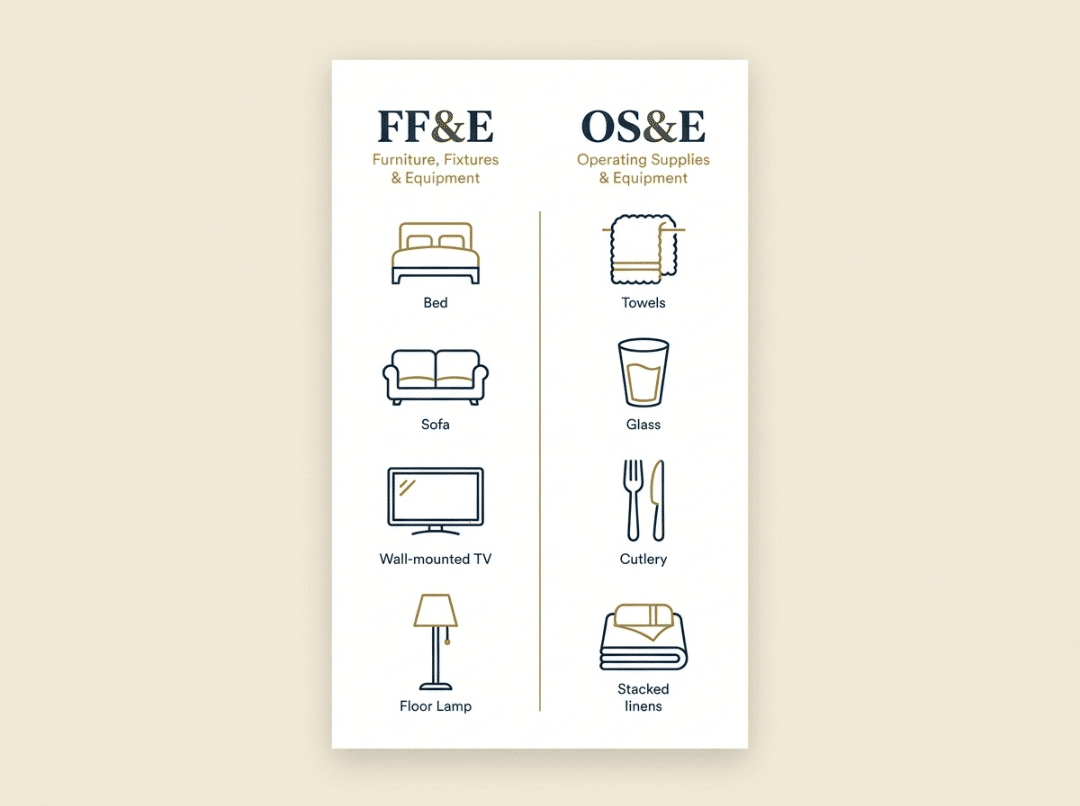
Practical hotel examples make it clear:
- FF&E: beds, sofas, TVs, lighting, casegoods
- OS&E: towels, linens, glassware, cutlery, amenities
|
Factor |
FF&E |
OS&E |
|---|---|---|
|
Full name |
Furniture, Fixtures & Equipment |
Operating Supplies & Equipment |
|
Examples |
Beds, sofas, TVs, lighting |
Towels, glassware, cutlery, linens |
|
Lifespan |
5–10 years |
Months to a couple of years |
|
Accounting |
Capital Expenditure (CapEx) |
Operating Expense (OpEx) |
|
Replacement |
Renovation cycles |
Ongoing, frequent |
Why the distinction matters for budgeting
FF&E sits in capital planning and depreciation. OS&E is operating setup and recurring spend. Mix them up and you distort your budget, your tax treatment, and your reserve planning. Owners who blur the line often underfund one and overspend on the other.
For a full breakdown, see our FF&E vs OS&E deep-dive and OS&E procurement guide.
Mini-takeaway: If it lasts years and gets depreciated, it’s FF&E. If it’s consumed or replaced often, it’s OS&E.
Why FF&E Matters in Hotel Budgeting and Operations
FF&E is more than a furnishing exercise. It drives outcomes owners and operators track every quarter.
- Opening readiness: late FF&E delivery can push back your launch date and delay revenue.
- Replacement frequency: quality, contract-grade choices reduce how often you re-buy.
- Maintenance costs: durable items mean fewer repairs and less downtime.
- Guest review quality: comfort and finish directly shape ratings and repeat bookings.
- Cross-department coordination: FF&E decisions pull in design, operations, finance, and procurement at once.
The cost of getting FF&E wrong
Picture a property that installs residential-grade lobby seating to save money. Within a year, upholstery frays and frames loosen. Guests notice, reviews slip, and the team re-buys at full price, this time with rush freight. One weak decision cascades into complaints, replacement costs, and lost margin.
Mini-takeaway: Smart FF&E decisions pay back through faster openings, better reviews, and lower lifetime cost.
How to Budget for Hotel FF&E
Budgeting is where thin planning shows up fast. Treat FF&E as CapEx, and if you run a branded property, maintain an FF&E reserve fund, often 3–5% of gross revenue set aside each year for future replacements.
Build a line-item FF&E schedule
Create a schedule that lists every item, quantity, unit cost, and area. This document becomes your single source of truth for procurement, budgeting, and tracking. If you want a starting point, use our Hotel FF&E checklist.
Account for hidden costs
Product price is never the full price. Budget the landed cost:
- Freight, shipping, and import duties
- Installation and assembly
- Warehousing and storage
- Contingency of 5–10%
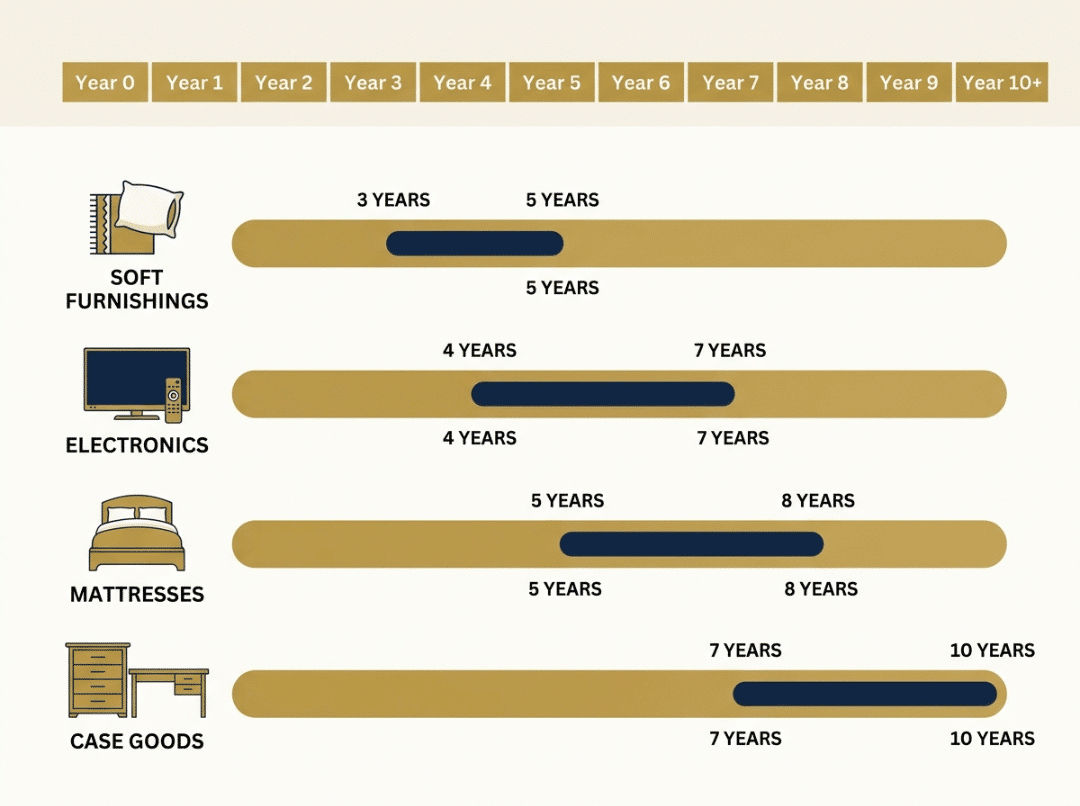
Plan around replacement cycles
Different items wear at different rates. Forecasting replacements prevents surprise capital outlays.
|
Item Type |
Typical Replacement Cycle |
|---|---|
|
Soft furnishings (drapes, upholstery) |
3–5 years |
|
Case goods and hard furniture |
7–10 years |
|
Electronics and equipment |
4–7 years |
|
Mattresses |
5–8 years |
New opening vs renovation budgeting
The two scenarios call for different tactics.
- New opening: full procurement, longer lead times, and phased delivery to match construction milestones.
- Renovation: prioritize worn or dated items, work around live operations, and manage guest disruption.
For a deeper walkthrough, see our hotel FF&E budgeting guide.
Mini-takeaway: Budget FF&E as capital, forecast replacements by cycle, and always include freight, install, and contingency.
How to Choose the Right Hotel FF&E Supplier
Your supplier can make or break the timeline, quality, and budget. Use this checklist to vet candidates.
- Hospitality experience: they understand contract-grade durability and brand standards.
- Product quality and compliance: materials meet fire safety and commercial-use standards.
- Customization capability: they can deliver bespoke pieces that match your design intent.
- Lead times: a proven, on-time delivery track record you can verify.
- Logistics support: warehousing, consolidated shipping, and installation.
- After-sales service: warranties, spare parts, and responsive support.
Before you sign
Request samples, check references, and review past hospitality projects. A slightly higher unit price from a proven supplier often saves money over the asset’s life. See our supplier selection guide for a full evaluation framework.
Mini-takeaway: Prioritize hospitality expertise, compliance, and reliable delivery over the lowest quote.
Common Hotel FF&E Procurement Mistakes
Even experienced teams stumble here. Watch for these five, each with the fix.
- Choosing residential-grade over contract-grade.
- Consequence: cheaper upfront, but it fails durability and compliance, forcing premature replacement.
- Fix: specify contract-grade and confirm commercial standards before ordering.
- Underestimating lead times.
- Consequence: a delayed opening, with lost revenue for every day the launch slips.
- Fix: confirm production and shipping windows early, and build in a buffer.
- Budgeting product price only.
- Consequence: freight, duties, and installation blow a tight budget late in the project.
- Fix: budget the full landed cost plus a contingency.
- Forgetting back-of-house items.
- Consequence: last-minute gaps and rushed, overpriced purchases.
- Fix: include BOH in the FF&E schedule from day one.
- Using too many suppliers.
- Consequence: fragmented logistics, inconsistent quality, and blurred accountability.
- Fix: consolidate where possible for tighter coordination and better leverage.
Mini-takeaway: Most FF&E mistakes trace back to weak planning, so build detailed schedules and vet suppliers early.
Frequently Asked Questions
What does FF&E stand for in hotels?
FF&E stands for Furniture, Fixtures, and Equipment: the movable and semi-fixed items a hotel needs to operate and deliver a comfortable guest experience.
Is hotel FF&E a capital expense?
Yes. FF&E is treated as Capital Expenditure (CapEx) and depreciated over its useful life, typically 5 to 10 years.
What’s the difference between FF&E and OS&E?
FF&E covers long-lasting capital assets like furniture and equipment. OS&E covers frequently replaced consumables like linens, towels, and glassware. FF&E is CapEx; OS&E is an operating expense.
Does hotel FF&E include kitchen equipment?
Larger, durable appliances usually fall under FF&E, while small utensils and consumable items are typically classified as OS&E.
How often should hotel FF&E be replaced?
Most FF&E lasts 5 to 10 years. Soft furnishings often need replacing every 3 to 5 years, while hard casegoods can last up to a decade with proper care.
What’s included in a hotel FF&E budget?
Product cost plus freight, duties, installation, warehousing, and contingency—the full landed cost, not just the sticker price.
Mini-takeaway: Clear answers to these questions keep your classification, budgeting, and sourcing decisions consistent.
Conclusion
FF&E is one of the most important investments you’ll make in your property. It defines guest comfort, protects your asset value, and carries long-term budget impact through its 5-to-10-year replacement cycles.
Keep these rules front and center:
- Treat FF&E as CapEx, not a monthly expense.
- Plan area by area so no zone gets missed.
- Separate FF&E from OS&E to protect your budget.
- Forecast replacements early using known cycles.
- Choose suppliers with proven hospitality experience.
Your next step: build a detailed, line-item FF&E schedule for your next project and use it as the single source of truth for budgeting and procurement. A well-planned FF&E strategy will pay back for years.