
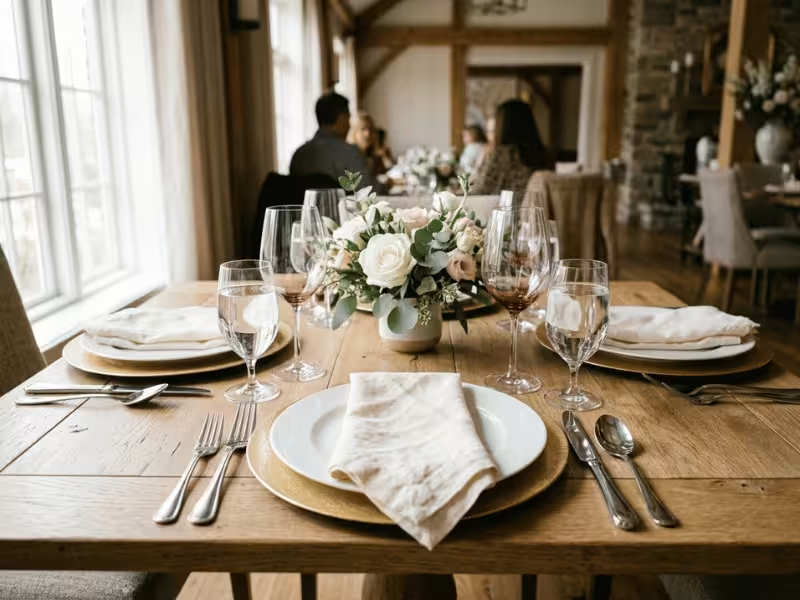
You’re about to host dinner. The food is ready, but the table stops you cold. Where does the fork go? Does the knife blade face in or out? How many glasses make sense?
Many people feel the same way. Some worry a messy table will look rude. Others can’t tell a casual setting from a formal one. The good news is that you don’t need to memorize an etiquette book.
Table setting still matters, but it isn’t a fussy ritual. A well-set table cuts confusion and makes the meal easier to enjoy. I’ll start with the core logic that answers most questions. Then I’ll show you how to adjust for casual, informal, and formal meals, what to do with a small table or mismatched dishes, and how to pull it all together in five minutes flat.
The Three Rules That Solve Most Table Setting Questions
When friends call me in a panic before a dinner party, I don’t send them a diagram. I give them three rules:
- Solids go on the left. That covers your bread plate and forks.
- Liquids go on the right. Your water glass, wine glass, and coffee cup all belong there.
- Utensils follow the order of use. Work from the outside in toward the plate.
The “outside in” idea is easy to picture. Imagine your guest sitting down. For the first course, they reach for the utensil farthest from the plate. With each new course, they pick up the next one in. So when you set the table, plan the meal backward. Put the tools for the last course closest to the plate and the tools for the first course on the outside. Nobody has to guess, and nobody grabs the wrong fork.
A word of caution, though. These rules tell you where things go. They don’t tell you how many things to put out. I’ve seen hosts lay out three forks for a meal that needed only one. That doesn’t look formal. It looks confusing.
Start with your menu instead. Serving a salad and then pasta? Set a salad fork, a dinner fork, and a knife. Passing dishes family-style on a weeknight? One fork, one knife, and a spoon if the meal calls for it. Set the table for the food you’re serving, not to impress anyone.
How a Proper Place Setting Is Built
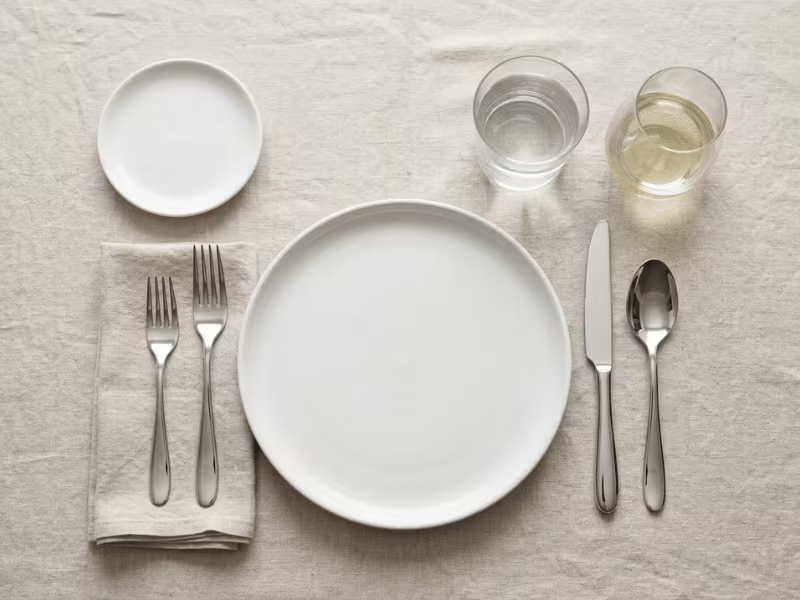
Once you know the three rules, the rest comes down to the pieces themselves. I build a place setting the same way every time, starting from the plate and moving outward.
Plates and Bowls: Start at the Center
The dinner plate anchors the whole setting. Place it first, centered in front of the chair, and build everything else around it. The bread plate goes above the forks, a little to the left.
Salad plates and soup bowls only show up when you serve those courses. For a casual meal, set the salad plate to the left of the forks or right on top of the dinner plate. A soup bowl usually sits on the dinner plate and gets cleared before the main course.
Chargers are the large decorative plates you see at weddings and fancy dinners. They frame the setting and hold other dishes between courses, and most hosts clear them before the main course. They’re a formal tool, not a requirement. At a family dinner, leave them in the cupboard.
Where the Flatware Goes
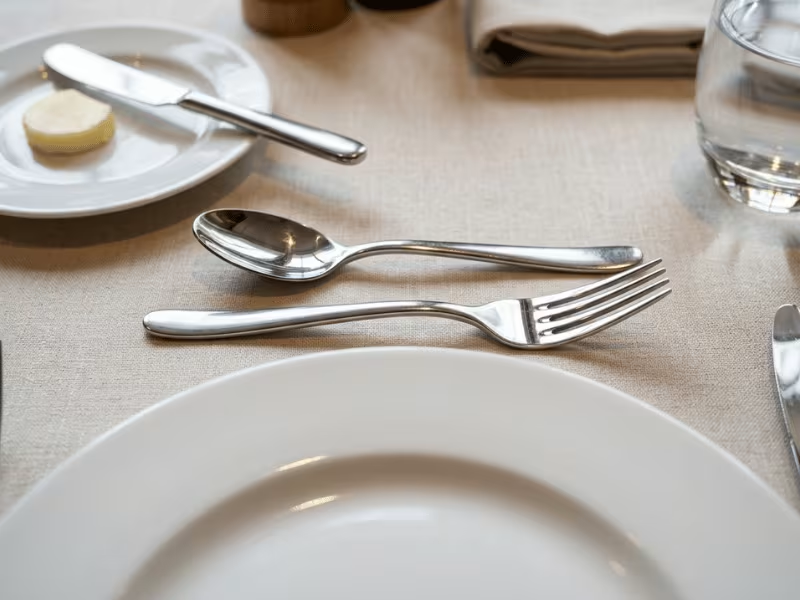
Forks sit on the left side of the plate. Knives and spoons sit on the right, with the spoon outside the knife. Always turn the knife blade toward the plate. It’s an old courtesy that still makes sense, since a blade facing your neighbor looks a little unfriendly.
Dessert utensils work differently. Lay them horizontally above the plate. The dessert fork goes closest to the plate with its handle pointing left, and the dessert spoon sits just above it with its handle pointing right. Each one slides down easily when dessert arrives. If you use a bread plate, rest a small butter knife across it at a slight angle.
Here’s the habit I push hardest: set only what the meal needs. No soup? Skip the soup spoon. If you’re building or refreshing a collection, well-made tableware in a simple, versatile style will cover almost every meal without crowding the table.
Glassware Without the Guesswork
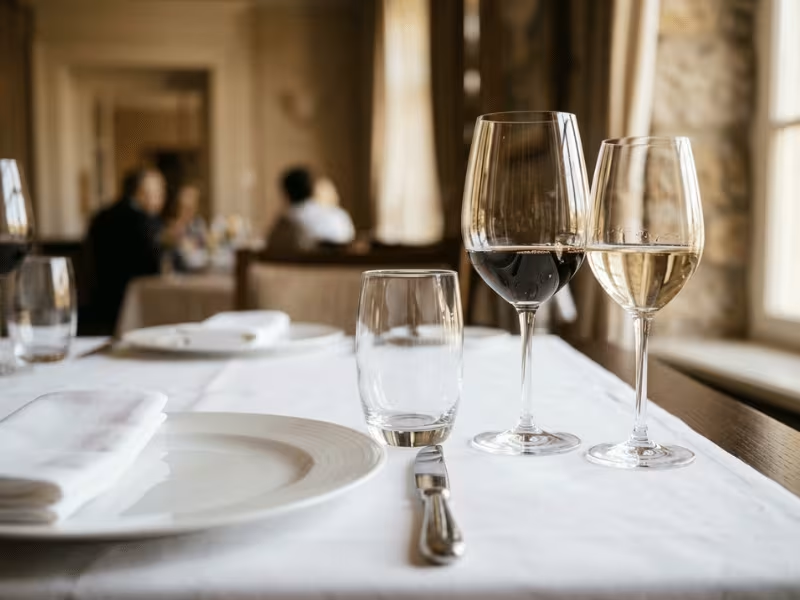
The water glass sits just above the tip of the dinner knife. Use it as your starting point. If you serve wine, set the wine glass to the right of the water glass, angled slightly down toward the table’s edge. With more than one wine, keep going in that diagonal line, in the order you’ll pour. Every glass stays easy to reach without anyone stretching across the plate.
One firm rule: never set more glasses than you plan to fill. An empty champagne flute just crowds the table and leaves guests wondering what they missed.
Napkins and Table Linen
Napkins are where you can relax a bit and have some fun. For casual meals, fold the napkin to the left of the forks or tuck it under them. For formal dinners, place it in the center of the plate or charger. That signals the setting is complete and ready.
Cloth napkins feel special and cut down on waste. Paper works fine for weeknights, kids’ meals, or messy food like ribs and tacos. Neither choice is wrong.
Your linens don’t need to match, either. I often mix two or three napkin colors on purpose. Stick to a loose color family, or repeat the same fold, and the table will look deliberate rather than random.
Give Everything Room to Breathe
A table can follow every rule and still feel cramped, so the last step is spacing. Set each plate about one inch from the table’s edge, and give each guest about 24 inches of width so elbows don’t collide.
Keep centerpieces low, under 12 inches, so people can see each other. If the table starts to feel crowded, remove something. Candles, extra serving dishes, and bulky décor are the easiest pieces to cut. Comfort matters more than decoration.
Casual, Informal, and Formal Table Settings: What Actually Changes
All three styles follow the same basic rules. The real difference is how many courses you serve and how many pieces each guest needs.
Casual Table Setting
This is the setting I use most nights, and it’s the one most people actually need. Put a dinner plate in the center. Lay a fork on the left and a knife on the right, blade facing in. Add a spoon only if you’re serving soup or something saucy. Fold a napkin beside the fork and set one glass above the knife.
That’s it. Five pieces, maybe six. It works for weeknight meals, family dinners, and takeout nights when you still want everyone to sit down together. It doesn’t look bare. It simply looks ready for dinner.

Informal Table Setting
Informal sits one step above casual. I reach for it when friends come over or when I host a small birthday meal.
The big shift is that you start thinking in courses. If salad comes first, add a salad fork outside the dinner fork. Add a second glass, too, usually a wine glass to the right of the water glass. You might include a soup spoon if soup opens the meal, or a dessert spoon above the plate.
The goal is simple. Each guest should find exactly what they need for each course, with nothing extra. The table feels thoughtful without feeling stiff.
Formal Table Setting
Formal settings have a reputation problem. People picture silverware lined up like surgical tools and assume the point is to show off. In my experience, it works the other way around. When you serve four or five courses, every piece has a job, and the layout quietly tells guests what comes next.
Start with a charger under the dinner plate. Set forks on the left and knives and spoons on the right, in order of use. Lay dessert utensils horizontally above the plate. Add a bread plate with a butter knife above the forks, and line up the glasses in a diagonal on the right. For larger groups, place cards stop guests from hovering and let you seat people who’ll enjoy talking to each other.
Even here, nothing should appear just for looks. If a course isn’t on the menu, its utensil doesn’t belong on the table.
A Simple Comparison Table
Treat this chart as a starting point, then adjust for your menu. A casual dinner with soup still needs a spoon. A formal meal without dessert doesn’t need dessert utensils. Let the food make the final call.
|
Item |
Casual |
Informal |
Formal |
|---|---|---|---|
|
Dinner plate |
✓ |
✓ |
✓ |
|
Charger |
— |
— |
✓ |
|
Salad plate or soup bowl |
Optional |
As needed |
✓ |
|
Bread plate and butter knife |
— |
Optional |
✓ |
|
Dinner fork and knife |
✓ |
✓ |
✓ |
|
Salad fork |
— |
✓ |
✓ |
|
Soup spoon |
If needed |
If needed |
If soup is served |
|
Dessert utensils (above plate) |
— |
Optional |
✓ |
|
Glasses |
1 |
2 |
2–4 |
|
Napkin |
Paper or cloth, beside fork |
Cloth or paper |
Cloth, on plate or charger |
|
Place cards |
— |
— |
Optional |
Common Table Setting Mistakes to Avoid
The mistake I see most often is the “everything drawer” table. A host lines up every fork, knife, and spoon they own, even for a simple pasta dinner. Guests stare at the row and wonder where to start. Match the flatware to the menu instead.
A few other slips show up again and again:
- Knife blade turned outward. Always point the cutting edge toward the plate.
- Glass crowding. Three or four glasses jammed above one plate get knocked over fast. Set only what you’ll fill.
- Dessert fork in the main lineup. A guest may grab it for the salad and end up without one later. Place it above the plate, or bring it out with dessert.
- Ignoring comfort. Squeeze eight chairs around a table built for six, and people bump elbows all night. If someone has to move a vase just to talk, the table isn’t doing its job.
A few myths are worth letting go, too. You don’t need a matching set. You don’t need a formal setting every time you eat, and one would feel strange at a Tuesday taco night. And the “right” way changes from place to place. In parts of Europe, hosts often set forks tines down. In Japan, chopsticks rest on a small holder in front of each diner.
Buffet and family-style service follow their own logic. Food moves to a shared space, so the place setting gets simpler and the serving area does more of the work. That’s where pieces from a tabletop supplies collection earn their spot, keeping dishes organized and easy to reach. Treat every rule as a guide for clarity, not a test your guests will grade.
Basic Table Etiquette Once Everyone Sits Down
A well-set table does half the work. The rest happens once people take their seats, and it comes down to a few easy habits.
Start with the napkin. Unfold it across your lap as soon as you sit. If you step away mid-meal, leave it loosely on your chair. When you finish, place it to the left of your plate.
Pass dishes in one direction. I always pass to the right, counterclockwise around the table. Platters don’t collide, and nobody ends up holding two bowls at once. Salt and pepper travel together, even if someone asks for only one.
Let your utensils signal. Cross your fork and knife on the plate while you pause. When you’re done, lay them side by side, pointing toward 4 o’clock. A good host reads that cue and clears your plate without asking.
Keep phones off the table. If you’re expecting an important call, mention it early and step away to take it. Even a face-down phone tells people they come second.
Handle spills calmly. Blot, offer a fresh napkin, and keep the conversation going. As a host, I laugh it off right away. Your reaction matters far more than the stain.
How to Set a Table in Under Five Minutes
Some nights, guests are ten minutes away and the table is still covered in mail. That’s when I use this quick-reset routine. It keeps every core rule in place and simply cuts the extras.
- Clear and wipe the surface. Move everything off the table and give it a quick wipe.
- Place the plates first. Center one plate at each seat, about an inch from the edge.
- Add forks on the left. Include a salad fork on the outside only if salad is on the menu.
- Set knives and spoons on the right. Blade toward the plate, and a spoon only if the meal needs one.
- Put the glass above the knife tip. Add a wine glass to its right if you plan to pour.
- Finish with napkins. Fold one beside each fork or lay it on the plate.
Before anyone sits down, step back and check three things: utensils run from the outside in, every glass sits on the right, and nothing is on the table that won’t get used.
Quick Answers to Common Table Setting Questions
Which side does the fork go on?
The left. If you serve salad first, the salad fork goes on the outside. The dessert fork is the one exception, since it rests above the plate.
Where does the napkin go in a formal place setting?
In the center of the plate or charger. For casual meals, fold it to the left of the forks or tuck it underneath them.
How many glasses should be on the table?
Only as many as you plan to fill. For most dinners, that’s a water glass plus a wine glass if you’re pouring. Formal meals may call for three or four in a diagonal line.
Is a charger necessary for a formal dinner?
No. It adds polish, but a formal dinner works fine without one. If your table feels tight, skip it. Nobody will notice.
Where do dessert utensils go?
Horizontally above the dinner plate, fork closest to the plate. On a casual night, you can bring them out with dessert. If you’re serving a spread of sweets for a crowd, a tiered piece from a dessert stand series keeps treats at eye level and frees up space at each seat.
What if I don’t have matching dishes?
Use what you have and give it one common thread, like a repeated napkin color, fold, or plate style. I often mix plates on purpose because it makes the table feel warmer and more personal.
A Good Table Is a Clear Table
You don’t need to know the name of every fork to set a great table. Remember the three core rules: solids on the left, liquids on the right, and utensils in the order guests will use them. They’ll guide you through almost any meal.
A Tuesday dinner can look just as polished as a holiday feast. One plate, the right flatware, a glass in its place, and a neatly folded napkin show your guests you care.
When I help someone set a table, I ask one question: does this piece help with the meal? If not, it goes back in the drawer. Set the table for the food and the people around it. Then sit down and enjoy the meal.