
Most buyers start with a pattern they like and a price that fits. In commercial food service, that approach usually backfires—tarnished pieces within six months, bent forks inside a year, and an unplanned replacement order sooner than any budget allowed. After decades in hotel-supplies manufacturing, we can tell you that the right decision starts somewhere else entirely.
The smart flatware choice begins with material grade, weight, and finish—matched to how your operation actually runs. Once you know what your service style demands, selecting a pattern becomes the easy last step.
This guide breaks down everything a procurement professional needs: material grades, weight categories, finishes, essential and specialty pieces, how to match flatware to your setting, supplier selection, and commercial care protocols. By the end, you’ll know exactly what to specify and why.
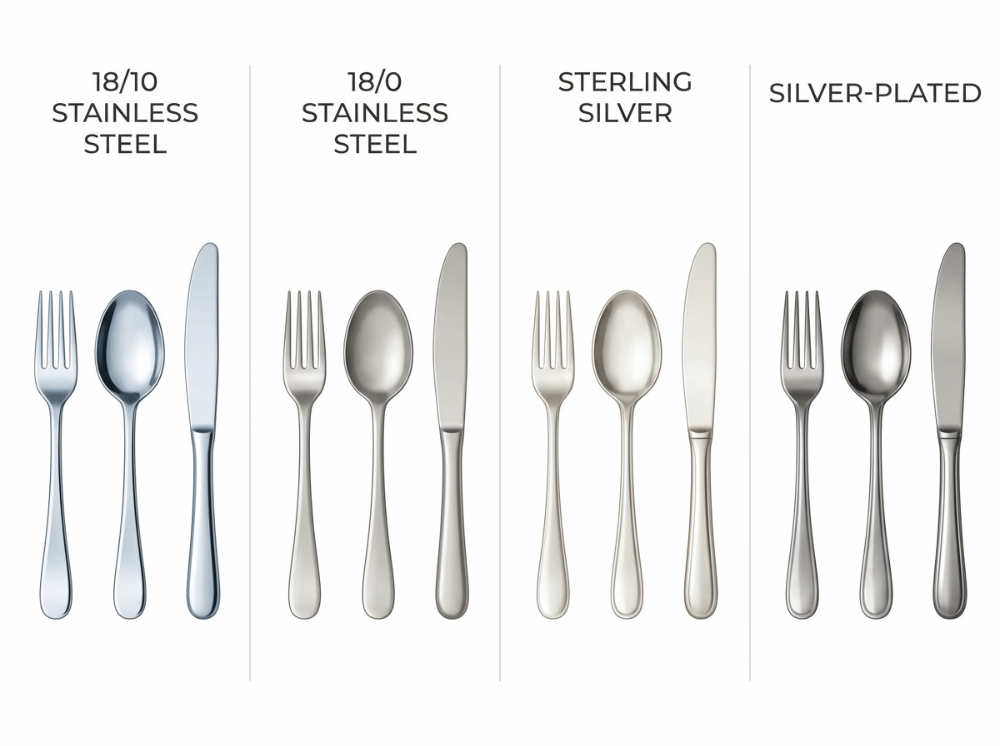
Quick answer: Flatware falls into four material grades—18/10 stainless steel, 18/0 stainless steel, sterling silver, and silver-plated. For most hospitality operations, 18/10 stainless steel offers the best balance of durability, appearance, and value, while 18/0 works well where budget or loss control is the priority. Weight, finish, and construction (forged vs. stamped), then determine long-term performance.
Choosing Flatware by Material and Quality
The numbers stamped on flatware (18/10, 18/0) refer to the percentages of chromium and nickel in the stainless steel alloy. Chromium provides rust and corrosion resistance. Nickel adds luster and durability. The higher the nickel content, the better the flatware holds up in demanding service.
18/10 Stainless Steel
18/10 stainless steel contains 18% chromium and 10% nickel. It’s the premium standard for commercial flatware and the grade you’ll find across fine dining rooms and four- and five-star hotels.
The nickel content delivers a brighter, more consistent finish. It resists bending, withstands corrosion, and performs reliably during high-volume commercial dishwasher cycles. When longevity and presentation both matter—as they do in most hospitality settings—18/10 is the right specification. Our stainless steel flatware collection centers on this grade for exactly that reason.
18/0 Stainless Steel
18/0 stainless steel uses 18% chromium and no nickel. That makes it more affordable, but also more prone to bending and less resistant to corrosion than 18/10.
It has one practical advantage: 18/0 is magnetic, making it compatible with magnetic flatware retrievers. That’s a real operational benefit for high-turnover dining halls, school cafeterias, and fast-casual concepts where flatware loss is a persistent cost. Choose 18/0 when the budget leads the decision or when the risk is high. For upscale service, stay with 18/10.
Sterling Silver
Sterling silver is 92.5% pure silver alloyed with 7.5% copper, typically stamped “925” or “Sterling.” It offers a depth of shine and weight that stainless steel can’t replicate, which is why it remains a fixture in formal private dining and luxury hotel settings.
The tradeoff is labor. Certain foods—eggs, tomatoes, salad dressings, salty items, mustard, and vinegar—accelerate tarnishing on contact. Sterling requires regular polishing, careful storage, and hand-washing protocols. For most operations, that upkeep cost makes it impractical. For luxury estates and high-end event services, it remains unmatched.
Silver-Plated Flatware
Silver-plated flatware is a base metal—usually brass or nickel—coated with a thin layer of silver by electroplating. These pieces are typically marked “EPNS” (Electroplated Nickel Silver) or “EP” (Electroplate).
Plated flatware costs less than sterling upfront, but the silver layer wears away with regular washing, eventually exposing the base metal. It photographs well and looks elegant early on, yet it won’t survive daily commercial service. Reserve it for occasional-use and special-event settings rather than everyday rotation.
Flatware Weight Categories: Medium, Heavy, and Forged
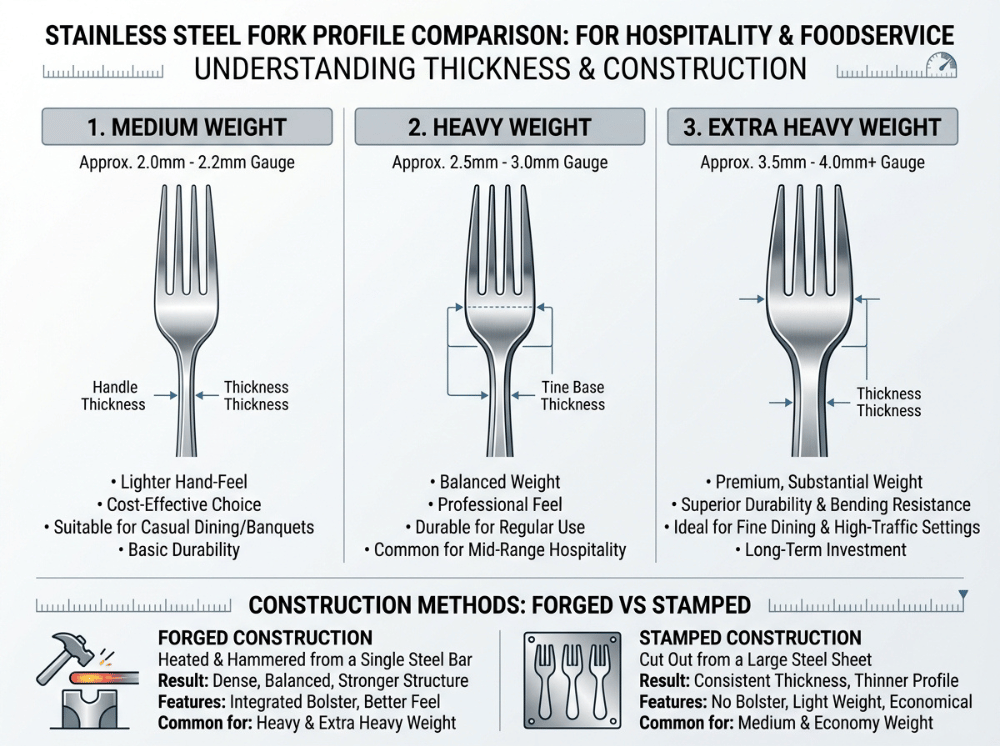
Weight is determined by the gauge (thickness) of the steel, not the material grade. Two forks stamped 18/10 can feel completely different in the hand. For procurement, weight is where perceived quality and durability meet.
- Medium weight: Thinner stock, more flexible, and the most economical option. A sound fit for cafeterias, institutional dining, and budget-conscious casual concepts.
- Heavyweight: Thicker stock with a more substantial feel. Well-suited to hotel all-day dining, banquets, and mid- to upscale restaurants where guests notice the difference.
- Extra heavy weight: The most substantial gauge, signaling premium service. Reserved for fine dining and luxury hotel table settings.
Forged vs. stamped is the other key distinction. Stamped flatware is punched from flat sheet steel—lighter and cheaper. Forged flatware is shaped from a single thick billet, resulting in better balance, consistent weight distribution, and a pattern that wraps around all sides of the handle. Forged pieces outperform stamped alternatives in both durability and feel, making them the choice for operations where presentation carries weight.
Flatware Finish Options
Finish affects appearance, maintenance, and how well pieces hide wear under heavy use.
- Mirror polish: A bright, reflective finish that reads as formal and premium. Ideal for fine dining and upscale hotel service, though it shows fingerprints and water spots more readily.
- Satin/matte finish: A softer, brushed look that hides fingerprints and minor scratches better in daily use—practical for high-volume operations that want a clean appearance with less visible wear.
- PVD coatings: Physical vapor deposition adds durable colored finishes such as black, gold, champagne, or rose gold. These have grown popular in design-forward restaurants and boutique hotels looking to differentiate their table settings. Ask about PVD availability when planning a signature look.
Essential Flatware Pieces for Commercial Service
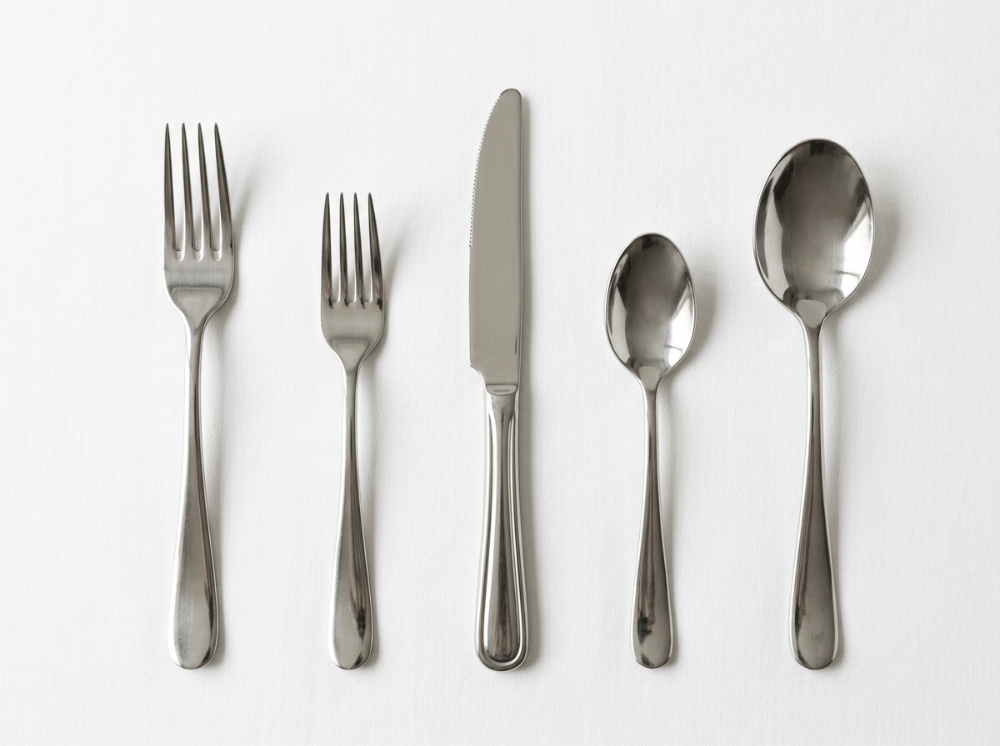
A standard five-piece place setting covers most menus and service formats. Here’s what each piece does and where it fits.
Dinner Fork
The dinner fork is the centerpiece of any place setting—usually four tines, built for the main course. In high-volume restaurants, it may be the only fork on the table. European dinner forks run slightly larger and heavier, a natural fit for formal dining rooms where a weightier feel reinforces the experience.
Salad Fork
Shorter and narrower than the dinner fork, the salad fork is used for salads, fruit courses, and lighter appetizers. In formal European settings, it sits farthest from the plate and is used first. In casual service, it doubles as a dessert fork—a versatile piece worth stocking in any program.
Dinner Knife
The dinner knife has a rounded tip and a longer blade than a butter knife, making it suitable for vegetables, soft meats, and general cutting. It isn’t built for steak—that’s a separate tool. Most dinner and dessert knife blades use 13/0 stainless steel, a grade better suited to blade forging that produces a sharper edge while resisting rust.
Teaspoon
The teaspoon is the most versatile piece in any set—for coffee, tea, dessert, cereal, and soup. It’s also ordered in the highest volumes. A 125-seat fine-dining restaurant typically needs around 625 teaspoons on hand to cover multiple courses and turnover, so build in extra headroom for every teaspoon order.
Soup Spoon
The soup spoon has a wider, deeper oval bowl than a teaspoon and is designed for broths, stews, and cream soups. The bowl shape allows a controlled sip without spilling—essential for any menu with a soup course.
Specialized Pieces for Formal Dining
White-tablecloth restaurants and formal hotel service add specialized pieces as courses are served. In classic French service, each implement arrives with its corresponding course rather than being set out all at once.
- Fish fork and knife: The fork is smaller than a dinner fork, often with a wider left tine to separate fish from the bone; the knife has a broad, blunt blade that flakes rather than pierces. Non-negotiable for a dedicated fish course.
- Butter spreader: The smallest knife in the set, with a flat blade and a rounded tip for spreading butter or soft cheese on rolls. It’s a personal piece—don’t confuse it with the serving butter knife.
- Cocktail (oyster) fork: Small with narrow tines, used for shellfish, shrimp cocktail, and small appetizers. It’s the only fork traditionally placed to the right of the knife in American settings.
- Steak knife: The one specialty piece that crosses easily from formal to casual. Any operation serving red meat needs it, usually brought out only when steak is ordered.
- Bouillon spoon: Smaller than a soup spoon with a round bowl, made for consommé and clear soups in a bouillon cup. Worth stocking for operations running a broth course.
Flatware, Serving Pieces, and Hostess Sets
Serving pieces complete a flatware program and transfer food from platters to individual plates. Explore matching options in our buffet serving utensils range.
- Serving spoon and pierced serving spoon: The standard spoon handles sauces, stews, and dense sides; the pierced (slotted) version drains liquid while transferring solids. Both are staples for family-style and buffet service.
- Cold meat fork: Elongated tines for handling and transferring sliced meats. Common at carving stations and buffet lines—and it works equally well for hot roasts.
- Serving butter knife and sugar spoon: Serving implements, not personal pieces. Standard additions for tea service and formal breakfast setups in hotel dining rooms.
- Pie or cake server: A wide, flat, triangular-bladed utensil for lifting slices of pie or cake. A well-made server supports a full slice without collapse—valuable for any formal dessert service.
Choosing Flatware for Hospitality Settings
Match your specification to how your operation actually runs. Here’s how the pieces come together by setting.
Fine Dining Restaurants
Specify 18/10 stainless steel, extra heavy or forged weight, mirror or satin polish, plus the full complement of specialty pieces—fish forks and knives, bouillon spoons, and cocktail forks. Presentation and hand-feel directly shape the guest experience, so this is where extra weight and premium finish pay off.
Hotel Buffets
Prioritize durable 18/10 stainless steel, straightforward patterns, and a strong lineup of serving utensils. High guest volume means pieces cycle through the wash constantly, so corrosion resistance and ease of replacement matter more than ornamentation. Coordinated hotel cutlery sets maintain a consistent look across outlets.
School and Institutional Dining
Choose magnetic 18/0 stainless steel, medium weight. The magnetic property enables flatware retrievers that cut loss in cafeterias and dining halls—one of the highest ongoing costs in institutional food service. Simple, replaceable patterns keep reorders painless.
Banquet and Event Service
Go with high-volume, stackable 18/10 flatware in a consistent finish, backed by a supplier who can guarantee pattern continuity for large replacement orders. Banquet operations run enormous quantities through fast turnarounds, so uniformity across thousands of pieces is the deciding factor.
Casual Restaurant Chains
Select entry-level 18/10 or quality 18/0, medium weight, satin finish. Satin hides fingerprints and scratches through heavy daily use, and multi-location chains benefit most from patterns that stay in production for years.
What to Look for in a Commercial Flatware Supplier
The product matters, but so does the partner behind it. When evaluating a manufacturer for a hospitality program, weigh these factors:
- Material grade consistency: Every reorder should match the last—same alloy, same weight, same finish. Inconsistency is the fastest way to end up with a mismatched service line.
- Pattern continuity: Confirm the pattern will stay in production. Discontinued lines force full replacements when you only need to top up.
- MOQ and lead times: Understand minimum order quantities and production timelines to plan opening orders, seasonal ramps, and replacements without gaps.
- Dishwasher durability: Ask how pieces perform under commercial wash conditions and chloride exposure—the real test of a stainless steel program.
- OEM/ODM capability: For branded or signature table settings, a supplier offering custom patterns, finishes, and packaging gives you room to differentiate. Learn more about our custom hospitality flatware options.
- Logistics and packaging support: Reliable bulk shipping, protective packaging, and export experience keep large orders moving on schedule.
Commercial Flatware Care and Maintenance
How flatware is washed, dried, and stored directly affects service life and appearance—and, ultimately, your replacement budget.
Dishwasher Protocols
Stainless steel handles commercial dishwashers well under the right conditions. Remove food residue before washing. Avoid detergents high in chlorides, which break down the protective film over time. Polish with a microfiber cloth immediately after the cycle to prevent water spots. For 18/0 specifically, hard water accelerates spotting—a pre-soak solution before the wash cycle helps.
Handling Sterling Silver
Where sterling is in rotation, hand-wash in mild soap and dry immediately with a soft flannel cloth—never air-dry. If a dishwasher is used, wash by hand the first four or five times to prevent copper migration spots, and remove pieces before the dry cycle. Never let sterling silver and stainless steel share a wash cycle; contact between the two metals can pit both surfaces.
Storage and Polishing
Store sterling in a clean, moisture-free drawer, or in flannel rolls or a lined wooden chest for long-term holding. Avoid plastic wrap, rubber bands, and newspaper—all contain sulfur compounds that speed tarnishing. Polish once or twice a year using a non-abrasive paste or quality spray polish, rubbing lengthwise to avoid micro-scratches. Stainless steel storage is far simpler: standard drawer dividers or trays work fine.
Frequently Asked Questions
What is the best flatware for restaurants?
For most restaurants, 18/10 stainless steel in medium-to-heavy weight offers the best balance of durability, appearance, and value. Fine dining benefits from extra-heavy or forged pieces, while high-volume casual concepts often do well with quality 18/0. Match weight and finish to your service style and washing conditions.
Is 18/10 flatware worth it for hotels?
Yes. The nickel content gives 18/10 a brighter finish and greater resistance to bending and corrosion, which pays off during repeated commercial dishwasher cycles. For hotels where both presentation and longevity matter, 18/10 lowers total costs over time by reducing replacements.
How do you choose a flatware supplier for hospitality projects?
Look for consistent material grade and weight across reorders, guaranteed pattern continuity, clear MOQs and lead times, proven dishwasher durability, and OEM/ODM options for custom or branded pieces. Reliable packaging and export logistics matter for large bulk orders.
How many flatware sets does a commercial operation need?
Volume depends on seat count, courses served, and turnover. A useful benchmark: a 125-seat fine dining restaurant typically stocks around 625 teaspoons alone to cover multiple courses and washing cycles. Always order beyond peak seating to absorb loss, breakage, and turnaround gaps.
What is the best flatware finish for commercial dishwashing?
Satin or matte finishes tend to look better longer in high-volume operations because they hide fingerprints, water spots, and minor scratches. Mirror polish looks more formal, but shows wear faster. Both can be produced in 18/10 or 18/0 steel.
What does “forged” mean for flatware?
Forged flatware is shaped from a single thick billet of steel, giving it better balance, consistent weight distribution, and a pattern that appears on all sides of the handle. It outperforms stamped flatware, which is punched from a flat sheet, in both durability and feel.
Specify With Confidence—Then Talk to Wonhosp
The flatware on your table signals the experience guests can expect before the first course arrives. Getting that signal right comes down to three decisions: the correct material grade, the right weight and finish, and the pieces that match how your operation actually serves. Nail those, and pattern selection—and your replacement budget—takes care of itself.
Planning a flatware program for a hotel, restaurant, catering service, or institutional dining operation? Contact Wonhosp for product recommendations, bulk order support, and OEM/ODM options. Our team will help you match material, weight, finish, and quantity to your service style and budget—so your first order performs as well as your last.