

If you’ve ever stood in a dinnerware aisle—or scrolled through endless product pages—wondering whether bone china or porcelain is actually worth the difference in price, you’re not alone. Both are high-quality ceramics. Both look refined on a table. But they perform very differently depending on how you use them.
This guide cuts straight to what matters: what sets these two materials apart, which one fits your specific situation, and how to make a confident choice whether you’re buying for home, gifting, or outfitting a hospitality operation.
Three things to know before you read on:
- Bone china is lighter, warmer in tone, and more translucent. Porcelain is denser, crisper, and more durable under heavy use.
- Bone china is the stronger choice for elegance, gifts, and fine dining. Porcelain wins on durability, stackability, and cost at scale.
- Most quality pieces of both materials are microwave- and dishwasher-safe—unless they have metallic trim.
Quick Answer: Which Should You Choose?
Choose bone china if you want refined tableware with a warm, translucent glow—for special occasions, formal dining, wedding registries, or a touch of everyday luxury.
Choose porcelain if you need durable, practical dinnerware that handles daily use, dishwasher cycles, and high-volume settings without fuss.
Neither is universally better. The right pick depends entirely on what you’re using it for.
What Is Bone China?
Bone china is a fine ceramic made by blending kaolin (china clay), feldspar (china stone), and bone ash—typically derived from cattle bones. Most quality pieces contain at least 30% bone ash, with premium versions reaching 45–50%.
That bone ash content is what makes bone china distinctive. It lowers the firing temperature needed, produces a material that’s lighter than standard porcelain, and creates the soft, glowing translucency the material is famous for.
What you’ll notice when you hold it:
- Translucency: Hold a piece up to the light and it glows softly.
- Warm ivory tone: Not stark white—it has a gentle, creamy color that flatters most food presentations.
- Surprisingly light: It feels delicate, but it’s genuinely chip-resistant thanks to its bone ash structure.
Bone china’s reputation for fragility is largely a myth. It’s actually one of the most chip-resistant ceramics available. Its real weakness is thermal shock—sudden temperature changes—not ordinary daily handling.
What Is Porcelain?
Porcelain is made from kaolin, feldspar, and quartz, fired at high temperatures (typically above 1,300°C) to produce a dense, vitrified, non-porous material. It contains no bone ash.
In some markets, porcelain is marketed as “fine china,” which can cause confusion. The key distinction: if it contains bone ash, it’s bone china. If it doesn’t, it’s porcelain—regardless of what the label says.
What you’ll notice when you hold it:
- Bright, cool white: A crisp, neutral surface that many chefs prefer for modern plating.
- Heavier and more solid: It feels sturdy and substantial in the hand.
- Harder and more scratch-resistant: It handles stacking, rough dishwasher cycles, and high-frequency use with fewer complaints.
Porcelain’s combination of durability, affordability, and clean aesthetics is why it dominates both casual home kitchens and commercial foodservice operations worldwide.
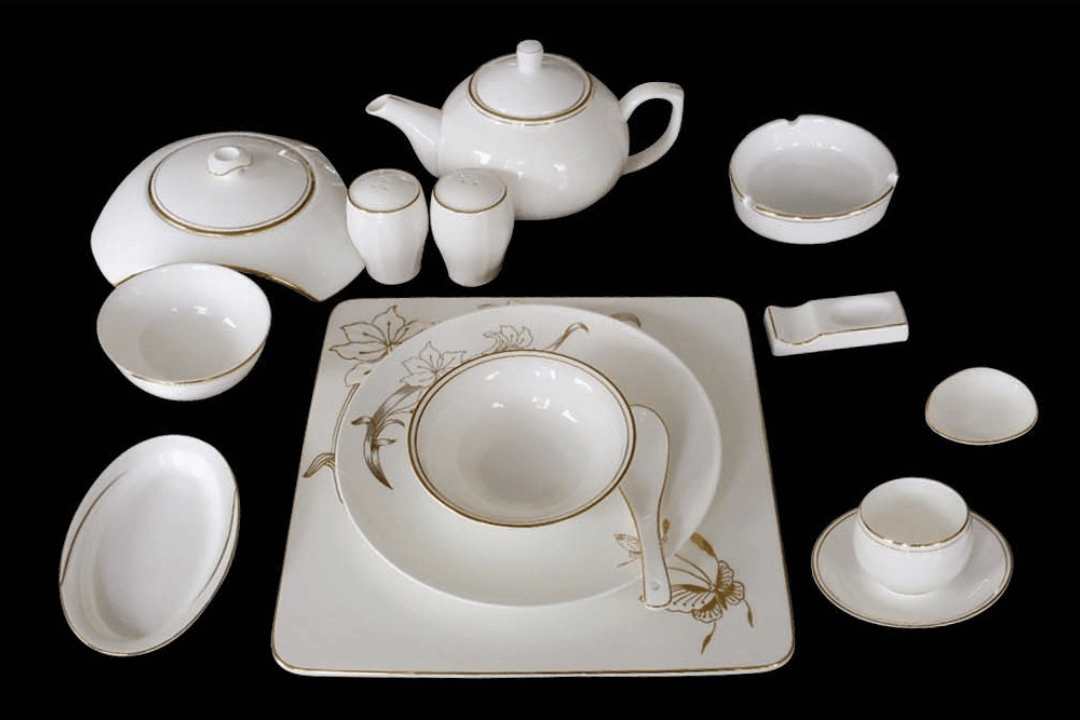
Bone China vs Porcelain: Side-by-Side Comparison
Before diving into specific scenarios, here’s a clear breakdown of how the two materials compare across every practical factor.
|
Feature |
Bone China |
Porcelain |
|---|---|---|
|
Key ingredients |
Kaolin, feldspar + bone ash (30–50%) |
Kaolin, feldspar, quartz |
|
Firing temperature |
~1,200°C |
~1,300°C+ |
|
Color |
Warm ivory-white |
Cool bright-white |
|
Translucency |
High — glows in light |
Low to opaque |
|
Weight |
Lightweight, delicate feel |
Slightly heavier, solid feel |
|
Chip resistance |
Excellent |
Good |
|
Scratch resistance |
Good |
Excellent |
|
Heat tolerance |
Moderate — sensitive to thermal shock |
High |
|
Dishwasher safe |
Yes (avoid metallic trim) |
Yes |
|
Microwave safe |
Yes (avoid metallic trim) |
Yes |
|
Price point |
Higher |
More affordable |
|
Best suited for |
Fine dining, gifts, elegant home use |
Everyday use, hospitality, commercial settings |
The Differences That Actually Matter When Choosing
Appearance: Warm Glow vs. Crisp White
Bone china flatters colorful, artfully plated food. Its warm ivory tone adds richness and depth—which is why it’s the default choice for formal dining, afternoon tea, and premium restaurants that want presentation to feel elevated.
Porcelain’s bright white creates sharp contrast. Many contemporary chefs prefer it precisely because it doesn’t compete with the food—it lets colors and textures stand out cleanly.
The practical takeaway: If your priority is elegance and visual warmth, bone china. If you want a clean, neutral canvas that suits a wider range of food styles, porcelain.
Durability: It Depends on the Type of Stress
Bone china resists chipping better—its flexible bone ash structure absorbs impact rather than cracking at the edge. But it’s more vulnerable to sudden temperature changes. Don’t move it straight from a freezer to a hot oven.
Porcelain is harder overall. It resists scratches from cutlery and stacking better, and it handles temperature variation more comfortably. In a busy kitchen or restaurant with constant dishwasher cycles, porcelain outlasts bone china at the same care level.
The practical takeaway: For chip-resistance in gentle use, bone china is excellent. For scratch-resistance and thermal stability in heavy, fast-paced environments, porcelain wins.
Weight and Feel
Bone china is noticeably lighter. That lightness is part of its appeal—it signals refinement and luxury in a way that porcelain can’t replicate. For teacups, fine dining, and premium gifting, the feel matters as much as the look.
Porcelain feels reassuringly solid. For everyday family meals or high-volume service where staff are handling dozens of pieces per shift, that sturdiness is a genuine advantage.
Price: What You’re Actually Paying For
Bone china typically costs 20–30% more than comparable porcelain. That premium reflects the cost of bone ash, the extra production steps, and the handwork often required for quality pieces.
Porcelain gives you strong performance at a lower cost per piece, which matters a great deal when buying in volume—whether for a large household or a hospitality operation with 100+ covers.
Which Is Better for Your Situation?
For Everyday Home Use
Porcelain is the safer everyday choice for most households. It’s tough, dishwasher-friendly, easy to replace if a piece breaks, and affordable enough that you won’t stress every time you stack the plates.
That said, bone china handles daily use better than most people expect. If you love the warmth and elegance of bone china and treat it reasonably well, it’s a perfectly practical daily option. The difference is that porcelain forgives more and costs less to replace.
A common mistake: Assuming bone china is too delicate for everyday life. It’s not the fragility that’s the issue—it’s the thermal sensitivity. Keep it away from extreme temperature changes and it holds up very well.
For Formal Dining and Special Occasions
Bone china is the clear winner. Its translucency, warm tone, and refined weight create a table setting that porcelain simply can’t match in terms of visual and tactile elegance. This is the context bone china was designed for.
For Gifts and Wedding Registries
Bone china is the traditional and widely preferred choice. It carries a sense of occasion and heirloom quality—pieces that feel genuinely special, associated with heritage brands, and likely to be kept for decades. Established bone china collections hold sentimental and often resale value in a way that porcelain rarely does.
Porcelain is a practical alternative for registries that prioritize durability, but if the goal is to give something that feels premium and lasting, bone china is the stronger choice.
For Restaurants, Hotels, and Hospitality Operations
This is where matching material to context matters most.
For high-volume settings—buffets, casual dining, room service, catering—porcelain is the smarter default. It stacks efficiently, survives aggressive dishwasher cycles, resists the scratching that comes from constant cutlery contact, and costs less to replace when pieces inevitably break. A busy restaurant going through hundreds of covers per day needs materials that can keep up without constant loss to chipping or cracking.
For fine dining rooms, VIP service, executive lounges, and banquet plated courses, bone china changes the experience. The lightness in the guest’s hand, the warm glow under restaurant lighting, and the visual refinement of the plate contribute meaningfully to perceived quality.
Many successful operations use both: porcelain for workhorse daily service, bone china reserved for premium plated moments. This approach balances cost efficiency with the elevated presentation that high-end hospitality demands.
Before buying in volume: Confirm lead times, minimum order quantities, and replacement availability with your supplier. Consistency across a collection matters—especially as pieces are retired through breakage over time.
Microwave and Dishwasher Safety: The Real Rules
Most modern bone china and porcelain are both microwave- and dishwasher-safe. The exception is metallic decoration.
Gold, silver, and platinum rims or accents:
- Never microwave. Metallic trim can arc and spark.
- Hand wash to protect the finish. Dishwasher detergents and heat will wear away metallic decoration over time.
Plain pieces (no metallic trim):
- Generally safe for both microwave and dishwasher. Always check the manufacturer’s guidance for the specific collection.
For bone china in the dishwasher specifically: Use gentle cycles, don’t overload the rack, and keep metal utensils away from the rims. Light contact from cutlery during the wash cycle is a common cause of chips and edge damage.
When in doubt—especially with heirloom or decorated pieces—hand wash.
How to Care for Each Material
Good care extends the life of both materials significantly. The routines differ slightly.
Bone China Care
- Wash soon after use. Acidic foods and sauces left sitting can affect the glaze over time.
- Hand wash where possible using mild detergent and a soft cloth.
- Never move pieces directly from cold to hot or vice versa—thermal shock is the primary risk.
- Store with felt liners or soft cloth between stacked pieces to protect edges.
- Remove coffee or tea stains with a baking soda and water paste; remove hard water marks with a brief soak in white vinegar.
Porcelain Care
- Dishwasher-safe on standard cycles; avoid high-alkaline detergents which can dull the surface over time.
- Use plate separators when stacking to reduce cutlery scratching on the base.
- Follow the manufacturer’s oven temperature limits—porcelain tolerates heat well, but there are still upper limits.
- Despite its resilience, avoid dramatic thermal shock for best longevity.
How to Decide in 5 Steps
If you’re still weighing up the choice, work through these five questions:
- What’s your primary use case? Formal occasions and gifting favor bone china. Daily use and high-volume service favor porcelain.
- How important is visual elegance vs. operational durability? Bone china for elegance. Porcelain for durability.
- What’s your budget, and how many pieces do you need? The 20–30% premium on bone china adds up quickly at volume.
- What are your microwave and dishwasher habits? Both work for plain pieces. If you have metallic trim, plan to hand wash.
- Do you need a consistent collection long-term? Check that your chosen range is available for replacement before committing—especially for commercial buyers.
FAQ
Is bone china real china?
Yes. Bone china is a genuine, high-quality form of fine china—widely considered the premium tier of ceramic tableware.
Is bone china stronger than porcelain?
It depends on what you mean by strong. Bone china resists chipping better. Porcelain resists scratching and thermal stress better. Neither is universally stronger.
Does bone china break easily?
Not particularly. It’s chip-resistant and handles everyday handling well. The main vulnerability is sudden temperature change, not regular use.
What’s the difference between bone china and fine china?
Bone china contains bone ash and has a warm, translucent quality. “Fine china” is often used loosely to mean porcelain, which contains no bone ash and appears colder and more opaque.
Why is bone china more expensive?
Bone ash adds raw material cost, and bone china production typically involves more labor-intensive steps. The price reflects both.
Is all fine china bone china?
No. All bone china is fine china, but not all fine china is bone china. Many products marketed as fine china are simply high-quality porcelain.
Can I mix bone china and porcelain on the same table?
Yes. Many restaurants and hosts do exactly this—porcelain for workhorse pieces, bone china for elevated moments like teacups or serving plates.
Final Verdict
Bone china and porcelain are both excellent materials. The decision comes down to your priorities, not which one is objectively better.
Choose bone china when you want lightweight elegance, translucent warmth, and a premium feel—for fine dining, gifts, wedding registries, or any setting where presentation and refinement matter.
Choose porcelain when you need durable, practical, cost-effective dinnerware that handles daily family meals, commercial dishwashers, and high-frequency service without issue.
For many buyers—especially in hospitality—the best answer is both: porcelain as the operational backbone, bone china as the premium layer for moments that deserve it.
Next step: Use the comparison table and the five-question framework above to identify your priority, then request samples from your supplier before placing a large order.