
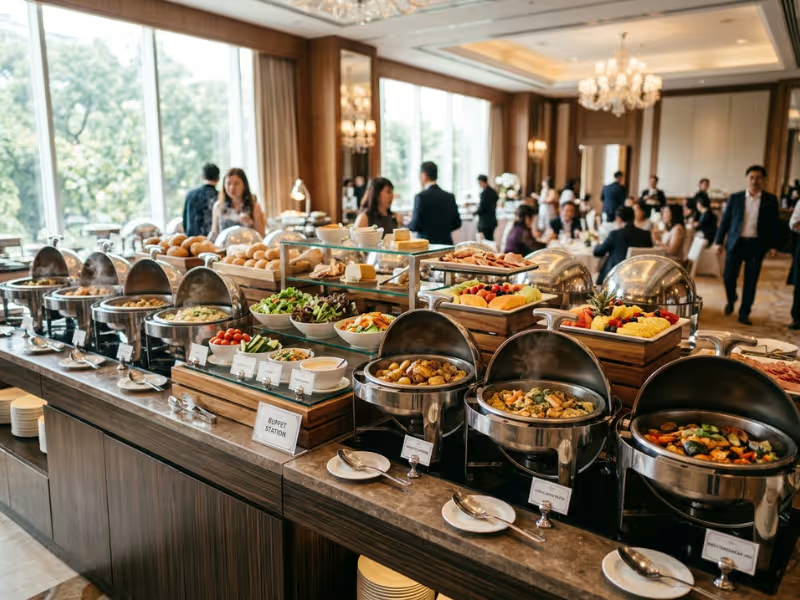
A good buffet counter setup does more than hold food. It shapes how fast your line moves, how easily guests grab their plates, and how fresh each dish stays.
Get the layout wrong, and you see long queues, crowded corners, and cold food. Get it right, and guests flow through smoothly and enjoy every bite.
I’ve set up buffet counters for events of all sizes. The same problems come up again and again, and most start with poor planning, not bad food.
This guide walks you through it. You’ll learn how to choose the right layout, keep traffic moving, design a counter that works, and dodge the mistakes that slow everything down.
Before You Choose a Layout, Answer These 4 Questions
The best buffet layout depends on your event, not on some perfect template. Before you move a single table, run through these four questions. They tell you what your setup actually needs to handle.
1. How many guests will use the buffet at the same time?
Forget the total headcount for a moment. What matters is how many people crowd the line at once. A 150-guest gala where everyone eats after the toast puts far more pressure on your counter than a 200-guest open house with a steady trickle. Plan for that peak rush.
2. Is the event seated, casual, or walk-around?
The style of the event changes everything. A seated dinner sends waves of guests up in an orderly flow. An open house means people drift in and out all evening. A mingling reception keeps everyone on their feet, so your setup should invite quick grabs rather than long queues.
3. How much menu variety needs to fit on the counter?
Count your dishes honestly. A simple spread of six items fits one line easily. But once you add a carving station, a live cooking spot, desserts, and drinks, one counter won’t hold it all. Big menus need more surface and often more than one station.
4. How much floor space and clearance do you actually have?
Walk the room before you commit. Look at the shape, the aisle width, and where doors, exits, and the bar sit. Guests hate bumping into each other while balancing a plate. Leave at least three feet of clearance on serving sides, and never park the buffet where traffic already knots up.
Answer these first, and the right layout almost picks itself.
Buffet Layout Types and When to Use Each One
The shape of your buffet decides how people move around it. Pick the layout that matches your crowd and your room, and half your problems disappear before the first guest arrives. Here’s a quick look at your four main options.
|
Layout Type |
Best For |
Main Advantage |
Main Risk |
|---|---|---|---|
|
Single-Line |
Small events, up to 50 guests |
Simple to set up and manage |
Bottleneck at the main dish |
|
Double-Sided |
Mid-size events, 50–150 guests |
Serves twice as fast |
Needs wide aisles and mirrored dishes |
|
L-Shaped or U-Shaped |
Corners and large rooms |
Guides guests along a clear path |
Gets confusing without flow cues |
|
Island or Scattered Stations |
Mingling and receptions |
Spreads the crowd out |
Harder to restock and label |
Each one shines in the right setting and struggles in the wrong one. Let me break down when to reach for each.
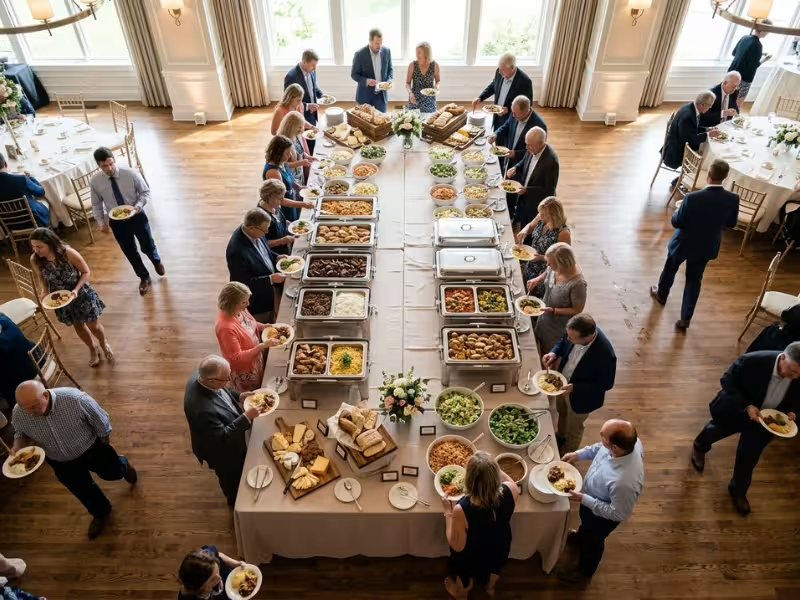
Single-Line Buffet
This is the classic setup: one straight run of tables, guests moving from one end to the other. It’s easy to plan, easy to staff, and it fits almost any small room.
The trade-off shows up at the popular dish. When everyone stops to load up on the carved roast or the pasta, the whole line stalls behind them. For 40 or 50 guests, that pause is minor. Push past that, and you get a queue that snakes around the room.
Keep a single line for intimate dinners and small gatherings. If you can, place the slowest, most-loved dish near the end so backups don’t jam the front.
Double-Sided Buffet
Open both sides of the table and you double your serving speed instantly. Two lines move at once, which makes this a strong pick for mid-size events where a single line would leave people waiting.
It asks for two things in return. First, give it room. You need wide aisles on both sides, at least three feet each, or guests bump elbows and trays. Second, mirror your dishes. Put the same item on both sides in the same order so nobody has to cross over or double back. When one side runs the appetizers and the other runs the mains, the flow breaks fast.
L-Shaped or U-Shaped Buffet
Bend the line and you turn awkward space into an asset. An L-shape tucks neatly into a corner, and a U-shape fills a large room while pulling guests along a natural route. Both give you more surface area without stretching one endless straight line.
These shapes work beautifully when guests know where to start and where to finish. Mark the entry and exit clearly. Without those cues, people wander in from the middle, meet others coming the other way, and the whole thing tangles. A simple “Start Here” sign and a stack of plates at the front do most of the work.
Use these when you have plenty of floor space and a menu big enough to fill the length.
Island or Scattered Stations
Instead of one buffet, you build several small ones around the room. One holds salads, another carves meat, a third pours drinks, and so on. Guests roam between them instead of standing in a single queue.
This layout is made for receptions and mingling events. It spreads the crowd out, kills long lines, and keeps the room feeling social rather than regimented. People chat, drift, and eat at their own pace.
The catch is upkeep. Every station needs its own restocking plan and its own clear labels, since guests won’t see one master line telling them what’s where. Station a runner to watch levels and refill early. Skip that, and you end up with empty pans scattered across the room and confused guests hunting for the dessert.
Reach for scattered stations when the goal is movement and conversation, not efficient feeding.
How to Choose the Right Layout for Your Event
You know your options. Now let’s match one to your event. Three things drive the decision: how many guests you’re feeding, the room you’re working with, and how big your menu is. Line those up, and the right layout gets obvious fast.
|
Guest Count |
Room Type |
Menu Complexity |
Recommended Layout |
|---|---|---|---|
|
Up to 50 |
Small or single room |
Simple (4–6 dishes) |
Single-Line |
|
50–150 |
Mid-size room |
Moderate (mains + sides) |
Double-Sided or Hybrid |
|
150+ |
Large or open space |
Full spread + drinks |
Multiple Stations |
For small, simple events, keep it easy. A single line handles a modest crowd and a short menu without fuss. You don’t need extra tables or extra staff. One clean run of dishes gets everyone fed and keeps your setup quick to manage.
Mid-size gatherings need more muscle. Once you push past 50 guests, a single line starts to drag. Open both sides of the table or build a hybrid setup so two lines move at once. This cuts your queue in half and keeps the room from feeling stuck.
Large or social events call for spread. When the crowd is big or people are meant to mingle, one long line becomes a wall. Break the food into separate stations around the room. Guests move freely, lines vanish, and the whole space feels livelier.
Here’s the move most people miss. For a lot of mid-size events, the smart play isn’t stretching your main line longer. It’s adding one satellite station for drinks or dessert. Pull those two off the main run, and you take real pressure off the busiest spot. Guests grab a plate, move through, then peel away for a drink somewhere else. The line keeps flowing, and nobody piles up at the end.
How to Design a Buffet Counter That Looks Good and Works Well
A great-looking buffet means nothing if guests struggle to serve themselves. Function comes first, and the good news is that a smart, working layout usually looks great on its own. Here’s how to make both happen.
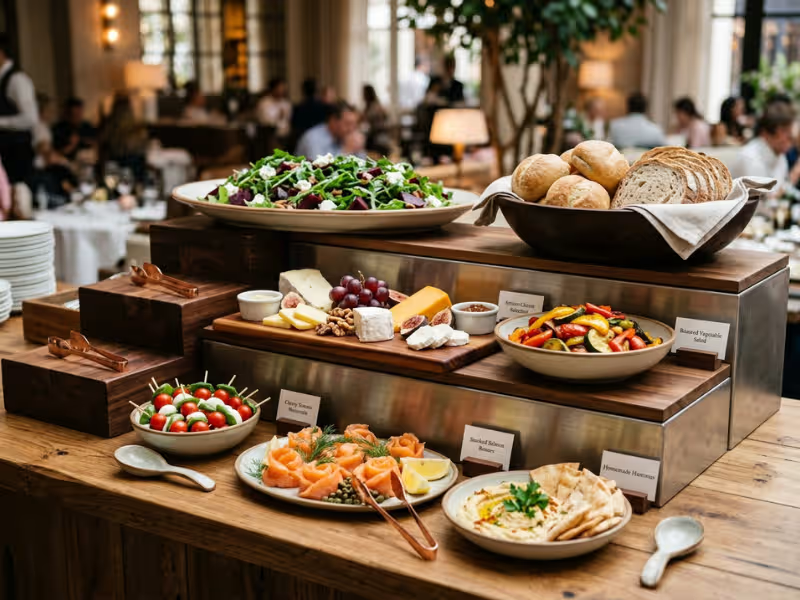
Use height to guide the eye
Flat tables hide food. When every dish sits at the same level, guests in the back can’t see what’s there, and the ones up front block the view.
Bring in risers and tiers to fix this. Place tall items and raised platters at the back, then step down to shorter dishes near the front. A few well-chosen tabletop display pieces let people scan the whole spread in one glance. Just keep those tall pieces clear of anyone’s sightline to the dish they’re reaching for.
Keep every item within easy reach
Nobody should stretch across a hot chafing dish to grab a serving spoon. That’s how you get burns, spills, and a jammed line.
Set each utensil right beside its own dish, handle facing the guest. Keep labels close too. When people find the spoon, the tongs, and the sign exactly where they expect them, they serve fast and move on. Push anything to an awkward corner, and the whole line slows while guests hunt for it.
Make labels easy to spot early
Labels aren’t just polite. They keep the line moving, so treat them as a tool, not decoration.
Guests need to read what a dish is before they reach it. That way they decide as they walk, instead of stopping to squint and hold everyone up. Use cards tall enough to see from a few feet back.
Allergen and dietary cues matter most of all. Mark anything with nuts, dairy, gluten, or shellfish in plain, bold text. A guest with an allergy should never have to ask or guess. Clear labels protect your guests and save your staff a dozen questions.
Keep decoration out of the busy zones
Flowers, props, and styling touches add charm, but they don’t belong in the middle of a serving rush. A pretty centerpiece that blocks a serving spoon just gets in the way.
So separate the two. Put decorative pieces at the ends, along the back, or on a nearby side table where they set the mood without stealing serving space. In your peak zones, keep the surface clear. Every inch there should hold food or the tools to serve it.
If your space gets good natural light, use it. Position the counter so daylight falls on the food and makes it look fresh. Beyond that, don’t overthink lighting or color schemes. A well-lit, easy-to-read spread beats a fancy one every time.
Serving Tips That Keep the Line Moving
Even a perfect layout stalls if the small details go wrong. These four habits do more to keep guests flowing than anything else, and they cost you nothing but a little planning.
Put plates first, utensils last
Guests need a free hand to serve themselves. If you hand them a fork and napkin at the start, they juggle those items down the whole line, dropping things and slowing down.
So flip it. Stack plates at the very front. Set forks, knives, and napkins at the very end, right before guests walk away. Now they load their plate with both hands free, then grab their utensils on the way out. It’s a tiny change that clears up a surprising amount of fumbling.
Refill early, not when trays run empty
Waiting for an empty pan is a mistake. A bare tray stops the line cold while guests stand around waiting for the swap.
Watch your levels and act sooner:
- Start prepping a fresh pan when a dish hits about one-third full.
- Keep backup pans warm and ready in the back, not still in the oven.
- Swap the whole pan instead of dumping new food on top of old.
This keeps the spread looking full and fresh, and guests never hit a gap. A calm refill beats a panicked scramble every time.
Tame the bottlenecks around slow dishes
Some foods just take longer to serve. Carved meats, saucy dishes, and anything custom-made pull guests to a stop, and the whole line backs up behind them.
You have three good ways to handle these:
- Move them to the end. Put the slowest dish last so backups don’t jam the front.
- Staff them. A server plating the roast or ladling sauce moves people through far faster than self-service.
- Give them their own station. Pull the carving spot or the pasta bar off the main line entirely. Guests who want it step aside; everyone else keeps moving.
Spot your slow dish before the event, not during it. You’ll know which one it is.
Pull drinks and desserts off the main line
This is the single fastest way to open up traffic. When drinks and desserts sit at the end of the main buffet, guests linger there, pouring and choosing, while a queue piles up behind them.
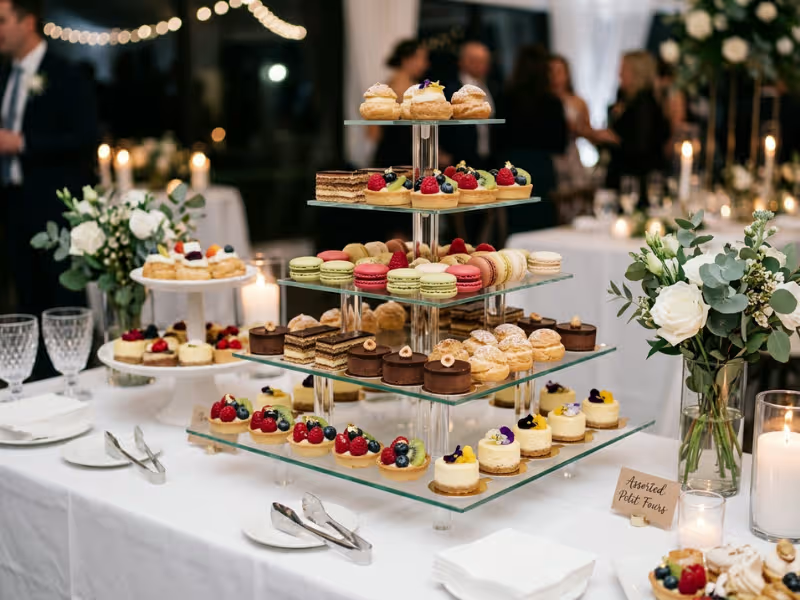
Move both to their own spot across the room. Set up a drink station near the seating, and give sweets their own tiered dessert stand display somewhere separate. Now guests grab their plate, clear the line, and drift off for a treat whenever they like.
The main buffet keeps flowing because nobody stalls at the finish. As a bonus, spreading these out gives the room a more relaxed, social feel.
Food Safety Basics You Should Build Into the Setup
Good food safety starts with your setup, not with a rulebook. A few simple choices at the counter protect your guests and keep your spread looking fresh all night.
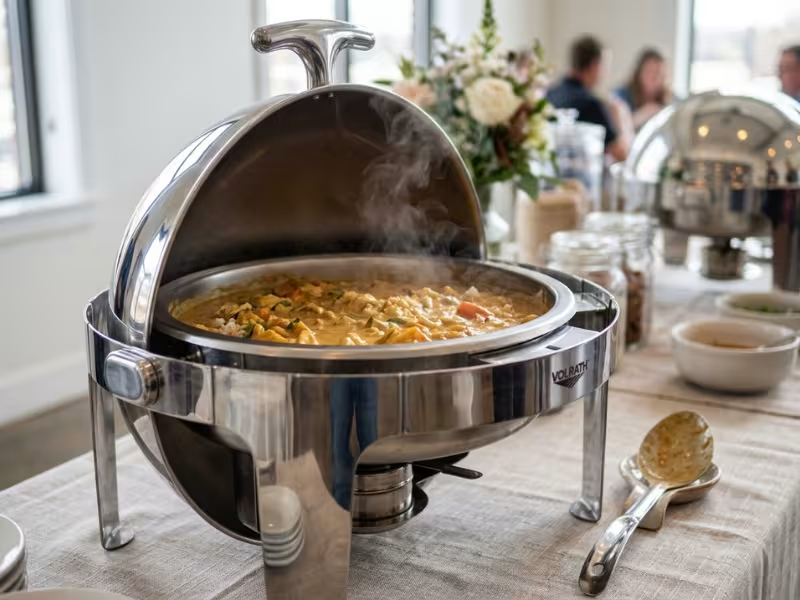
Hold temperatures where they belong. Keep hot foods hot in chafing dishes and cold foods cold on ice beds. Food that drifts to room temperature turns risky fast. Reliable stainless steel catering equipment makes this easy, so set it up before the first tray goes out and nothing sits in the danger zone.
Give every dish its own utensils. One spoon per dish, no sharing. When a serving fork jumps from the shrimp to the salad, it drags allergens and bacteria with it. Match each utensil to its dish and rest the handle where guests can grab it easily.
Swap trays, don’t top them off. Never pour fresh food onto a half-empty pan. That mixes old with new and hides food that’s been out too long. Pull the whole tray and drop in a clean, full one. It looks better and stays safer.
Label allergens clearly. Mark anything with nuts, dairy, gluten, shellfish, or eggs in plain, bold text. A guest with an allergy should read the card and know right away, without stopping to ask.
Build these four habits into your layout, and safety takes care of itself.
Common Buffet Counter Mistakes to Avoid
I’ve seen the same handful of slip-ups sink otherwise great events. The food was fine. The setup wasn’t. Dodge these five, and you’ll stay ahead of most problems before they start.
1. Building one long line for a large crowd.
A single line looks tidy, but it can’t feed a big group fast. One person stops at the popular dish, and everyone behind them waits. For large events, split the food into stations or open both sides of the table. Never make 150 guests share one straight run.
2. Putting the buffet in a traffic choke point.
The spot near the door or beside the bar feels convenient. It isn’t. Guests carrying plates collide with guests coming in, and the whole room jams. Set the buffet where people can gather and spread out. Leave clear paths in and out, so nobody serves themselves in a doorway.
3. Mixing decor with serving space.
A tall centerpiece in the middle of the reach zone gets in the way every time. Guests knock it, dodge it, or stretch around it. Keep your busy serving areas clear. Push flowers and props to the ends, the back, or a nearby side table. Let the styling set the mood without stealing an inch of working space.
4. Skipping labels and allergen cues.
Unlabeled dishes slow everything down. Guests stop, squint, and ask what’s in the pan. Worse, someone with an allergy has no safe way to choose. Label every dish in plain, bold text, and mark nuts, dairy, gluten, and shellfish clearly. Labels aren’t a nicety. They keep the line moving and keep your guests safe.
5. Waiting too long to refill popular dishes.
An empty tray stops the line cold. Guests hover, waiting for the swap, while a queue builds behind them. Don’t wait for the pan to run dry. When a favorite dish drops to about one-third full, start prepping the next tray. Keep backups warm and ready in the back, then swap the whole pan instead of piling new food on old.
Walk your setup before the first guest arrives and check for these five. A quick pass usually catches the trouble while you still have time to fix it.
Buffet Setup Tips for Small Spaces and Outdoor Events
Tight rooms and open fields each throw their own curveballs. A little planning turns both into smooth, easy setups. Here’s how I handle each one.
Small Spaces
When floor space runs short, think up and out, not long. A single island in the center lets guests circle it from all sides, which beats a cramped line against the wall. A bar cart works wonders too, rolling drinks or desserts wherever you have a spare corner. Push the main spread against a wall to free up the middle for people to move.
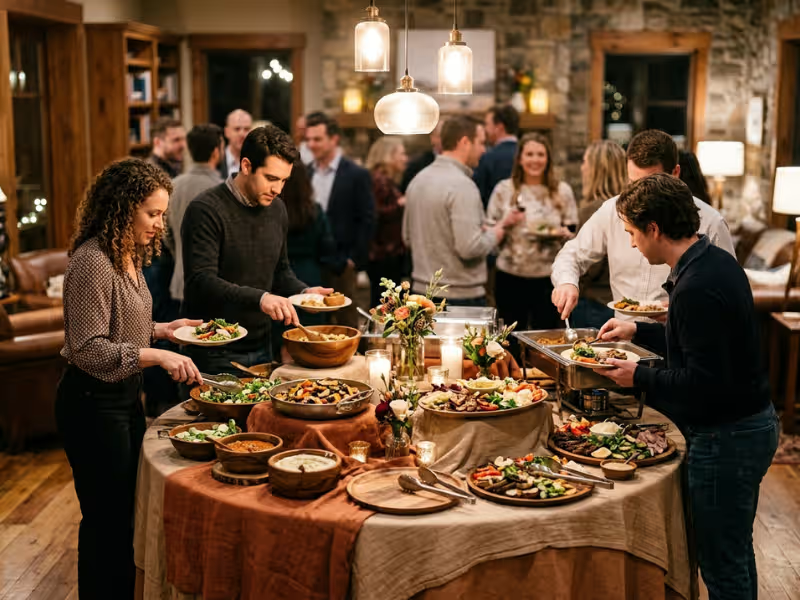
Serve in phases instead of crowding everything onto one table. Put out appetizers first, clear them, then bring out mains. This keeps the surface uncluttered and the food fresh. And always split desserts and drinks off to their own small spot to ease the crush.
|
Small Space Fix |
Why It Helps |
|---|---|
|
Island or wall-side setup |
Opens up the floor |
|
Bar cart |
Adds serving space anywhere |
|
Phased serving |
Keeps the table clear |
|
Separate dessert/drink spot |
Cuts the crowd |
Outdoor Events
The outdoors fights back, so plan for it. Wind lifts labels and dries out food fast. Weigh down your signs with small stones or clips, and keep lids on dishes between refills.
Bugs show up uninvited. Mesh food covers and a tented setup keep them off your spread without hiding the food. Sort out power and warming before the day arrives, too. Scout for outlets, or bring a generator, and lean on sterno cans or insulated carriers when no power exists.
|
Outdoor Challenge |
Quick Fix |
|---|---|
|
Wind |
Weight signs, cover dishes |
|
Insects |
Mesh covers, tent the setup |
|
No power |
Generator or sterno warmers |
|
Loose signage |
Clip or anchor every sign |
Handle these small details early, and both setups run themselves.
Quick Answers to Common Buffet Setup Questions
How many buffet lines do I need for 100 guests?
Two lines. One line can feed 100 people, but they’ll wait a while. Open both sides of the table, or run a double-sided setup, and you cut that wait in half. For a seated dinner where everyone eats at once, two lines keep the room calm.
Where should a buffet table go in a room?
Away from doors, exits, and the bar. Those spots turn into traffic knots fast. Pick a place where guests can gather and spread out on all sides. Leave at least three feet of clear space around the serving edges so nobody bumps elbows.
Should plates go at the beginning or end?
Beginning, always. Guests need a free hand to serve themselves. Stack plates at the very front, then put forks, knives, and napkins at the end. People grab their utensils on the way out, once their plate is full.
What foods should go first on a buffet line?
Start with the lighter, cheaper items. Salads, breads, and sides go first. Mains and proteins come next. This order fills plates early and keeps guests from loading up entirely on the pricey roast. Save slow-to-serve dishes for last.
How do I keep a buffet line moving faster?
Pull drinks and desserts off the main line. That single move opens things up more than anything else. Then refill dishes before they hit empty, staff any slow station, and keep utensils right beside each dish. Small tweaks add up fast.
How should buffet food be labeled for allergies?
Use clear cards in plain, bold text. Name each dish, and flag the big allergens: nuts, dairy, gluten, shellfish, and eggs. Make the cards tall enough to read from a few feet back. A guest with an allergy should know what’s safe without stopping to ask.
Get the order right, and everything else falls into place. Decide your layout first. Then set your dish order. Last, check how traffic will flow around it all. Before guests arrive, walk the space as if you were one of them. Grab a plate, move through the line, reach for a spoon. This quick run-through catches most problems while you still have time to fix them. Do it every time, and you’ll turn a stressful event into a smooth one.