

You sit down at a nice restaurant, and there it is: three forks, two knives, a small plate off to the side, and a cluster of glasses. Your brain freezes. Which fork do you start with? Whose water is that? And what do you do with your knife when you pause?
Here’s the good news. A place setting isn’t a test. It’s a map, and once you understand its logic, the guesswork disappears. Every piece sits where it does for a reason, and the arrangement tells you exactly how the meal will unfold.
This guide walks you through the whole system in the order it actually matters:
- How to read any place setting at a glance
- How to use each piece, course by course
- How to signal your server without saying a word
- How to adapt for buffets, business dinners, and travel
By the end, you’ll walk into any dining room and focus on the food and the conversation instead of the cutlery.
Why the Layout Follows a Logic
The reason a table looks intimidating is that formal settings show you everything the meal will use, all at once. A casual restaurant hands you pieces course by course, so the table stays simple. A fine-dining table shows its full hand up front.
That’s actually a gift. The layout is a preview. More forks means more courses. A dessert spoon resting above your plate tells you something sweet is coming. Read the setting, and you already know the shape of your evening.
Two principles govern almost everything:
- Utensils sit in the order you’ll use them, working from the outside toward the plate.
- Drinks live on the right, bread on the left. Simple, and it never changes.
Keep those two ideas in mind, and the rest falls into place.
How to Read a Place Setting at a Glance
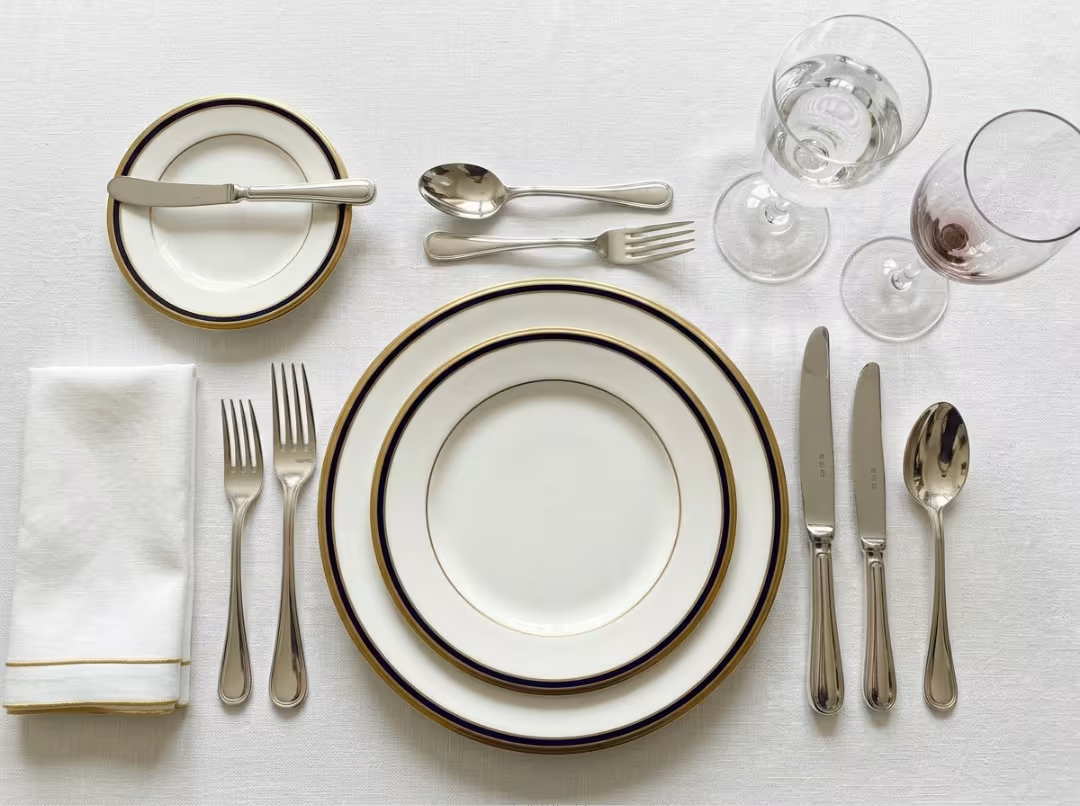
Forks on the Left, Knives and Spoons on the Right
Forks line up to the left of the plate. Knives sit immediately to the right, blades facing inward toward the plate. Spoons rest to the right of the knives.
There’s one quirky exception worth knowing: a small oyster or cocktail fork sometimes rests on the far right, tucked beside the spoons. It’s the only fork that breaks the left-side rule, and it only shows up when seafood starts the meal.
Glassware Above the Knives
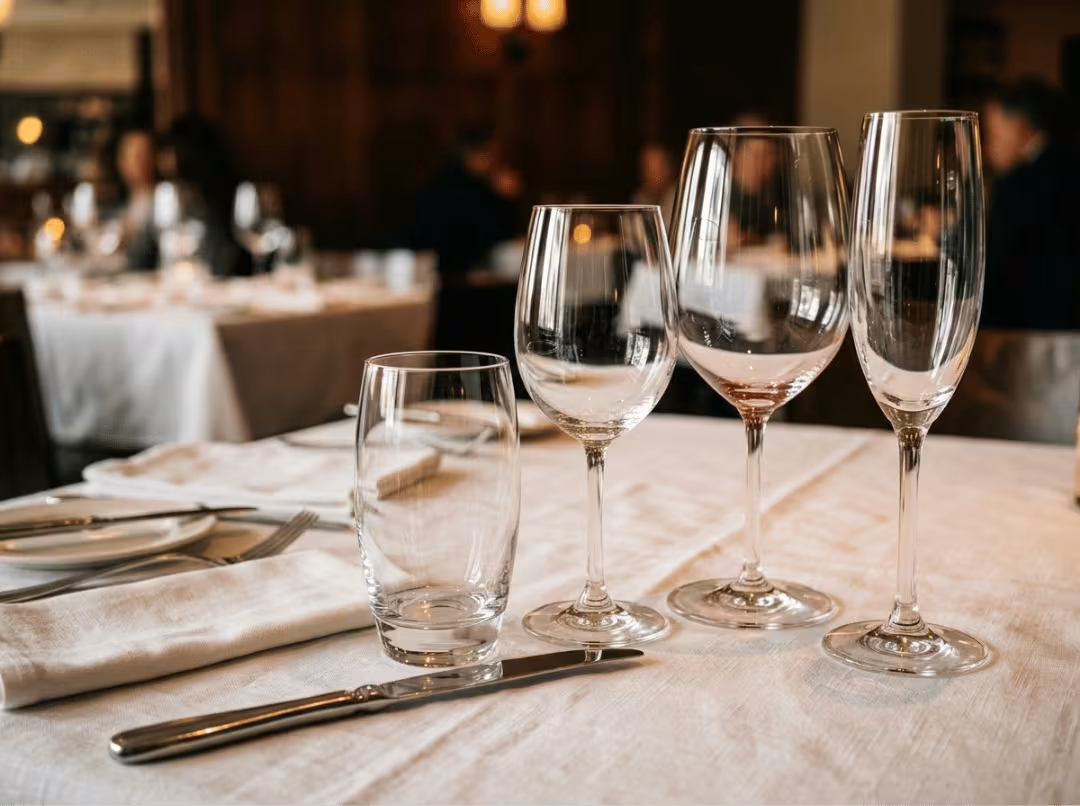
Look up and to the right of your plate. Your water glass sits directly above the dinner knife. The wine glasses fan out to its right — red wine closer, white wine slightly lower and farther out.
The logic is practical, not decorative. Glasses cluster on the right so you reach them with your right hand without crossing over your plate.
The Bread Plate on the Upper Left
Your bread plate sits above the forks, on the upper left. The small butter knife rests across it, blade facing in.
This is where the classic mix-up happens. In a crowded setting, people grab the bread plate to their right — which belongs to their neighbor. Remember it this way: bread is on your left, drinks are on your right. Some people use the “b” and “d” trick (bread-left, drink-right) to lock it in.
A Quick Word on Chargers
At upscale restaurants, you may find a large decorative plate already in front of you. That’s a charger. You never eat off it. It anchors the setting and gets whisked away once your first real course arrives. The quality and finish of these base plates matter more than most diners realize — if you’re curious how restaurants choose durable, food-safe pieces, our guide on bone china vs. porcelain breaks down what separates good tableware from the rest.
The Outside-In Rule: The One Habit That Solves Everything
If you remember nothing else, remember this. Start with the utensil farthest from your plate and work inward with each course.
The table is arranged to match the order of the meal. Say you’re looking at three forks. From the outside in, that’s your salad fork, your fish fork, and your dinner fork. As each course arrives, you reach for the next piece moving toward the plate.
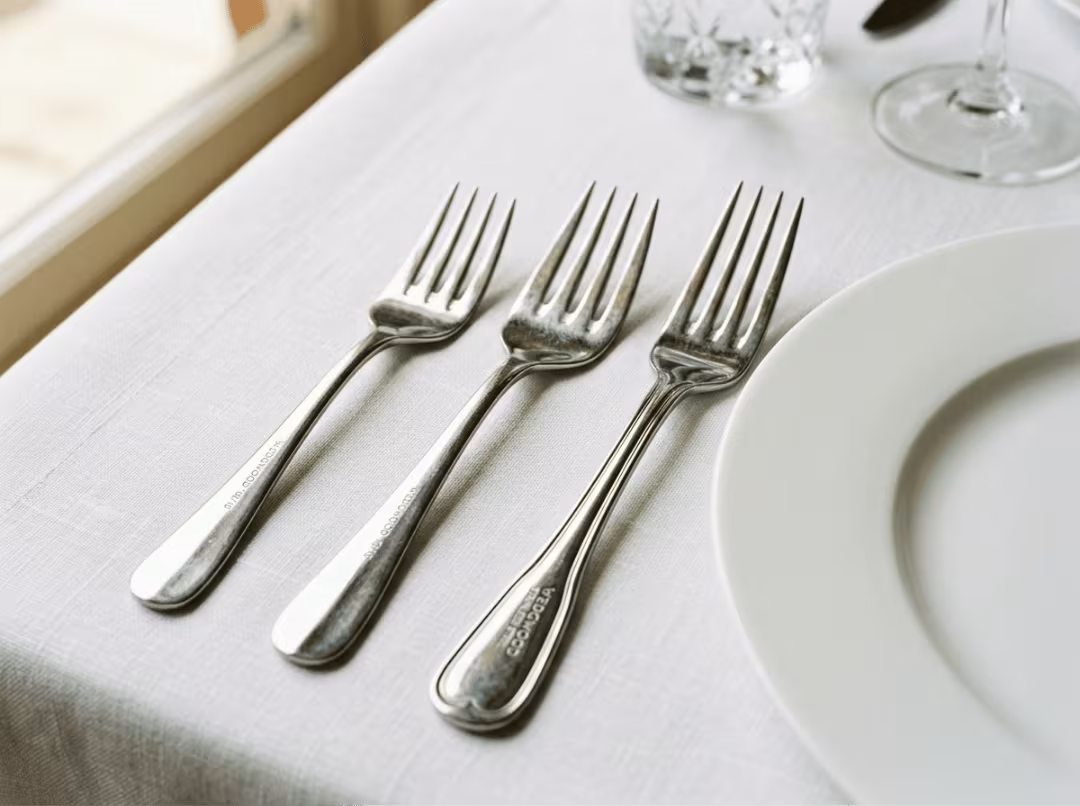
Here’s why it works so reliably: the restaurant sets the table knowing the menu. The farthest fork is always for whatever comes first. You don’t have to memorize which fork is which — you just move inward as the courses roll out.
If a course ends and you notice a utensil you skipped, don’t panic. The server will clear it. Move on to the next piece and keep going.
Using Each Piece Without Overthinking It
Utensils, Course by Course
Soup. Hold the spoon with your thumb on top. Skim the spoon across the surface away from you, then sip from the side, not the tip. Tilting the bowl slightly away helps you get the last spoonfuls cleanly.
Salad. Use the salad fork when the salad is its own course. If the salad arrives alongside your main, just use your dinner fork — no need to hunt for a separate one.
Main course. Switch to the dinner fork and knife. This is where American and Continental styles diverge, which we’ll cover below.
Dessert. The fork and spoon set horizontally above your plate are for dessert. The fork tines point right, the spoon bowl points left. When dessert arrives, bring them down to the table.
Glasses: Finding Yours and Holding It Right
Your water glass is the one directly above your knife — never the glass to its right. That one belongs to your neighbor. When tables are tight, this single rule saves a lot of awkwardness.
Hold wine glasses by the stem. It keeps your body heat off the wine and your fingerprints off the bowl. Water glasses are more forgiving — hold them by the base or lower body.
Bread and Butter
Tear off one bite-sized piece at a time rather than biting into a whole roll. Move butter from the shared dish to your bread plate first, then butter each piece as you go. Rest the butter knife on your bread plate between uses.
The Napkin
Unfold your napkin and lay it across your lap shortly after you sit. If you step away mid-meal, set it loosely on your chair — never on the table. When you’re done, place it loosely to the left of your plate.
Two things to avoid: don’t refold it neatly (it looks staged), and don’t drop it crumpled on your plate. From the server’s side, a napkin on the plate slows down clearing and usually comes back covered in scraps.
Silent Signals: What Your Silverware Tells the Server
This is the part most guides skip, and it’s the most useful thing you can learn. The position of your fork and knife speaks for you.
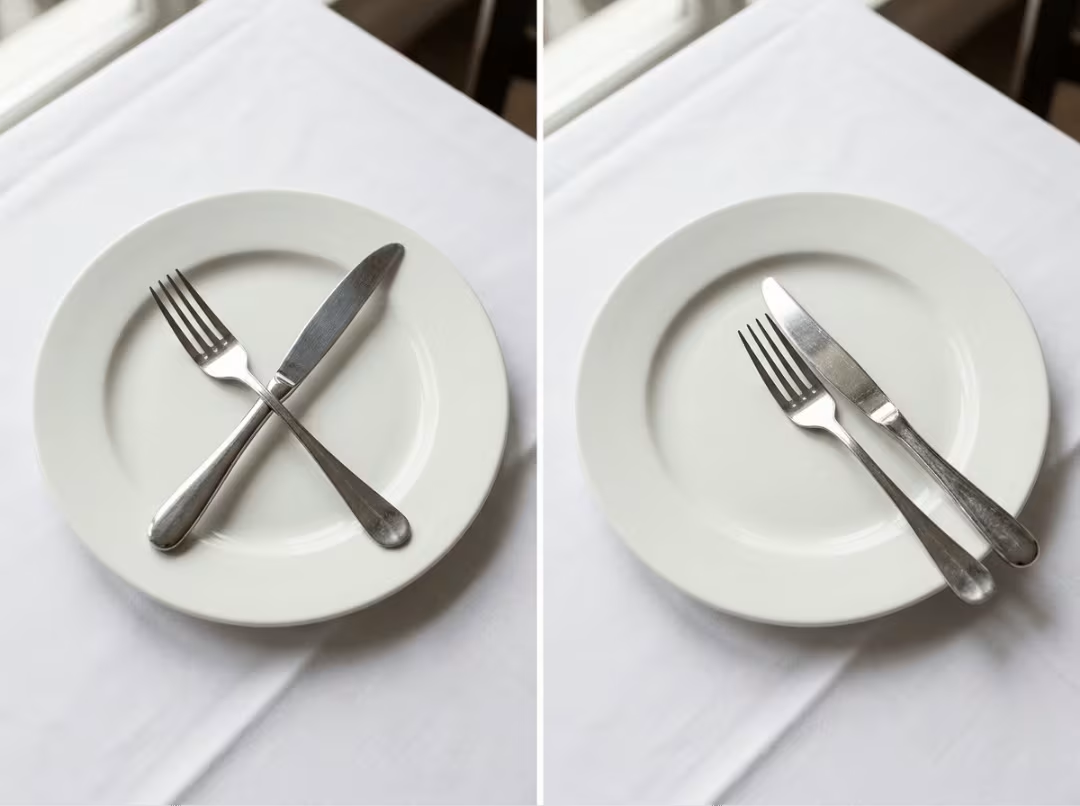
The Resting Position — “I’m Still Eating”
When you pause to talk or take a drink, don’t leave your utensils flat and parallel — that reads as “finished.” Instead:
- American style: Rest the knife across the top of the plate and place the fork toward the center, or set them on opposite edges with handles angled down.
- Continental style: Cross the fork and knife in the center of the plate, forming an X.
A good server reads this instantly and knows to leave your plate alone.
The Finished Position — “Please Clear My Plate”
When you’re done, place your fork and knife parallel, at roughly the 4 o’clock position, handles pointing toward you. Think of the plate as a clock face, with the utensils lying along the 10-to-4 line.
- American style: Fork tines point up.
- Continental style: Fork tines point down.
Don’t push the plate away or stack your dishes to signal you’re done. The utensil position does all the talking — quietly and clearly.
One caveat for travelers: some European fine-dining rooms read a crossed fork and knife as “finished,” not “resting.” When in doubt, glance at how the server responds and adjust.
Setting Styles: Casual, Formal, and Everything Between
The Everyday (Informal) Setting
Most restaurants use a stripped-down setting: one dinner fork, one dinner knife, a water glass, and a napkin. Pieces get added only when a course calls for them. If a soup arrives, so does a spoon. If you order steak, a serrated knife appears.
The Formal, Multi-Course Setting
A full formal table expands in both directions. On the left: salad fork, fish fork, dinner fork. On the right: two knives and two spoons. Above the plate: dessert utensils. Above the knives: three or four glasses.
Formal service also clears each course completely — plates and used silverware both — before the next arrives. You never carry a fork from one course to the next.
The Casual Setting: Rolled Silverware
At mid-range spots, you’ll often find silverware bundled inside a napkin. Casual doesn’t mean the rules change — it just means fewer pieces. Unroll the napkin, and if you find two forks and a knife, the outside-in rule still applies.
Buffet and Family-Style Etiquette
Buffets flip the usual flow, so they deserve their own playbook.
There’s no charger and no preset silverware at your seat. Instead, plates stack at the head of the line, and cutlery comes bundled in a napkin nearby. The rhythm is simple:
- Grab a plate first.
- Take silverware and a napkin at the start, not partway through.
- Move down the line steadily — don’t linger over one dish while a queue builds behind you.
- Use a fresh plate each trip rather than reloading a used one.
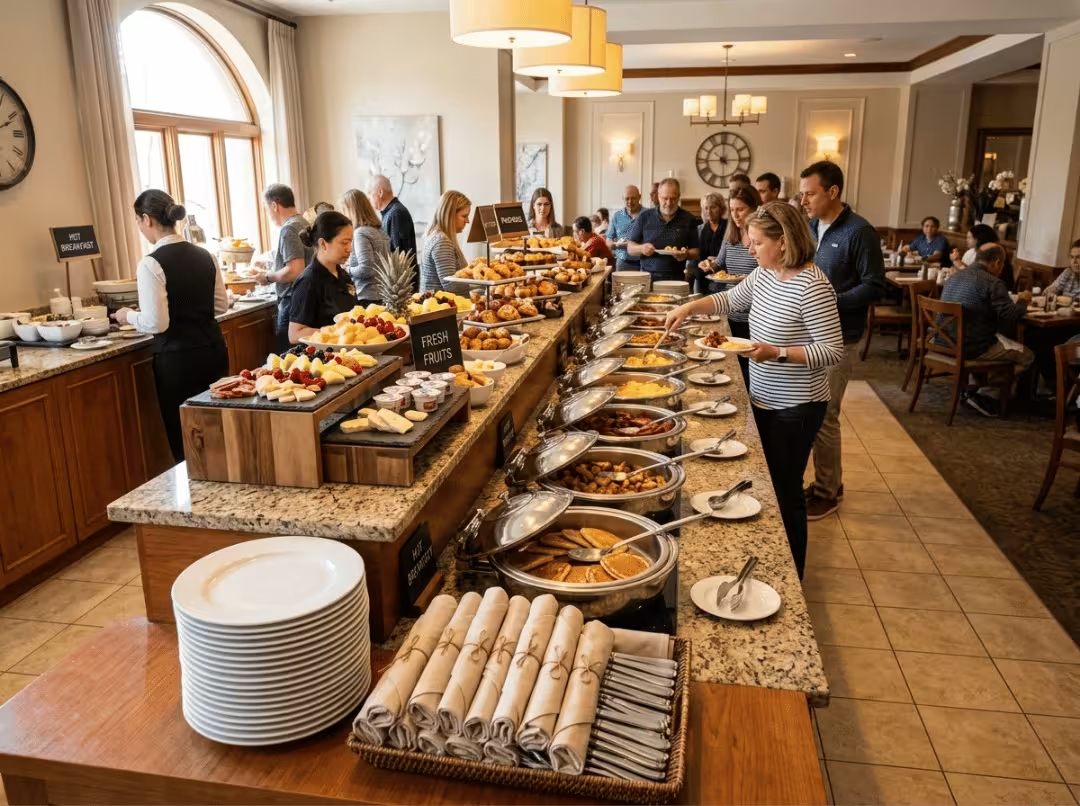
Buffet presentation is also doing a lot of quiet work here. The risers, display stands, and serving pieces guide how you move and what you reach for — there’s real strategy behind why hotel buffet ornaments matter more than you’d think.
For family-style meals, each shared dish has its own serving utensil. Use those to move food to your own plate — never your personal fork. Serve a modest portion, set the serving spoon back in the dish, and pass it along.
Adapting the Rules to Real Situations
Etiquette isn’t about performing. It’s about making everyone at the table comfortable, including you. Here’s how the rules shift by setting.
Business Dinners
The stakes feel higher here, and small habits do get noticed. A few guidelines:
- Follow the host’s lead. Don’t start eating until the host lifts a fork or invites you to begin.
- Order in the middle of the menu. Skip the priciest dish and anything messy or noisy to handle — think ribs, whole lobster, or long pasta.
- Use the resting and finished positions deliberately. Clients and managers register the difference, even subconsciously.
The goal is to keep attention on the conversation, not your plate.
First Dates and Social Meals
Relax. Ease matters far more than precision, and small slip-ups vanish the moment the conversation clicks. Keep your movements compact — elbows in, modest bites, phone out of sight. Use the finished position so the table clears smoothly and the meal keeps its rhythm.
American vs. Continental Dining Styles
These two styles are the source of most cross-cultural confusion, so it’s worth knowing both.
- American style: Hold the fork in your left hand and knife in your right to cut. Then set the knife down, switch the fork to your right hand (tines up), and eat. Cut, switch, eat.
- Continental style: Keep the fork in your left hand, tines down, throughout. Cut with your right, then bring the food to your mouth without switching hands. No switching, ever.
Neither is “more correct.” Continental is standard across Europe and reads as slightly more polished; American is perfectly at home in the US. If you’re traveling and notice diners eating with their forks in their left hands, you can quietly match the room.
Frequently Asked Questions
Which fork should I use first?
The one farthest from your plate. Work inward with each course, and you’ll always reach for the right piece.
Whose water glass is mine?
The glass directly above your dinner knife. The glasses to its right belong to your neighbor. Remember: drinks on the right, bread on the left.
Are charger plates meant to be eaten from?
No. A charger is a decorative base plate. Your actual courses arrive on top of it, and the server removes it before or during the meal.
How do I signal I’m finished without saying anything?
Lay your fork and knife parallel at the 4 o’clock position, handles toward you. That tells the server you’re ready for the plate to be cleared.
What do I do with my napkin if I leave the table mid-meal?
Set it loosely on your chair, never on the table. When the meal ends, place it loosely to the left of your plate.
Is it rude to ask my server which fork to use?
Not at all. A quick, friendly question is far better than visible stress. Good servers answer without a second thought.
Do these rules apply at casual restaurants?
Yes, just with fewer pieces. The outside-in rule and the silent signals work whether you have one fork or four.
The Takeaway
A place setting is a silent map, and now you can read it. Utensils progress from the outside in. Drinks stay on the right, bread on the left. And the position of your fork and knife tells the server everything they need to know — no words required.
The single most useful habit is the finished position. Practice it at your next dinner: fork and knife parallel at 4 o’clock when you’re done, crossed or angled when you’re still going. Do it a few times, and it becomes automatic.
If you’re setting tables rather than sitting at them, the same logic guides smart purchasing — our complete guide to tabletop supplies covers what to stock and why. Either way, you now have the map. The guesswork is gone.