

You slide into a hotel bed and feel it instantly: the sheets are cool, crisp, and substantial in a way your bedding at home never quite matches. Then you check the tag, expecting some astronomical number, and find something surprisingly modest. That gap between expectation and reality is exactly where most people waste money.
Thread count is often treated as the sole measure of quality, but it’s one of the weakest predictors of how a sheet actually feels and lasts. By the end of this guide, you’ll know why the 1,500-count sets on store shelves are often worse than a hotel’s 300-count standard, what luxury properties genuinely buy, and how to pick sheets that deliver that five-star feel without overpaying.
Why the Thread Count Number Misleads You
Thread count measures one thing: the number of horizontal and vertical threads woven into one square inch of fabric. A 300-count sheet has roughly 150 threads running each direction. That’s the whole calculation.
The problem is what happens when marketing gets involved. To manufacture a genuine 1,000-count single-ply fabric, you’d need yarn so fine and a weave so dense that the sheet would feel stiff, heavy, and poorly breathable. It isn’t practical for a bed you actually sleep in.
So manufacturers game the number instead. They twist two, three, or four thinner strands together into a single thread, then count each strand separately. A sheet advertised as “1,200 thread count” might contain only 400 real threads, each made of three twisted plies. You’re paying for a bigger label, not a better sheet.
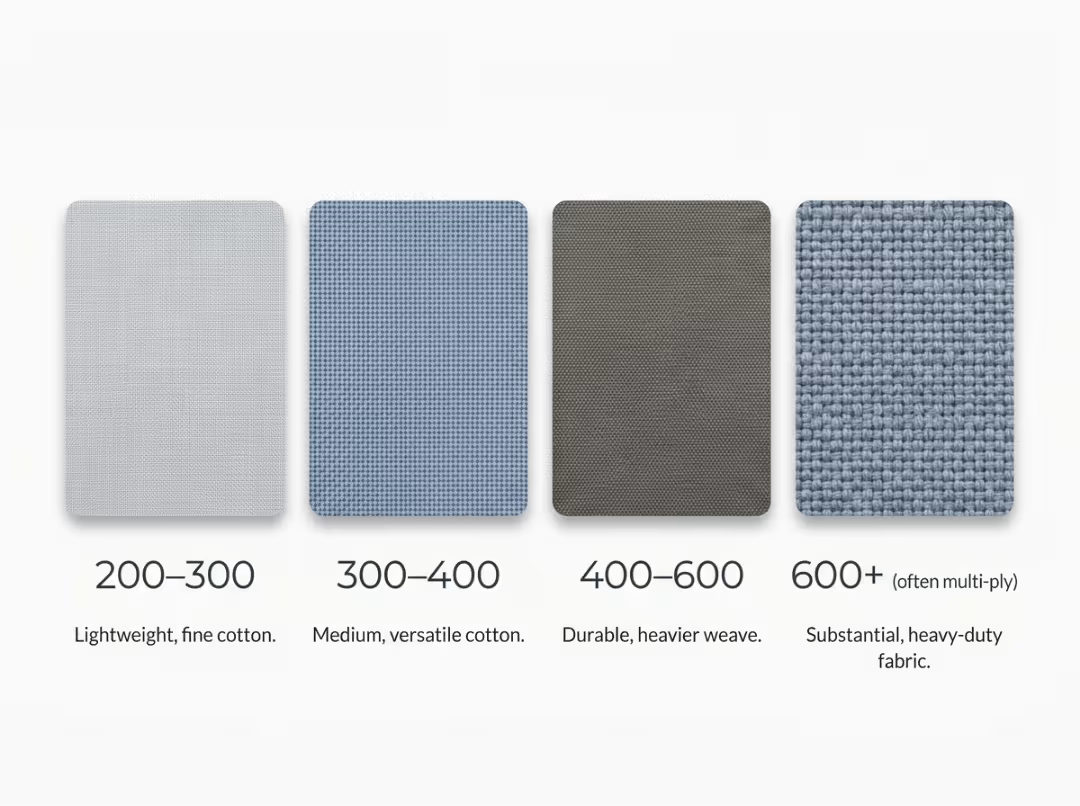
Here’s the counterintuitive result: those inflated multi-ply sheets often feel worse. The extra twisting reduces air circulation, traps heat, and adds bulk. Once you understand this, you stop chasing the number and start looking at what actually determines quality.
What Luxury Hotels Actually Put on Their Beds
The most persuasive evidence comes from the properties famous for their beds. If higher counts were better, five-star hotels would use them without hesitation. They don’t.
Most luxury hotels specify sheets in the 300 to 500 thread count range:
- Ritz-Carlton uses a 300-count for its signature beds.
- Four Seasons has historically built its bedding around 300-count components and cotton blends.
- Mandarin Oriental stocks roughly 350-count.
These aren’t budget compromises. These are properties that invest enormous effort in the guest experience, and they’ve landed on this range because it delivers the best balance of crispness, breathability, durability, and cost. A well-made 300-count percale outperforms a twisted 1,000-count set on every measure guests actually notice.
There’s a practical reason too. Hotel linen goes through brutal industrial laundering, high heat, harsh detergents, and constant rotation. Properties run tight linen inventory systems, often three sets per bed, so sheets are washed and reused relentlessly. You can see how demanding that rhythm is in the way hotels structure their housekeeping and laundering cycles. A sheet that survives that cycle for years has to be built honestly, and honest construction rarely exceeds 500 count.
Reputable mills produce very few sheets above 600 count, and when you see numbers beyond that, treat it as a warning sign rather than a badge of quality.
The Factors That Actually Determine Quality
If not thread count, then what? Three things matter far more.
Fiber Length: The Single Biggest Differentiator
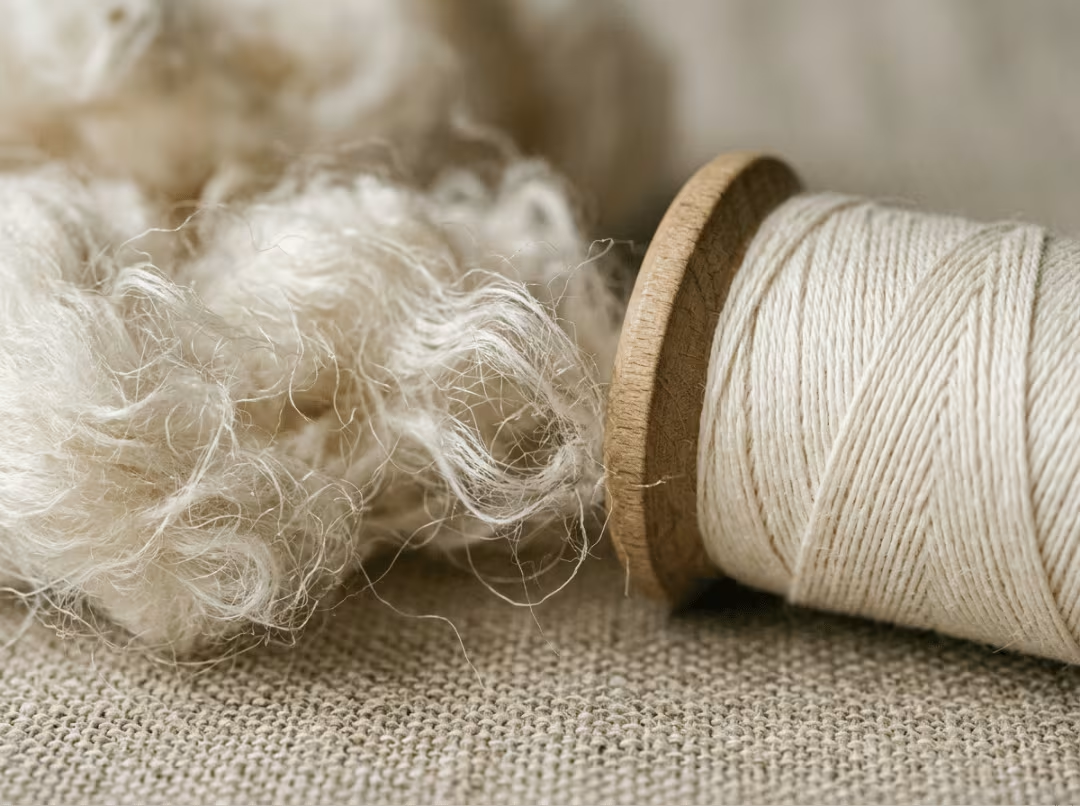
The length of the cotton fiber, called staple length, is the strongest predictor of how a sheet feels and how long it lasts. Long-staple cotton spins into smoother, stronger yarn with fewer loose ends poking out of the surface.
The result is a sheet that resists pilling, gets softer with each wash instead of rougher, and holds up for years. The three names worth knowing are Egyptian cotton, Supima, and Pima, all long-staple varieties. A 300-count sheet made from genuine long-staple cotton beats a 600-count sheet made from cheap short-staple fiber every time.
Single-Ply Beats Multi-Ply
Ply describes how many strands are twisted into each thread. Single-ply uses one continuous strand per thread. Multi-ply twists several thinner, often lower-grade strands together.
Single-ply built from long-staple cotton is the mark of quality construction. It breathes better, feels lighter, and doesn’t rely on artificial thread-count inflation. When you compare a single-ply 300-count sheet against a multi-ply 600-count sheet, the single-ply almost always wins on comfort and airflow.
Weight and Finishing
Fabric weight, measured in grams per square meter (GSM), tells you more about warmth and durability than thread count does. A slightly heavier weave feels substantial and holds up to washing; a very light one feels crisp and cool. Finishing techniques then determine how the fabric drapes and how smooth it feels against your skin.
Percale vs. Sateen: Match the Weave to How You Sleep
Weave type shapes the feel of a sheet more than almost any other factor, and choosing the right one comes down to how hot or cold you sleep.
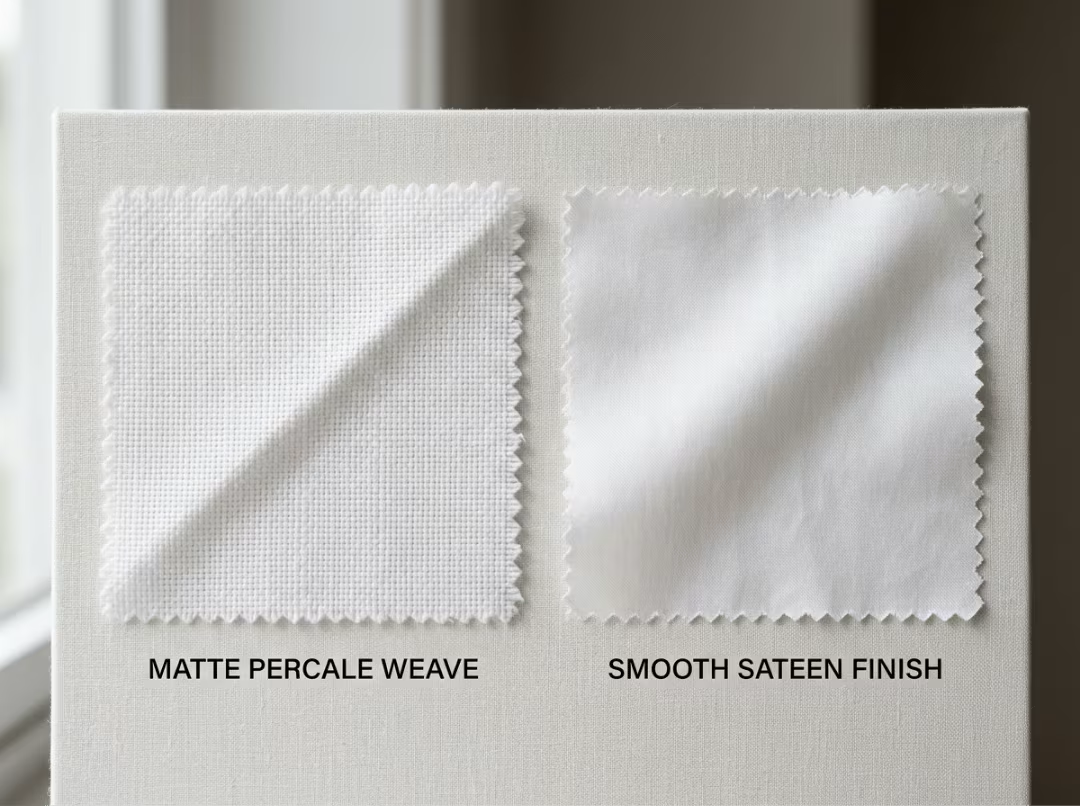
Percale uses a simple one-thread-over, one-thread-under weave. It feels crisp, matte, and cool, like a freshly pressed dress shirt. It breathes exceptionally well and stays fresh through the night, which is exactly why it’s the default choice for hotel beds. If you sleep hot, run warm at night, or live in a hot climate, percale is your answer.
Sateen uses a weave where several threads pass over one, creating a silky surface with a soft sheen. It drapes elegantly and feels smooth and slightly warmer against the skin because the weave traps a bit more heat. If you sleep cold or want a more luxurious, cozy hand-feel, sateen suits you better.
Two quick scenarios make the choice obvious:
- The hot sleeper: Choose a 300-count single-ply percale in long-staple cotton. Cool, crisp, breathable, and durable.
- The cold sleeper: Choose a 400-count sateen in long-staple cotton. Smoother, with just enough extra warmth to feel snug without overheating.
Your Buying Decision, Simplified
When you’re evaluating sheets, ignore the giant number on the front and work through this instead:
- Thread count: Target 300 to 500. Anything above 600 deserves suspicion.
- Fiber: Insist on 100% long-staple cotton (Egyptian, Supima, or Pima).
- Ply: Choose single-ply.
- Weave: Percale if you sleep warm, sateen if you sleep cool.
- Fit: Check pocket depth. Deep pockets fitting 12 to 15 inches of mattress, with full corner elastics, keep the sheet from slipping.
A simple in-person test helps. Fold the fabric and squeeze it; quality construction feels smooth and compact without excessive bulk. Hold it up to the light and look for an even, dense grid with no gaps, thin spots, or lumpy slubs.
If you’re buying for a property rather than a home, sourcing shifts to hospitality-grade suppliers who build linen specifically to survive industrial laundering. Those sheets often feel firmer out of the package but outlast retail bedding by a wide margin. Our guide to hospitality supply sourcing in the USA walks through how to evaluate vendors on construction quality rather than marketing claims.
One brief note on care, since it protects your investment: wash in cold or warm water with a mild detergent, skip bleach and fabric softeners (they coat and weaken the fibers), and dry on low heat. Rotating two sets extends the life of both.

FAQs
Is a higher thread count always better?
No. Beyond roughly 500, higher numbers usually signal multi-ply twisting rather than better fabric. A genuine, single-ply 300-count sheet in long-staple cotton outperforms an inflated 1,000-count set on comfort, breathability, and durability.
What thread count do five-star hotels use?
Most sit in the 300-500 range. Ritz-Carlton uses around 300, Mandarin Oriental about 350, and Four Seasons builds its bedding around 300-count components. They choose this range on purpose, not to save money.
What does single-ply mean, and why does it matter?
Single-ply means each thread is one continuous strand rather than several thinner strands twisted together. It breathes better, feels lighter, and reflects honest construction. Multi-ply sheets inflate the thread-count number while often reducing airflow.
What makes a good all-season sheet?
A 300 to 400-count single-ply percale in long-staple cotton is the most versatile choice. It stays cool in summer and comfortable in cooler months, and it holds up to frequent washing without losing its feel.
The takeaway is straightforward: stop shopping by the number on the box. Aim for 300 to 500 thread count, demand genuine long-staple cotton and single-ply construction, and match percale or sateen to how you sleep. Get those four things right, and you’ll bring home the crisp, cool, durable feel of a five-star bed, while the person chasing a 1,500-count label sleeps under twisted marketing.