
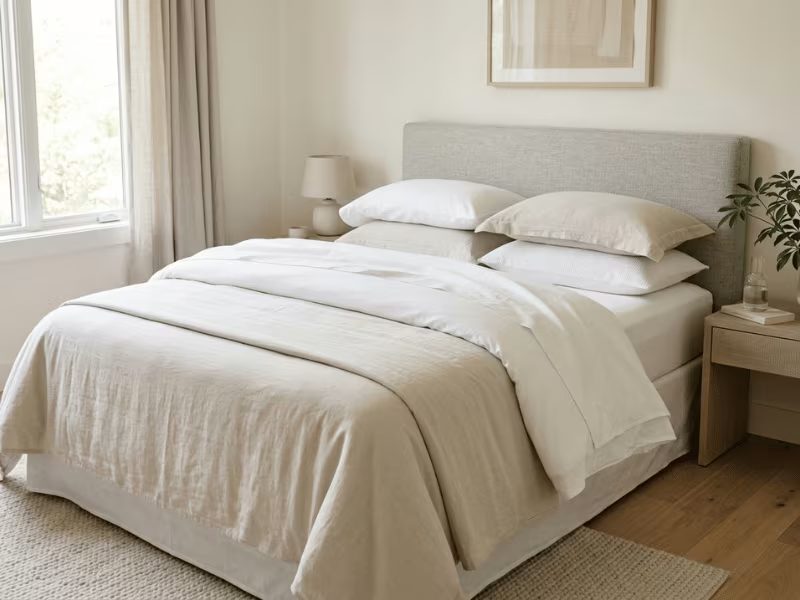
Most people shopping for sheets believe one simple thing: higher thread count means better sheets. It sounds logical. A bigger number should mean softer, more luxurious bedding.
But that belief costs shoppers money every day.
Here is the truth. Thread count matters, but far less than most people think. Once you understand what the number really tells you, you stop paying extra for sheets that just carry an impressive label.
I have helped countless people pick sheets that feel great and last for years. The best ones rarely have the highest numbers. What separates a wonderful sheet from a disappointing one usually comes down to details the label barely mentions.
This guide clears up the confusion. You will learn what thread count actually measures, which range is genuinely worth your money, and the factors that matter far more when you shop. By the end, you will read a sheet label with a sharper eye and buy with real confidence.
What Is Sheet Thread Count?
Thread count sounds technical, but the idea is simple. It counts the threads packed into one square inch of fabric.
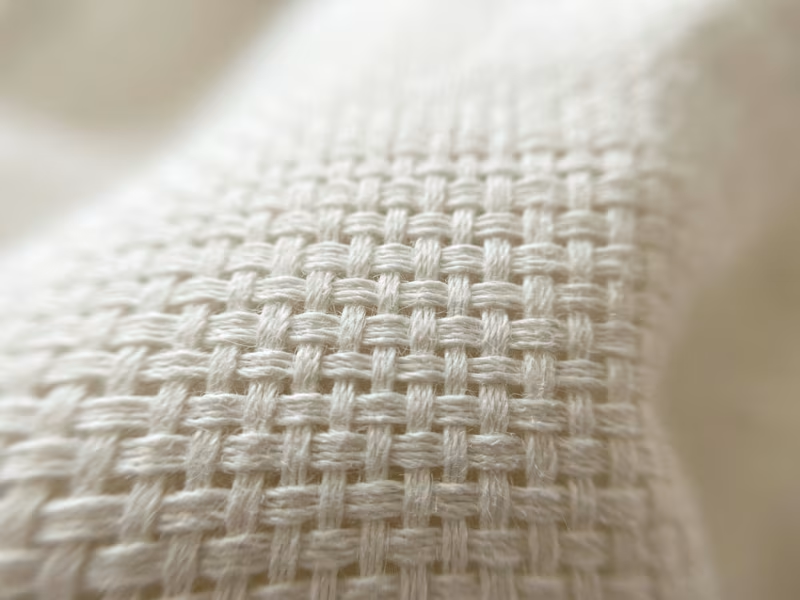
Every woven sheet has two sets of threads that cross each other. The lengthwise threads run up and down the fabric. Weavers call these the warp. The widthwise threads run side to side, and those are the weft.
Add the warp and weft together in one square inch, and you get the thread count. So a sheet labeled 300 has roughly 300 threads woven into each square inch, counting both directions.
That is the whole definition. No secret formula, no hidden science.
Here is the part most shoppers miss. Thread count measures density. It tells you how tightly the threads sit together, and nothing more.
Density is not the same as quality. A sheet can pack in plenty of threads and still feel rough, sleep hot, or wear out fast. Meanwhile, a sheet with a lower number can feel smooth, breathe well, and last for years.
Think of thread count as one line on a spec sheet, not the final verdict. It says almost nothing about how the sheet will feel against your skin or hold up after months of washing.
Why Thread Count Can Be Misleading
Here is where things get slippery. Two sheets can share the exact same thread count and feel worlds apart. The number on the label leaves out one big detail: how brands arrive at it. Once you see the trick, you stop trusting the number blindly.
Single-Ply vs. Multi-Ply
The trouble starts with how you count a thread.
A single-ply yarn is one strand, counted once. Simple and honest.
A multi-ply yarn twists two or more thinner strands together into one thread. Some brands then count each strand separately, even though they weave in as a single thread.
Picture this. A sheet has 300 single threads per square inch. If a brand uses two-ply yarn and counts each strand on its own, that same fabric suddenly reads as 600. Nothing changed about the construction. Only the math did.
So a “600 thread count” sheet can hold no more cotton than a 300 one. It just sounds twice as impressive.
Remember this: more strands crammed into a thread does not mean better thread. Thin, weak plies twisted together often feel worse than one strong single-ply yarn.
Why Very High Numbers Deserve a Second Look
This ply trick explains why sky-high numbers should raise your eyebrows.
Look at claims of 800, 1000, or 1200. In genuine single-ply cotton, weaving that many threads into one square inch is nearly impossible. The fibers simply run out of room.
So how do brands hit those figures? They stack the plies and count each one. A four-ply yarn turns a modest 300 into a flashy 1200 overnight.
Some producers push this even further with very thin, low-grade strands, all to chase a headline number. Regulators have flagged these inflated claims before, though enforcement stays uneven.
The takeaway is simple. When you see 800 and up, treat it as a red flag, not a badge of honor. A real 1000 thread count in pure single-ply cotton would cost a fortune and rarely shows up on a store shelf.
Ask what the fabric is actually made of. If the brand stays quiet on ply and fiber, the big number is probably doing the talking.
What Happens When Brands Chase the Number
Chasing a big number comes at a cost, and you feel it in bed.
Pack too many threads into one square inch, and the fabric loses its ability to breathe. It sleeps warmer and feels stuffy against your skin.
The hand feel often suffers too. A dense, over-packed sheet can turn stiff instead of soft. That “luxury” number does not guarantee a luxury feel.
Worse, brands often reach these figures by using cheaper, weaker fibers. They spend their budget on the number, not on the cotton. You end up paying more for a sheet that breathes poorly, feels flat, and wears out sooner.
Let the number go. The fabric behind it tells the real story.
Why Higher Thread Count Isn’t Always Better
Let’s say the number on the label is honest. Even then, a higher thread count does not promise a better night’s sleep. Once you understand how dense fabric behaves in real life, you stop treating that number as a shortcut to quality.
Breathability Has Limits
Sheets need airflow to feel comfortable. Pack too many threads into one square inch, and you choke that airflow off.
Dense fabric traps heat close to your body. If you already run warm at night, a super-high thread count can turn your bed into a sweatbox. The tighter the weave, the less room air has to move.
That same density slows down drying too. After a wash, over-packed sheets hold moisture longer and take extra time on the line or in the dryer.
Softness Comes From More Than Density
Plenty of shoppers assume more threads mean a softer feel. It rarely works that way.
Real softness comes from the fibers themselves. Long-staple cotton spins into smoother, finer yarn that glides against your skin. Short, cheap fibers stay coarse no matter how many you cram in.
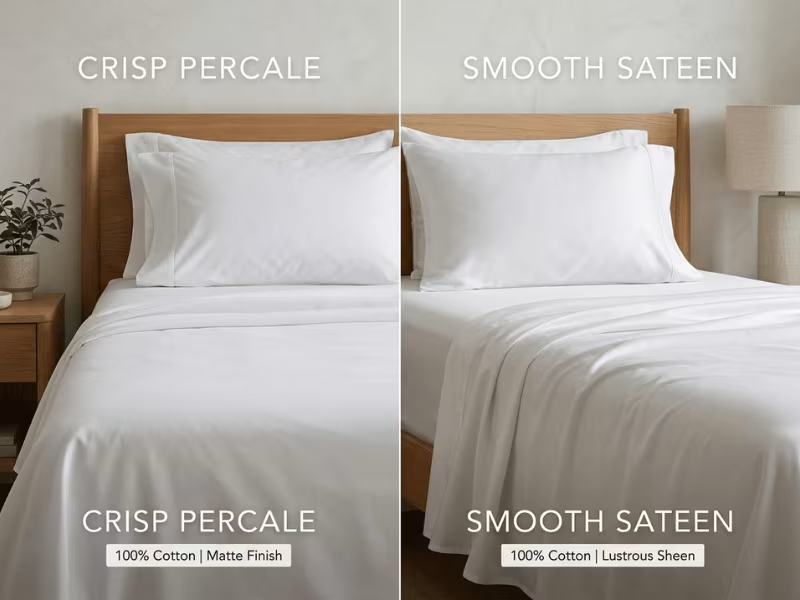
The weave shapes softness too. A sateen weave feels silky, while a crisp percale feels cool and structured. Same number, completely different hand.
Finishing plays a part as well. Careful spinning and gentle treatment do more for feel than raw density ever could.
Durability Can Suffer Too
Here is the part that hits your wallet later. Brands often reach big numbers by using thinner, weaker yarns.
Skinny strands break down fast. You see it in pilling, in fabric that thins at the center, and in surfaces that tear far sooner than they should.
A sheet built from strong single-ply yarn at a modest count usually outlasts a flimsy high-count rival. Sturdier yarn simply survives more wash cycles. So a sky-high number can actually shorten the life of your sheets. Strength lives in the yarn, not in the count.
What Matters More Than Thread Count
If thread count only tells you so much, what should you actually check? These four things predict comfort and durability far better than any number on the front of the package. Learn to read them, and you shop like a pro.
Fiber Quality
Start here, because the fiber decides almost everything about how a sheet feels.
The key detail is staple length, which means the length of each cotton fiber. Longer fibers spin into smoother, stronger yarn with fewer loose ends poking out.
Short-staple cotton makes rougher, weaker fabric that pills fast. Long-staple cotton feels noticeably smoother and holds up longer. Extra-long-staple cotton sits at the top, giving you the softest, most durable weave.
You will spot names like Egyptian, Pima, and Supima cotton. These signal extra-long-staple fibers, and they earn their reputation.
But a name on a label proves nothing on its own. Plenty of sheets claim “Egyptian cotton” with almost none inside. Look for a real certification instead, since that verifies the fiber actually lives up to the claim.
Weave Type
Fiber sets the foundation, and weave shapes how that fabric behaves against your skin. Two weaves dominate the sheet world, and picking the right one matters more than chasing a higher number.
Percale uses a simple one-over, one-under weave. It feels crisp, cool, and light, almost like a fresh dress shirt. Air moves through it easily.
Sateen floats more threads on the surface, which creates a smooth, silky feel with a soft sheen. It drapes over you and holds a touch more warmth.
Neither wins. The right choice depends on how you sleep.
Sleep hot, or hate that stuffy, clingy feeling? Reach for percale. It breathes, stays cool, and gets crisper with every wash.
Want a silk-like glide and a cozy, luxurious drape? Sateen delivers that hotel-suite softness.
Live somewhere with real seasons? Many people keep both: percale for summer, sateen for the cold months. Once you match the weave to your sleep style, comfort stops being a guessing game.
Ply and Yarn Quality
Here is a detail brands love to hide. Ply tells you how many strands twist into each thread.
Single-ply means one strong, quality strand. It usually points to better cotton, since only good fibers hold up on their own.
Multi-ply twists thinner strands together, often to pump up the number. Two sheets can share the same thread count yet feel completely different, all because of the yarn behind it. When a brand states single-ply clearly, take it as a good sign.
Fabric Weight and Finishing
One last pair of clues rounds out your checklist.
Some brands list GSM, or grams per square meter. It simply tells you how heavy and substantial the fabric feels. Heavier is not always better, but it gives you a fairer sense of the sheet than thread count does.
Then there is finishing. Many sheets get a chemical softener or silicone coating that makes them feel plush right off the shelf.
That softness fades. After a few washes, the coating rinses away and the true texture shows up. This is why a great in-store feel can turn disappointing at home. Trust the fiber and weave, not a temporary finish.
What Thread Count Is Best for Sheets?
Now for the number you actually came here to find. There is no single magic figure, but there is a smart range for each type of sheet. Here is how the numbers break down in practice.
|
Thread Count Range |
Usually Best For |
What to Expect |
What to Watch Out For |
|---|---|---|---|
|
200–400 |
Everyday cotton and percale |
Cool, crisp, breathable, durable |
Anything under 180 can feel thin and rough |
|
300–600 |
Sateen and smoother weaves |
Silky feel, soft drape, slight warmth |
Weak fiber hiding behind a nice number |
|
600+ |
Marketing, mostly |
A big label, not always a better sheet |
Inflated multi-ply counts and hype |
200–400: The Everyday Sweet Spot
This is where most great sheets live.
For crisp cotton and percale, 200 to 400 hits the perfect balance. You get real breathability, honest softness, and fabric that survives wash after wash.
Sheets in this range breathe well because the weave stays open enough for air to move. They feel cool in summer and comfortable year-round. You rarely need to spend more. A well-made 300 thread count percale often beats a flashy high-count rival on both comfort and lifespan.
300–600: Where Sateen Shines
Push a little higher, and you enter sateen territory.
Sateen needs a few more threads to create that smooth, silky surface, so 300 to 600 suits it well. Expect a soft glide and a gentle sheen that drapes over you.
But do not fixate on the number itself. A 400 thread count sateen made from long-staple cotton will outshine a 600 made from cheap fiber every time. Check the fiber and weave first.
Above 600: Time to Get Skeptical
Once you climb past 600, treat the number with real caution.
In genuine single-ply cotton, weaving that many threads into one square inch is nearly impossible. So most of these figures come from multi-ply yarn counted strand by strand. That does not always mean a bad sheet. It does mean the number is telling you very little.
If you want crisp and cool, start with a 200–400 percale. If you prefer something smoother and slightly warmer, look at a 300–600 sateen.
Percale vs. Sateen: Which One Should You Choose?
Once you set the number aside, the real decision comes down to weave. Percale and sateen feel like two different beds, and the right one depends entirely on how you sleep.
|
Feature |
Percale |
Sateen |
|---|---|---|
|
Feel |
Crisp, cool, light |
Smooth, silky, soft |
|
Breathability |
High, airy |
Moderate |
|
Warmth |
Cool, minimal |
Warmer, cozy |
|
Best for |
Hot sleepers, summer |
Cold months, luxury feel |
|
Typical thread count range |
200–400 |
300–600 |
|
Durability tendency |
Holds up longer |
Snags a bit easier |
Sleep hot? Go with percale. Its plain weave lets air move freely, so it stays cool through the night and never clings. It feels like a fresh, crisp shirt against your skin, and it actually gets softer with each wash.
Want that silky, hotel-suite glide? Sateen is your answer. The weave floats more threads on the surface, which gives you a smooth, almost buttery feel with a gentle sheen. It drapes over you and holds a little more warmth, perfect for chilly nights or anyone who loves a cozy, draped bed.
Care most about sheets that last? Percale usually wins here. Its tight weave resists snags and pilling, so it survives heavy rotation and years of washing. Sateen feels wonderful, but those floating surface threads catch and wear a touch faster.
Many people stop choosing and simply keep both. Percale carries them through hot summer nights, and sateen takes over when the temperature drops. If you can only pick one, match it to your bigger problem: overheating points to percale, while a craving for softness points to sateen.
How to Read a Sheet Label Before You Buy
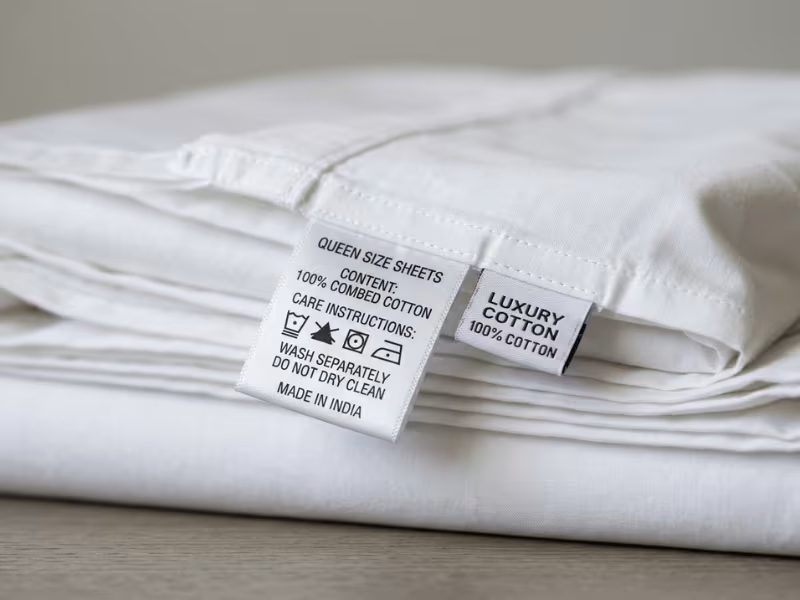
By now you know the number alone can’t guide your purchase. So what should you actually look for? A good label tells you what the sheet is made of and how it’s built. A weak one just shouts a big number. Run through this quick checklist before you buy.
Scan the label for these six details, in this order:
- Fiber type. Look for the specific cotton, like Supima, Pima, or Egyptian, or an alternative like linen or bamboo lyocell. Vague wording like “cotton-rich” usually means a blend with something cheaper.
- Weave. The label should name percale or sateen. If it stays silent on the weave, you’re buying blind on the one feature that shapes how the sheet feels.
- Single-ply or multi-ply. A brand that prints “single-ply” is telling you it trusts its yarn. Silence here often hides a padded thread count.
- Thread count range. Match it to the weave. Roughly 200–400 for percale, 300–600 for sateen. Anything past 600 deserves a hard second look.
- Certifications. These prove the claims. OEKO-TEX Standard 100 confirms the fabric passed testing for harmful chemicals. GOTS backs up organic cotton. The Cotton Egypt Association seal verifies genuine Egyptian cotton, which plenty of “Egyptian” labels lack.
- Reviews after repeated washing. Skip the reviews from week one. Search for buyers who describe how the sheets held up after six months. Pilling, thinning, and fading show up over time, not on day one.
Ignore the Words That Mean Nothing
Here’s where brands play their favorite trick. They lean on language that sounds impressive but carries zero standard behind it.
“Hotel quality.” “Luxury.” “Premium.” “Resort collection.” None of these terms are regulated. Any brand can slap them on any sheet, at any price.
Treat these words as decoration, not information. A real hotel sheet earns its feel through weave and durable fiber, not a marketing phrase. The same logic applies across a property, from the linens down to the hotel bathroom supplies that guests notice: durable, well-made basics beat flashy labels every time.
When a label leans hard on adjectives but goes quiet on fiber, weave, and ply, that silence is your answer. Trust the ones that give you facts, and walk past the ones selling you a mood.
Common Myths About Sheet Thread Count
A few stubborn myths keep shoppers overpaying for the wrong sheets. Let’s clear up the four that cause the most confusion.
Myth 1: A higher thread count always means better sheets. This is the big one, and it simply isn’t true. Once you push past a sensible range, extra threads add density, not quality. A dense sheet can sleep hot, feel stiff, and wear out fast. Plenty of “1000 thread count” sheets rely on padded multi-ply math, not better cotton.
Myth 2: Softer sheets always have a higher thread count. Softness doesn’t come from packing in more threads. It comes from the fiber and the weave. Long-staple cotton spins into smooth, fine yarn that feels great at a modest count. A sateen weave adds silkiness on its own. I’ve handled 300 thread count sheets that feel softer than 800 ones, every time, because the fiber behind them was better.
Myth 3: Hotel sheets are high-thread-count sheets. People assume that crisp, luxurious hotel feel comes from a sky-high number. It doesn’t. Most hotels use percale in the 250 to 400 range. They choose it because it breathes, feels cool, and survives industrial laundering week after week. That crispness comes from the weave and durable fiber, not a big label.
Myth 4: A low thread count means low quality. Not so. Some fabrics naturally sit lower on the scale and still cost more. Linen often lands well under 200 and delivers a premium, breathable sleep. Flannel works the same way. Thread count doesn’t even apply the same way to these weaves.
Notice the pattern across all four? The number keeps stealing credit that belongs to the fiber and the weave.
Best Sheets by Sleep Style and Preference
Everything so far leads to one question: which sheet is right for you? The honest answer depends on how you sleep and what you value most. Here’s how I’d steer four different sleepers.
If you sleep hot
You know the feeling. You kick the covers off at 2 a.m., damp and frustrated. Skip the dense, high-count sheets, because they trap heat and make it worse.
Reach for a long-staple cotton percale in the 200 to 400 range. That open weave lets air move, so your bed stays cool all night. The crisp feel also keeps the fabric from clinging to your skin. This is the single best fix for a hot sleeper.
If you want softness first
Some people don’t care about temperature. They want that smooth, buttery glide the moment they slide in.
Go with sateen in a sensible range, roughly 300 to 600. The weave floats more threads on the surface, which gives you that silky feel and a soft sheen. Just check the fiber first. A long-staple sateen at 400 feels far better than a cheap one at 600.
If you love hotel-style crispness
That fresh, cool, pressed feeling in a good hotel bed comes from single-ply cotton in a moderate count, usually 250 to 400 percale. It’s the same principle that guides smart hotel furniture and furnishings: pick well-built basics that hold up, not showy extras.
Look for a label that clearly states single-ply. Skip the sheets shouting 1000 and stay in that honest middle range.
If you’re shopping on a budget
Money matters, and here’s the good news: you don’t need to spend big for great sheets.
Do not chase 800 and up. Those numbers usually mean padded multi-ply math, not better fabric. Find a brand that names its fiber, states its weave, and stays in the 200 to 400 range. A well-made 300 thread count percale will out-sleep and outlast most flashy high-count bargains every time.

A Smarter Way to Shop for Sheets
Here’s what years of handling sheets taught me: the number on the front of the package is the least reliable thing on it.
Thread count matters, but only up to a point. Once you land in a sensible range, more threads stop helping. What actually decides how your sheets feel and how long they last comes down to three things: the fiber, the weave, and how the sheet is built.
So flip your shopping habit. Stop leading with the number.
Start by asking what the fabric is made of. Check the staple length. Read the weave. Look for single-ply. Match the count to that weave instead of hunting for the biggest figure in the aisle.
Do this, and you’ll spend less, sleep better, and replace your sheets far less often. You’ll also stop falling for the 1000-count hype that empties wallets and disappoints sleepers.
One simple rule carries you through every purchase from here on out: buy from brands that tell you what the sheet is made of, how it’s woven, and how it’s made — not just how high the number goes.
Frequently Asked Questions
What is a good thread count for sheets?
For most cotton sheets, aim somewhere in the 200 to 400 range. That’s the zone where you get real breathability, honest softness, and fabric that survives years of washing. Sateen can climb a bit higher, into the 400 to 600 area, since that weave needs a few more threads to feel silky. Anything below 180 tends to feel thin, and anything way above 600 usually leans on marketing more than quality. Match the count to the weave, and you’ll land in the right spot.
Is 1000 thread count good?
Rarely. A true 1000 thread count in single-ply cotton is almost impossible to weave, so nearly every “1000” sheet you see gets there through multi-ply math. Brands twist thin strands together and count each one separately. You end up with a big number and a fabric that often sleeps hot and wears out fast. If you spot 1000 on a label, flip it over and hunt for the fiber and ply details. The silence usually tells the story.
What thread count do hotels use?
Lower than most people expect. Good hotels typically run percale in the 250 to 400 range. They pick it because it breathes, feels crisp and cool, and holds up to industrial laundering night after night. That fresh, pressed feel you love comes from the weave and durable fiber, not a sky-high number. You can recreate it at home for far less than you’d think.
Is percale or sateen better?
Neither wins outright. It depends on how you sleep. Percale feels crisp, cool, and light, so it’s the pick for hot sleepers and warm months. Sateen feels smooth and silky with a soft drape, which suits chilly nights and anyone craving a plush bed. If you can’t decide, keep both and swap them by season.
Does thread count matter for linen or bamboo sheets?
Not really. Thread count is a cotton measurement, and it doesn’t translate cleanly to other fabrics. Linen naturally sits well under 200 and still delivers a premium, breathable sleep. Bamboo lyocell gets judged by fiber quality and weave, not thread count. For these materials, look at the fabric type and construction instead of chasing a number.